


Pakistan’s first women triathletes at the Asian Games have opened a new chapter in the country’s sporting history, proving that determination can take athletes to the international stage even when resources are limited. Their landmark appearance in Japan, however, has also raised questions about the support available to women competing in demanding endurance sports.
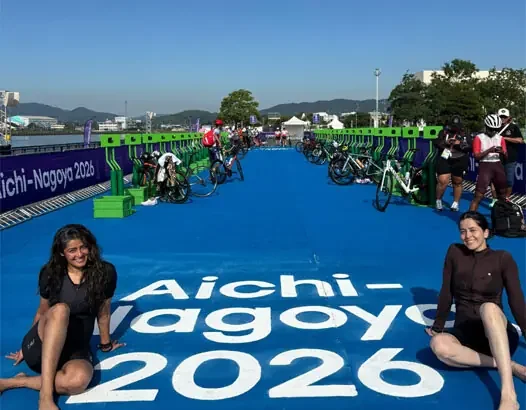
Sana Arif and Anisha Ali from Hunza represented Pakistan at the 20th Asian Games in Aichi-Nagoya, becoming the country’s first female triathlon competitors at the continental event. They were accompanied by male teammates Ali Hassan, Mohid Sadiq Lone and Muhammad Mustaghis Noor.
For Sana, the journey was particularly remarkable. She learnt to swim only in 2021 but subsequently completed three Ironman 70.3 races, each involving a 1.9-kilometre swim, 90.1 kilometres of cycling and a 21.1-kilometre run.
Born in Kuwait and raised in Lahore before returning to Kuwait, Sana developed her triathlon career largely through personal determination and independent training.
Her Asian Games selection came unexpectedly while she was visiting Pakistan on holiday. After learning about the team trials through a friend, she decided to participate. A week later, the Pakistan Triathlon Federation informed her that she had been selected to represent the country.
Her teammate Anisha, 26, brought extensive experience from other sports, including judo, martial arts, rowing, boating, tug-of-war and fencing. However, triathlon presented a different challenge, requiring proficiency in swimming, cycling and running.
Despite limited preparation opportunities, the athletes found encouragement in their team spirit and interactions with international competitors. Sana said athletes from other countries helped ease her anxiety about competing in a sprint format that differed from her usual long-distance races.
Although Pakistan did not win medals, Sana believes their participation was significant in itself.
The experience also exposed shortcomings in the country’s sports infrastructure. According to Sana, Pakistani competitors used rented bicycles, while the tri-suits provided to them were unsuitable for the demands of the sport.
She argued that athletes needed proper equipment, financial assistance, specialised coaching and structured preparation well before major international competitions.
“If Pakistan wants competitive Asian Games athletes, they shouldn’t start receiving support six months before the event,” she said.
Anisha highlighted similar challenges for women athletes, particularly those from rural, remote and mountainous communities. Many talented girls lack access to training facilities, qualified coaches, financial support and safe sporting environments.
She believes greater representation by Pakistani women at international competitions could inspire younger generations to pursue sports and challenge traditional barriers.
For Sana, the Asian Games were both an achievement and a learning experience. Meeting elite athletes helped her understand the standards required to compete internationally and the improvements Pakistan needs to make.
The response at home has largely been encouraging, although some criticism followed the team’s return without medals. Sana said she remained focused on the positive support she received rather than allowing criticism to overshadow the experience.
Pakistan’s pioneering women triathletes have demonstrated that its athletes can reach demanding international competitions through commitment and perseverance. Their achievement also highlights the importance of building a system that supports talent consistently.
The next challenge is to ensure future athletes receive the equipment, coaching, funding and preparation needed to compete more effectively. For Pakistan’s women in triathlon, reaching the Asian Games was the first milestone; creating a sustainable pathway for future competitors will be the real test.