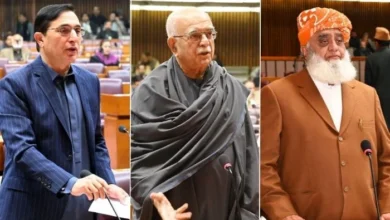


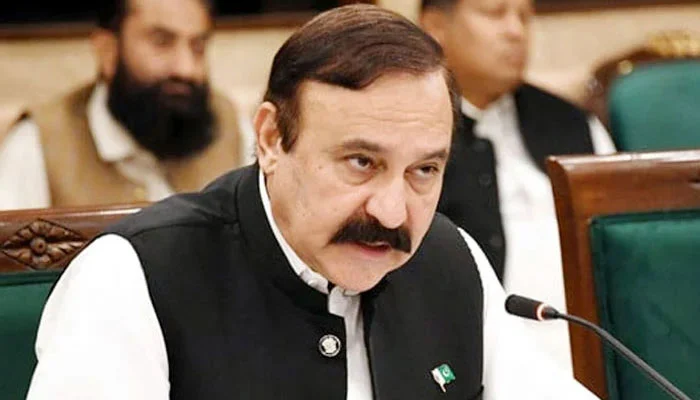

ISLAMABAD: Federal Minister for Parliamentary Affairs Tariq Fazal Chaudhry said on Thursday the agenda of a meeting between Prime Minister Shehbaz Sharif and the opposition leader was more important than its venue, reiterating the government’s willingness to hold talks.
Chaudhry said the prime minister was ready to meet Opposition Leader in the National Assembly Mahmood Khan Achakzai to discuss matters of national interest and fulfil constitutional requirements.
Earlier today, opposition alliance Tehreek Tahaffuz Aiyeen-e-Pakistan (TTAP) proposed the Constitution Room in Parliament for a potential meeting between the premier and Achakzai.
“If the prime minister comes to the opposition chamber, we will take him to the Constitution Room,” TTAP spokesperson Akhunzada Hussain told Geo News, adding that the opposition wanted negotiations to take place at a neutral venue without ego or stubbornness obstructing dialogue.
Achakzai had previously declined to participate in talks at the National Assembly speaker’s chamber, saying he would attend if the negotiations were held at a neutral location.
The latest developments came as PM Shehbaz visited Peshawar and chaired a meeting of the federal apex committee to review the security situation in Khyber Pakhtunkhwa (KP).
It was his first visit to the province since President Asif Ali Zardari proclaimed emergency and governor’s rule on October 11 on his advice.
Addressing the meeting, the premier said the measures had been undertaken under “extreme compulsion”.
Rejecting allegations that the federal government wanted to take control of KP for political reasons, Chaudhry questioned why the Centre would seek to assume control of a province facing terrorism and resource constraints. He said the emergency was imposed to restore peace and promote development.
Responding to Pakistan Tehreek-e-Insaf (PTI) central leader Salman Akram Raja’s remarks that Chief Minister Sohail Afridi, who is now dysfunctional after the Centre’s emergency measures, was not responsible for the failure of negotiations, Chaudhry said the opposition delegation lacked the authority to make a final decision.
He claimed that four drafts had been finalised during the talks, but opposition representatives repeatedly sought Afridi’s approval. According to the minister, the delegation eventually backed away from the fourth draft, saying the chief minister did not agree to it.
Chaudhry said arrangements for doctors’ access and meetings had also been clarified by Interior Minister Mohsin Naqvi during the negotiations.
Chaudhry urged political parties to work together against terrorism, expressing confidence that peace and development would return to KP.
Govt-opposition talks collapse
The renewed push for dialogue follows the collapse of negotiations between the federal government and opposition in the early hours of October 4, after four rounds of discussions over counterterrorism cooperation in KP and access to incarcerated PTI founder Imran Khan.
The negotiations involved government representatives, opposition leaders and members of the Pakistan Peoples Party (PPP). Interior Minister Mohsin Naqvi said the parties had reached agreement on most points but failed to settle differences over the final draft.
According to the government’s account, the proposed agreement covered joint efforts against terrorism, condemnation of the outlawed Tehreek-e-Taliban Pakistan (TTP) and other militant groups, implementation of the national policy on Afghan refugees, and preventing Afghan territory from being used for attacks against Pakistan.
The draft also included increased funding for counterterrorism and police operations, alongside closer coordination between provincial authorities and security forces.
Naqvi had accused Afridi of backing away from commitments made during the negotiations, while the opposition disputed the government’s account.
Following the breakdown, President Zardari proclaimed emergency and governor’s rule in KP on October 11 under Articles 232 and 234 of the Constitution, respectively.
The federal government cited rising terrorist incidents and shortcomings in the provincial administration’s counterterrorism efforts to justify the measures.
The PTI opposed the decision, arguing that it undermined the province’s elected government and democratic mandate.
Parliament subsequently endorsed the presidential proclamations during a joint sitting on October 15, with the government maintaining that the measures were necessary to restore peace and improve security in the province.