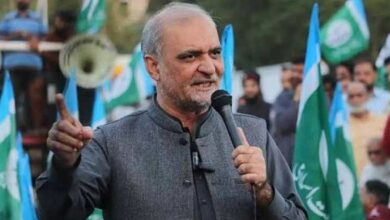




ISLAMABAD/PESHAWAR: Pakistan’s political and institutional landscape is undergoing a significant shift as the government and military leadership pursue what they describe as a unified national agenda focused on economic stability, institutional strength and security. Against this backdrop, Maulana Fazlur Rehman’s increasingly critical stance towards the establishment has sparked debate over whether the JUI-F chief is seeking political concessions or attempting to regain influence in the country’s power structure.
According to sources familiar with the matter, the government and military leadership remain aligned on rejecting political pressure tactics and avoiding concessions that could undermine institutional authority.
A shift towards national priorities
The state’s changing approach reflects lessons from past political and security policies. One major concern is Pakistan’s deteriorating security situation, particularly following the return of the Taliban to power in Afghanistan. The previous policy of negotiations and engagement with the Tehreek-e-Taliban Pakistan (TTP), supported by different political stakeholders, has faced criticism following a rise in militant violence. The current security approach emphasises eliminating terrorism and restoring the state’s authority in Khyber Pakhtunkhwa and Balochistan.
Economic management is another major priority. Projects involving mines, minerals and infrastructure development have increasingly come under institutional scrutiny. Through initiatives such as the Special Investment Facilitation Council (SIFC), the government aims to attract investment, improve transparency and accelerate development projects. Supporters of these reforms argue that resistance to greater institutional oversight often comes from individuals and groups that previously benefited from the existing system.
Pakistan’s foreign policy has also sought to maintain a balance between its longstanding relationship with China and improved engagement with Western and Gulf countries. This approach is being presented as an effort to strengthen diplomatic and economic partnerships while protecting national interests.
The end of political entitlement
Maulana Fazlur Rehman has remained an influential political figure for decades, holding important parliamentary and political positions, including the chairmanship of the Kashmir Committee. However, his reduced influence in the current political environment has raised questions about his future role.
His electoral setbacks in Dera Ismail Khan and other constituencies have further complicated his political position. Meanwhile, questions surrounding the financial affairs and assets of individuals allegedly associated with his family and political network have added another dimension to the situation. Any investigations by relevant institutions, including NAB and FIA, should proceed according to law and established procedures.
Will political negotiations bring concessions?
Sources suggest that Maulana may be seeking relief in accountability matters, greater political representation in Khyber Pakhtunkhwa and an influential constitutional position. However, the government and establishment are reportedly unwilling to accommodate demands that lack electoral or constitutional justification.
Discussions about involving local stakeholders in governance and development initiatives in Balochistan and Khyber Pakhtunkhwa are also being presented as an alternative to traditional political arrangements.
Ultimately, the state’s position appears focused on institutional continuity, accountability and national security. Political negotiations remain part of democratic politics, but they cannot come at the expense of public mandates or the rule of law.
For Maulana Fazlur Rehman, the challenge is to redefine his political relevance in a changing environment. For the state, the stated priority remains clear: national interests must take precedence over individual political ambitions.