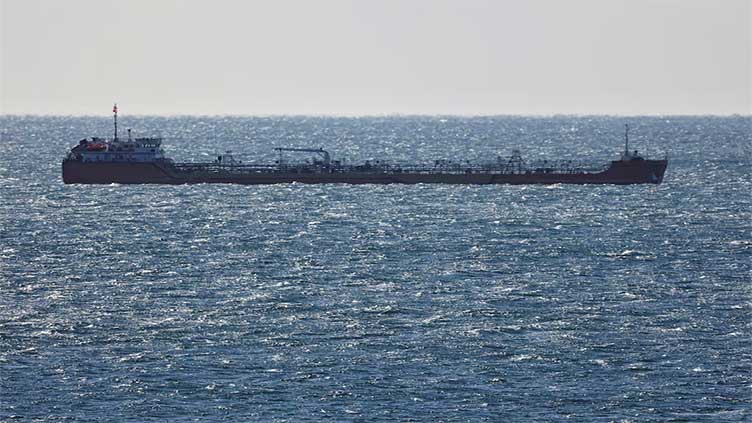

SINGAPORE: Trade for March-loading Russian oil in top buyer Asia has stalled as a wide price gap between buyers and sellers emerged in China after costs for chartering tankers unaffected by US sanctions jumped, according to traders and shipping data.
Washington imposed fresh sanctions on Jan. 10 targeting Russia’s oil supply chain, causing tanker freight rates to soar as some buyers and ports in China and India steered clear of sanctioned ships.
Offers for March Russian ESPO Blend crude exported from the Pacific port of Kozmino jumped to premiums of $3-$5 a barrel to ICE Brent on a delivered ex-ship basis (DES) to China after freight rates for an Aframax tanker on the route surged by several million dollars, three traders familiar with the grade said.
Prior to the January sanctions, robust winter demand and firming prices for rival grades from Iran sent spot premiums for ESPO Blend crude to China rising to close to $2 a barrel, the highest since the start of the Ukraine war in 2022, the aftermath of which had sent discounts to as deep as $6.
In India, Bharat Petroleum Corp Ltd’s finance chief told Reuters last week that it has not received any new offers for March delivery, as it would ordinarily have, and expects the number of cargoes offered for March to drop from January and December.
India typically receives offers for Russian crude during the middle of each month.
Russian crude accounted for 36% of India’s and nearly a fifth of China’s 2024 imports.
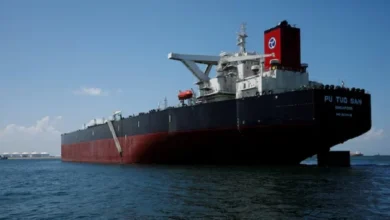
The latest sanctions target tankers that carry about 42% of Russia’s seaborne oil exports, primarily to China, according to analytics firm Kpler, although sanctioned tankers are gradually discharging oil in China and India during a waiver period.
The US clarified to India that tankers loaded with Russian oil must discharge by Feb. 27 under the sanctions, India’s oil secretary Pankaj Jain told reporters on Friday. Payments for oil onboard affected ships must be cleared by March 12, he added.
PORT DELAYS
In China, newly sanctioned tankers face delays offloading oil despite meeting waiver requirements. Three of them discharged Russian ESPO and Sokol crude during Jan. 15-17 while tanker Olia offloaded at Shandong’s Yantai port on Sunday after carrying its ESPO cargo for nearly three weeks, according to LSEG data.
Tanker Huihai Pacific is still waiting to discharge at Tianjin after loading its ESPO cargo on Jan. 5 while Viktor Titov is heading to Qingdao after loading Sokol on Jan. 6, LSEG data showed.
In India, nine newly sanctioned tankers have discharged oil since Jan. 10, with several carrying Urals crude on the way, LSEG data showed.