
KYIV: “Everything will be all right.” Ukrainian soldier Serhii Hryhoriev said this so often during brief phone calls from the front that his wife and two daughters took it to heart. His younger daughter, Oksana, tattooed the phrase on her wrist as a talisman.
Even after Hryhoriev was captured by the Russian army in 2022, his anxious family clung to the belief that he would ultimately be OK. After all, Russia is bound by international law to protect prisoners of war.
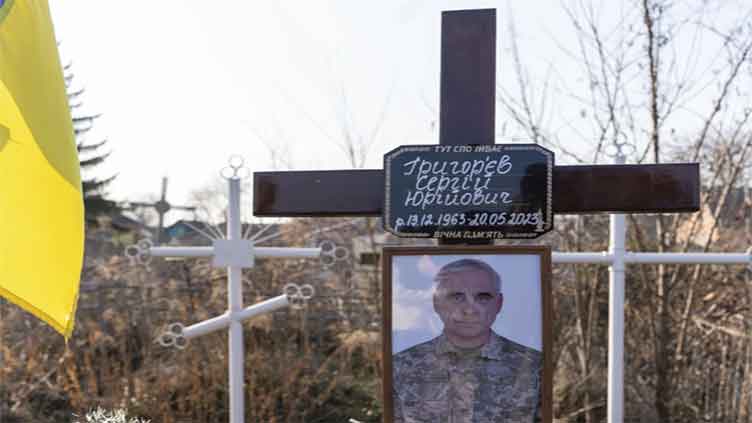
When Hryhoriev finally came home, though, it was in a body bag.
A Russian death certificate said the 59-year-old died of a stroke. But a Ukrainian autopsy and a former POW who was detained with him tell a different story about how he died – one of violence and medical neglect at the hands of his captors.
Hryhoriev is one of more than 200 Ukrainian POWs who have died while imprisoned since Russia’s full-scale invasion three years ago. Abuse inside Russian prisons was likely a contributing factor in many of these deaths, according to officials from human rights groups, the U.N., the Ukrainian government and a Ukrainian medical examiner who has performed dozens of POW autopsies.
The officials say the prison death toll adds to evidence that Russia is systematically brutalizing captured soldiers. They say forensic discrepancies like Hryhoriev’s, and the repatriation of bodies that are mutilated and decomposed, point to an effort to cover up alleged torture, starvation and poor health care at dozens of prisons and detention centers across Russia and occupied Ukraine.
Russian authorities did not respond to requests for comment. They have previously accused Ukraine of mistreating Russian POWs — allegations the U.N. has partially backed up, though it says Ukraine’s violations are far less common and severe than what Russia is accused of.
‘Alive and well’
Hryhoriev joined the Ukrainian army in 2019 after he lost his job as an office worker at a high school. When the war began three years later, he was stationed with other soldiers in Mariupol, an industrial port city that was the site of a fierce battle — and far from his home in the central Poltava region.
On April 10, 2022, Hryhoriev called his family to reassure them that “everything will be all right.” That was the last time they ever spoke to him.
Two days later, a relative of a soldier in Hryhoriev’s unit called to say the men had been captured. After Mariupol fell to Russia, more than 2,000 soldiers defending the city became Russian prisoners.
Soon his family got a call from the International Committee of the Red Cross, which confirmed he was alive and officially registered as a POW, guaranteeing his protection under the Geneva Conventions. “We were told: ‘that means everything is fine … Russia has to return him,’” Hryhoriev’s wife, Halyna, recalled.
In August 2022, she received a letter from him, that addressed her by a nickname. “My dear Halochka,” he wrote. “I am alive and well. Everything will be all right.”