India is in the grip of the horrendous wave of COVID-19 that has seen the country pass 18 million infectious cases creating world record number of daily infections putting the vast country in a spin making the country a virtual graveyard.
India reported 379,257 new infections and 3,645 new deaths and these data showed the highest number of fatalities in a single day since the start of the pandemic. The current position is that the world’s second most populous nation deeply mired in crisis with hospitals and morgues overwhelmed.
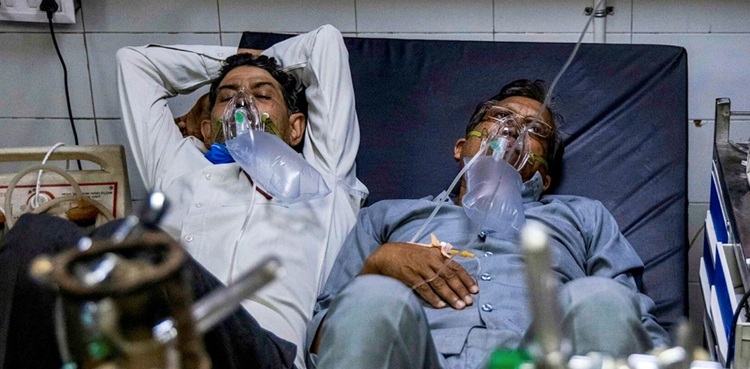
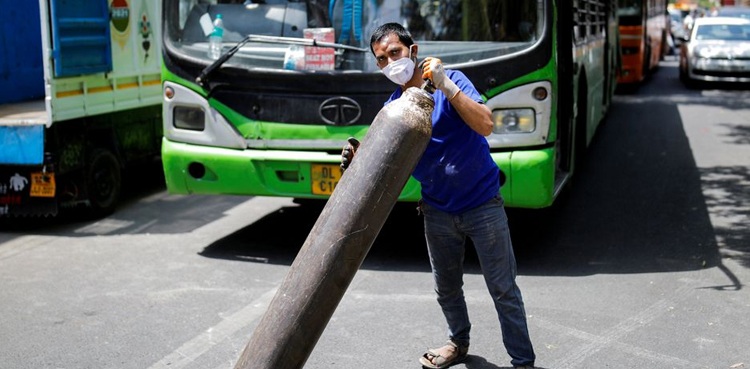
Each day, thousands of Indians search frantically for hospital beds and life-saving oxygen for sick relatives, using social media apps and personal contacts. Hospital beds that become available, especially in ICUs are snapped up in minutes.
Hotels and railway coaches have been converted into critical care facilities to make up for the shortage of hospital beds.
The main issue is the availability of actual figures as the Indian official description is usually not held credible, a problem common to the developing countries. In this context, medical experts believe India’s true COVID-19 numbers may be five to 10 times greater than the official tally. In respect of vaccination, however, it is reported that only about 9% of India’s population of about 1.4 billion has received a dose since the vaccination campaign began in January.
Prime Minister Narendra Modi has been criticised for allowing massive political rallies and religious festivals which have been super-spreader events in recent weeks.
There are loud clamours about the rampant killer virus and people are now asking for a full and honest account of what led more than a billion people into a catastrophe.
It is widely held that the BJP government tremendously miscalculated the situation and it wasted a crucial stretch of time between September and February when COVID-19 cases in India defied global trends, falling sharply throughout the coldest months of the year.
India escaping the wrath of the virus was inexplicable with many attributing this remission due to the hot weather of the country. It was also conjectured that the child immunisation regime given to children was responsible for holding back the virus. It was also mentioned that somehow India achieved the herd immunity and this tantalising idea took hold in India’s highest circles of policymaking, media and science – even a government-commissioned study suggested herd immunity may indeed have been achieved.
This self-effacing assessment proved one of the most fatal miscalculations of the pandemic with devastating consequences. The virus, however, had other designs and it viciously attacked the unsuspecting Indians.
The reasons proffered for this cruel turnaround are the cycle of election that tempted the Modi regime to go full throttle and the large Kumbh Mela that was almost officially supported by the extreme right wing BJP government headed by a yogi in large Indian state of UP.
Now even the senior officials acknowledge that a gross mistake has been committed for which an extremely high price has been paid. The famed Indian author Arundhati Roy termed the situation as a crime against humanity and is exasperated by the self-absorbed and callous actions taken by Modi regime.
It is, however, conceded that an outbreak the size of India’s second wave, apparently fuelled by COVID-19 variants that appear to be more infectious than earlier strains, would have overwhelmed most public health systems let alone the creaky healthcare system of India but public health experts, including some involved in advising the government, say the scale of India’s current outbreak was also partly manmade, the result of a feeling of exceptionalism that emanated from the top of the Indian government and rippled across society, leading to countless administrative and personal decisions that, within a few months, would prove disastrous.
Consequently, India went into full-blown celebratory mode and Modi started giving lectures to many countries about the issue.
Alongside warnings that people should maintain precautions, governments at all levels relaxed restrictions, allowed massive social events to resume and pressed ahead with raucous electioneering, confident the continued circulation of the virus in states such as Kerala or Maharashtra were the dying embers of the virus, not evidence of the sparks that would ignite a second firestorm.
There was a lot of mixed messaging coming through which made people very complacent.
It is reported that given India’s youthful population, COVID-19 death rates were expected to be smaller than elsewhere but official numbers during the first wave were exceptionally low. In Karnataka, for instance, a state with a similar population to France, many studies mentioned that nearly half of the people were infected by August yet the state’s death toll was about 12,000 last year, compared with the more than 60,000 people who died from the virus in France over the same period.