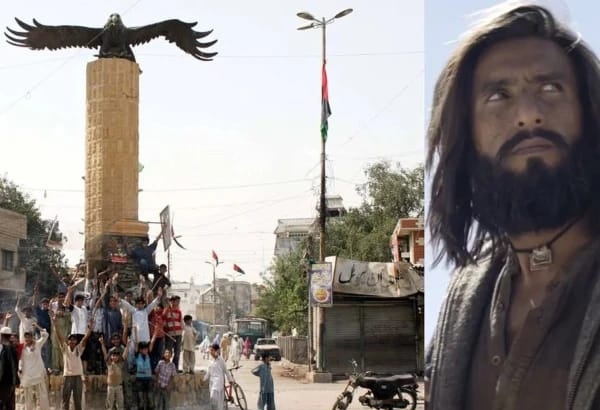

Because movies reach millions of people worldwide, this kind of storytelling is a potent tool for influencing public opinion. When complicated political and historical topics are presented in an emotive and simplified manner, viewers might take these depictions at face value.
While Indian security forces are portrayed as perfect peacekeepers, war-based and spy movies usually portray Pakistan as a threat, frequently associating it with terrorism or aggression. Perceptions are shaped by this recurring imagery both domestically in India and abroad.
The rewriting or selective presentation of history is another obvious trend. Uncomfortable facts are disregarded while some events are emphasized in a way that promotes nationalist ideology. Sometimes depicting Muslims as villains or internal enemies exacerbates communal tensions, which can widen social divides and foster intolerance. These narratives frequently fit in with the larger political climate, which heavily promotes nationalism for ideological and electoral reasons.
Additionally, commercial success is crucial. Movies about war, patriotism, and animosity toward alleged adversaries frequently do well at the box office. This incentivizes filmmakers to keep creating content of a similar nature, even at the expense of artistic depth, accuracy, or balance. As a result, movies cease to be thoughtful narratives and instead become a tool for emotional mobilization.
A self-assured and autonomous film industry can support the presentation of different viewpoints, encourage discussion, and more accurately depict reality. Cinema has the ability to foster understanding, but when it is misused, it can also exacerbate conflict and mistrust.