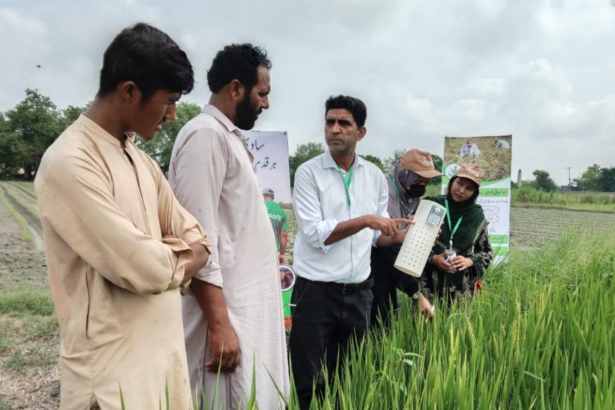

SAWiE Ecosystems Private Ltd and AgriCapture enter a strategic partnership to reduce methane emissions from rice cultivation in Pakistan while unlocking new income streams for smallholder farmers through high-integrity carbon credits in the Voluntary Carbon Market (VCM).
As part of the Global Rice Methane initiative across South Asia, the partnership combines on-the-ground farmer engagement with robust agricultural data systems to scale climate-smart practices such as Alternate Wetting and Drying (AWD). Carbon credits generated from the 2026 growing season will be developed under Verra’s VM51 methodology, ensuring measurable, transparent, and high-integrity methane reductions.
Pakistan cultivates rice on approximately 3.9 million hectares, ranking among the world’s top 10 producers and contributing around 2% of global output. However, flooded rice systems emit an estimated 7-8 million tonnes of CO₂e annually in Pakistan alone. Transitioning to improved water management can significantly reduce these emissions while improving productivity and resilience.
The partnership will train smallholder farmers, especially women, to adopt sustainable rice cultivation practices and generate verified methane-reduction carbon credits. This creates additional income streams while strengthening environmental integrity and market transparency. From paddy fields to global plates, sustainable rice and verified carbon credits can now move together – benefiting farmers, markets, and the climate.
Mr. Fritz Boehmler, CEO of SAWiE Ecosystems, stated: “We are excited to work with AgriCapture to harness the potential of methane reduction through Alternate Wetting and Drying. This will create additional incentives for farmers while enabling sustainable and traceable rice production.”
Mr. Tyler Hull, CEO of AgriCapture, stated “We’re excited to combine AgriCapture’s expertise in developing and commercializing high-integrity carbon credits with SAWiE’s on-the-ground farmer engagement and local leadership. Together, we can scale credible methane reductions in rice while connecting farmers to global carbon markets.”
Ms. Nosheen Ramzan, Chairperson of SAWiE, added “By aligning farmers, rice millers, exporters, financial institutions, and climate markets, we aim to accelerate the shift from conventional flooded systems to resilient, climate-smart rice landscapes across Pakistan.”