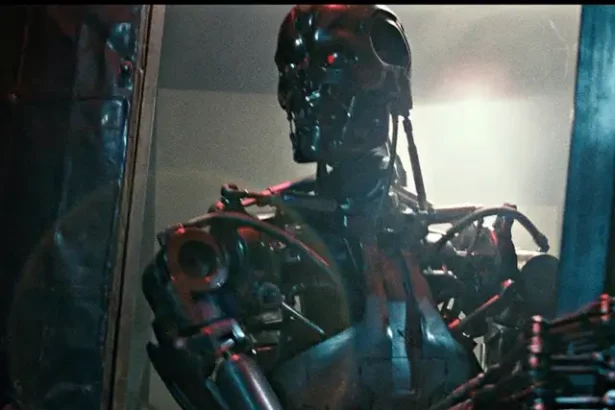

Beijing has issued a stern warning to the United States regarding its increasingly rapid development and application of artificial intelligence technology in military affairs. The stern warning issued by Beijing stated that such rapid development and application of AI technology in military affairs could lead to a bleak future similar to the science fiction horror depicted in the famous movie Terminator.

During a briefing session, Jiang Bin, who is a spokesperson for China’s Ministry of National Defense, stated that “If left unchecked, military AI development—especially in matters related to life and death—poses a grave risk to ethical norms and accountability on the battlefield. Such a trend ‘not only erodes ethical restraints and accountability in wars, but also risks technological runaway.’ The bleak future described in the 1984 science fiction horror movie Terminator, where machines are used to wage war on humanity through AI technology, could be a reality in the future if such a trend is allowed to continue unabated,” he said.
The stern warning issued by Beijing to the US regarding its rapid development and application of AI technology in military affairs has come at a time when there is increasingly growing friction between the US military and AI technology developers. The US military has approved Elon Musk’s Grok AI technology for classified use while blacklisting Anthropic for its refusal to allow its Claude technology to be used for mass surveillance or to be used to make weapons. The friction between the US military and AI technology developers has been further exacerbated by Defense Secretary Pete Hegseth’s announcement that he has blacklisted Anthropic technology as a “supply chain risk,” ordering federal agencies to cease using its technology.
Beijing’s concerns are as practical as they are theoretical. China has argued that over-reliance on AI could undermine national sovereignty as well as global stability by empowering machines to make important strategic decisions without adequate human intervention. China has urged that there is a need to establish a multilateral framework that controls military AI use, emphasizing that humans must remain at the helm of affairs when it comes to military technology use.

The debate reflects a widening split within the world as it grapples with the extent to which it should allow AI to become a part of its military operations. While some see it as a means of sharpening decision-making capabilities as well as enhancing military effectiveness, others are concerned about unforeseen consequences that could result from it, as well as the possibility of an arms race that could result from it before diplomacy is able to act as a calming influence.