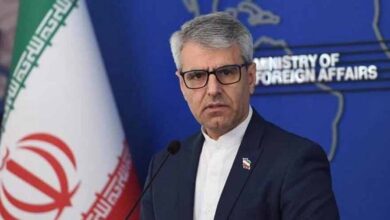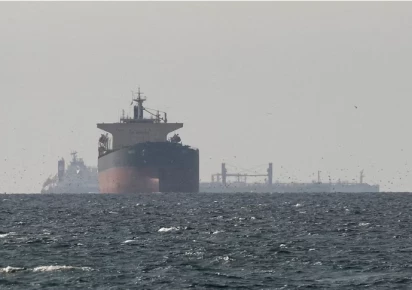

Iran has declared that the Strait of Hormuz cannot be used by any country to launch attacks on its territory. The statement came from Iranian Foreign Ministry spokesperson Esmaeil Baghaei during a press briefing in Tehran. He said that Iran’s armed forces control the passage and that ships will only transit under strict security conditions due to threats from the US and Israel.
Baghaei stressed that Iran has the right to take all necessary measures to safeguard its national security. He accused the US and Israel of creating instability in the region and said Iran has historically ensured safe passage through the strait. The spokesperson added that Iran never trusted the US during talks and approached negotiations with caution and full awareness.
The US has sought support from its allies to reopen the Strait of Hormuz. About 20% of the world’s oil passes through this vital waterway. US President Donald Trump demanded that allies provide military assistance to secure the strait. He also called on China to participate, noting that it relies heavily on Gulf oil. Trump said he might delay his meeting with Chinese President Xi Jinping if Beijing does not help.
However, Japan and Australia rejected Trump’s request. Japanese Prime Minister Sanae Takaichi said the country cannot send naval vessels due to constitutional limits. Australia confirmed it would not dispatch ships either. Both countries rely heavily on Gulf oil but will not engage militarily.
The UK, under Prime Minister Keir Starmer, is working with allies on a collective plan to restore freedom of navigation through the strait. EU foreign ministers are also discussing bolstering naval presence, but no final decision has been made. South Korea has said it will review any request carefully.
The US-Israel-Iran conflict, now in its third week, has disrupted global energy and transport networks. Brent crude prices have risen above $104 per barrel. Air travel across the Middle East is severely affected. Airports in Dubai, Doha, and Abu Dhabi are operating under restrictions. Vietnam has warned its airlines to prepare for flight reductions after China and Thailand halted jet fuel exports due to the conflict.
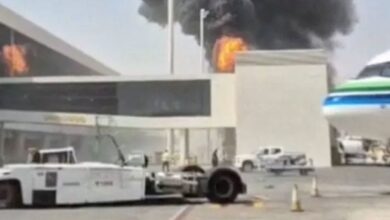
Iran continues to defend its territory and critical infrastructure. Drone attacks and missile strikes have targeted Gulf states and oil facilities, though no casualties have been widely reported. Israeli forces have also conducted operations in southern Lebanon and Gaza, targeting Iran-backed groups such as Hezbollah and Hamas.
On Monday, a US-Israeli strike hit the Shahid Khomeini Boys’ School in Khomein city. Photos show significant damage to the building. No casualties were reported, though nearby homes were affected. The Iranian Red Crescent shared images of the damage, highlighting the humanitarian consequences of the conflict.
Despite repeated US claims of neutralizing Iran’s military capabilities, Tehran insists it remains ready to defend itself for as long as necessary. Iranian Foreign Minister Abbas Araghchi reiterated that Iran has never requested a ceasefire or negotiations. He also said Israel’s attacks on oil depots constitute ecocide under international law due to long-term environmental and health impacts.