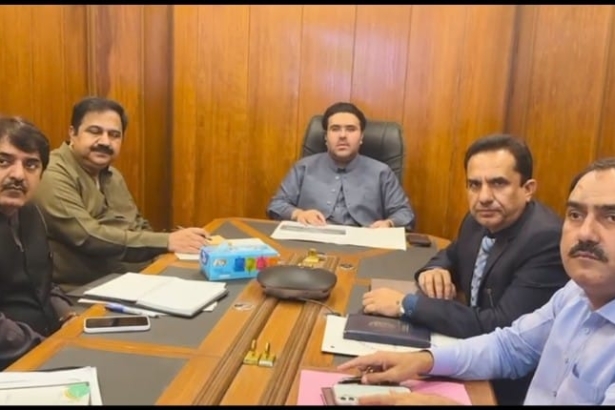

KARACHI: In a high-level and comprehensive review meeting chaired by the Provincial Minister for Food, Makhdoom Mahboob-uz-Zaman, the Sindh government has officially finalized an extensive and multifaceted strategy for the upcoming wheat procurement season. The session served as a critical assembly of the province’s top agricultural and food leadership, bringing together the Secretary of Food, the Director of Food, and dedicated district officers from every corner of the province. This gathering was not merely a routine briefing but a vital platform to outline the complex logistical, administrative, and financial frameworks necessary to stabilize the provincial agricultural sector. The overarching goal is to ensure long-term food security for millions of citizens while creating a protective shield for the local economy against unpredictable market forces.
Minister Makhdoom Mahboob-uz-Zaman took the opportunity to highlight the province’s exceptionally strong agricultural performance this year, projecting an impressive total wheat yield of approximately 4.5 million metric tons for the current harvesting season. This expected bumper crop is viewed as a direct reflection of the successful implementation of targeted agricultural subsidies, improved irrigation management, and the adoption of modern farming practices by growers across Sindh. To effectively manage this significant surplus and maintain essential market stability, the provincial government has formally committed to purchasing 1 million metric tons of wheat directly from local growers. This strategic intervention is designed to prevent a glut in the open market, which could otherwise lead to a devastating crash in prices for the hardworking farming community.
To support this massive operation, a monumental financial injection of 87.5 billion PKR has been officially allocated to fund the procurement drive. This substantial budgetary commitment underscores the government’s unwavering dedication to providing a fair and sustainable support price to farmers, effectively protecting them from the volatile price fluctuations that often follow a high-yield harvest. The Minister emphasized during the meeting that this investment is not just a seasonal expenditure but a cornerstone of the province’s broader economic stability plan for the fiscal year. By injecting liquidity directly into the rural economy, the government hopes to stimulate secondary markets and ensure that the agricultural backbone of the province remains financially resilient.
In an effort to facilitate the smooth and efficient collection of grain, the Food Department has meticulously established a sprawling network of 109 procurement centers strategically located across all districts of Sindh. These centers have been placed with geographical precision to minimize travel distances and transportation costs for farmers, particularly those operating in remote or underserved rural areas. Each center has been issued strict mandates to maintain the highest possible standards of quality control and weight accuracy. Furthermore, these hubs are tasked with ensuring that the procurement process remains transparent, accessible, and organized, preventing the chaotic scenes that have occasionally marred previous seasons.
In what is being hailed as a landmark shift toward the modernization of governance, the Minister issued a direct mandate that all payments to farmers must be processed within a strict and non-negotiable 48-hour window. This rapid financial turnaround is made possible through the innovative integration of the Hari Card system and the formal banking network. By transitioning to this digital-first approach and bypassing traditional, cumbersome cash-based transactions, the government aims to systematically eliminate the influence of exploitative middlemen and “commission agents.” The ultimate objective is to ensure that the full, undiluted financial benefit of the support price reaches the bank accounts of the actual cultivators who toil in the fields.
Furthering the government’s commitment to supporting small-scale and marginalized growers, a specialized “Bardana” (gunny bag) incentive scheme has been introduced as part of the procurement package. Under this detailed plan, the government will provide an additional payment of 60 PKR per 50kg bag of wheat delivered to the centers. This financial provision is specifically intended to offset the rising costs of packaging materials and initial handling expenses, providing much-needed secondary financial relief to the agricultural community at the point of sale. By subsidizing these logistical costs, the government is ensuring that the net profit for the farmer remains as high as possible, encouraging participation in the official procurement program.
During the proceedings, Minister Makhdoom Mahboob-uz-Zaman adopted a firm stance on administrative integrity, issuing a stern and final warning against any form of malpractice or corruption. He stated in no uncertain terms that theft, embezzlement, and the adulteration of wheat stocks would be met with zero tolerance. The Minister made it clear that any official, regardless of rank or station, found complicit in such activities or negligence would face severe legal consequences and immediate disciplinary action. He reminded the assembly that the integrity of the provincial food reserve is not just a matter of departmental policy but a critical issue of national security and public trust.
To bolster transparency and accountability, a rigorous and multi-layered monitoring system has been activated across the province. All field formations and center coordinators are now strictly required to submit detailed daily reports to the central Food Department headquarters in Karachi. This proactive oversight mechanism is designed to identify and resolve logistical bottlenecks, such as bag shortages or storage capacity issues, in real-time. By maintaining a constant flow of data, the ministry intends to ensure that every procurement center is operating at peak efficiency throughout the high-intensity weeks of the harvesting season, leaving no room for operational lapses.
The Minister also broke new ground by mandating the immediate implementation of a sophisticated digital inventory system for all provincial wheat stocks. By moving away from antiquated manual record-keeping and ledger-based systems, the Food Department aims to achieve 100% real-time visibility of grain levels across all 109 centers and various government warehouses. This digital transformation is expected to significantly reduce the risk of stock mismanagement, “ghost” inventories, and unauthorized grain movement. Moreover, the data collected through this system will provide the provincial government with accurate, high-fidelity information to inform future food policy, export decisions, and emergency reserve planning.
A major technical focus of the review session was the timely reconciliation of wheat delivery and inter-district transportation. The Minister ordered all relevant officers to ensure that every single metric ton of grain moved from procurement centers to permanent government warehouses is electronically tracked and accounted for immediately upon arrival. This directive is specifically aimed at preventing the “disappearance” of stocks during transit—a systemic challenge that has historically plagued large-scale agricultural procurement efforts in the region. By tightening the chain of custody through mandatory reconciliation, the department aims to seal every possible leak in the distribution pipe.
The high-level meeting concluded with a passionate call for unified, synchronized action among all stakeholders to safeguard the collective interests of both the producers and the end consumers. The Minister reiterated that by combining significant financial backing with transformative digital reforms—such as the Hari Card, digital inventory tracking, and expedited banking—the Sindh government is positioning itself to lead the country in agricultural governance. The province is now set to embark on what is expected to be one of the most efficient, transparent, and farmer-friendly wheat procurement cycles in its history, setting a new benchmark for public sector grain management.