
Sindh Chief Minister Syed Murad Ali Shah on Monday chaired a high-level meeting to review the ongoing wheat procurement campaign, announcing the removal of the wheat sale limit in a major decision aimed at facilitating small farmers and accelerating procurement.
The meeting was attended by provincial ministers Sharjeel Memon and Makhdoom Mehboob-uz-Zaman, Chief Secretary Asif Haider Shah, Principal Secretary Agha Wasif, Secretary Agriculture Zaman Narejo, Secretary Food Abbas Naik, representatives of Sindh Bank, and other senior officials.
Addressing the meeting, the chief minister said that the condition restricting small farmers to selling five sacks per acre had been abolished, allowing them to sell wheat to the government without any quantity limitations. He termed the move a significant relief measure that would help meet procurement targets and support growers.
Food Minister Mehboob-uz-Zaman briefed the meeting that the wheat procurement campaign began on April 1, with a target of procuring one million metric tons. The support price for this year has been fixed at Rs3,500 per 40 kilograms.
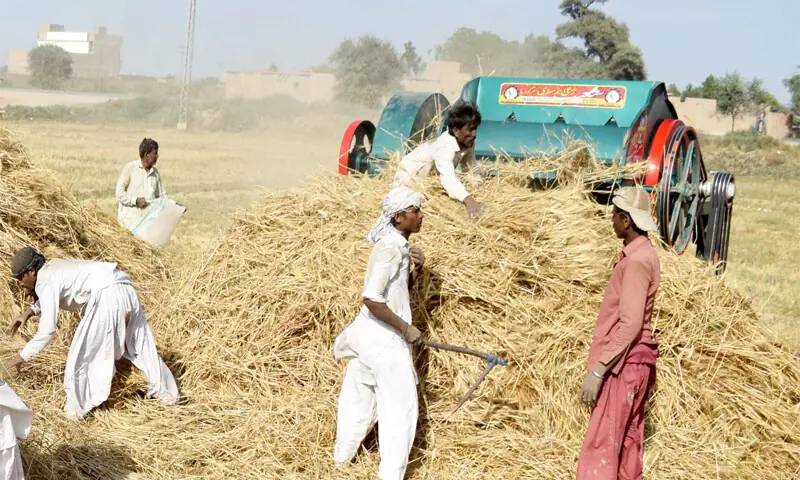
He said that over 332,000 wheat farmers are cultivating the crop on approximately 1.94 million acres across the province. However, only 8,958 metric tons of wheat have been procured so far, attributing the shortfall largely to the earlier restriction imposed on small farmers.
Taking notice, the chief minister ordered the immediate removal of the limit and directed authorities to intensify procurement efforts across all districts.
Murad Ali Shah also instructed the Food Department to ensure prompt payments to farmers, emphasizing that timely disbursement is crucial for maintaining growers’ confidence. Officials informed the meeting that payments are being transferred to farmers through Sindh Bank within 24 hours, with Rs198.3 million already distributed.
Expressing satisfaction over the improved payment system, the chief minister directed that the process remain transparent and efficient. He urged all eligible farmers to sell their wheat at government procurement centres, noting that such participation would also make them eligible for future subsidies.
The chief minister ordered stricter monitoring in districts with low procurement levels and directed district administrations to accelerate the campaign. Assistant commissioners, mukhtiarkars, and agriculture officers have been tasked with regularly visiting procurement centres and maintaining close contact with farmers.
Officials also informed the meeting that a control room has been established to address complaints, while 12 additional procurement centres have been set up to facilitate growers. The chief minister directed that all inactive centres be made operational immediately.
Reiterating a zero-tolerance policy for irregularities, Murad Ali Shah stressed that the entire procurement process must be farmer-friendly, transparent, and effective.
He said the wheat procurement campaign is vital not only for ensuring food security but also for providing sustained support to farmers, assuring that the government will continue to stand by the agricultural community.