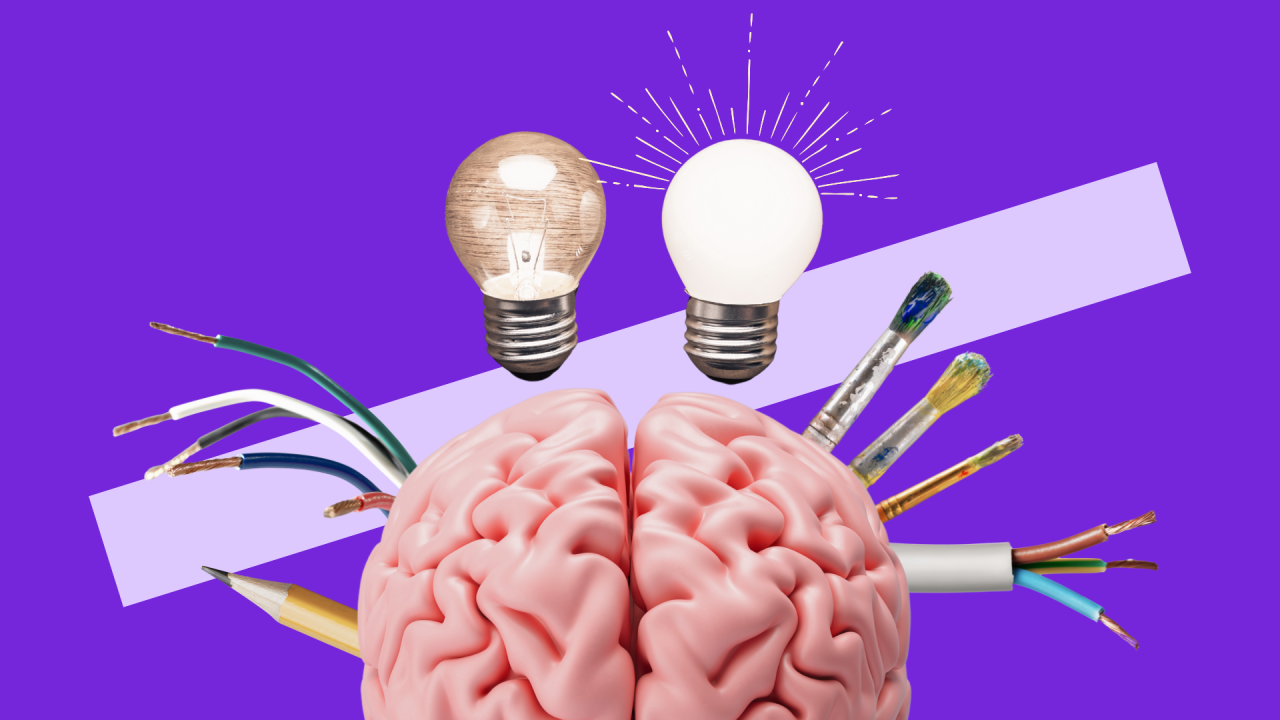

Every year on 21 April, the global community observes World Creativity and Innovation Day, a United Nations initiative dedicated to recognizing the transformative power of human imagination and innovation. Established by the UN General Assembly in 2017, the day highlights how creative thinking and innovative approaches can address some of the most pressing challenges facing humanity today. At its core, World Creativity and Innovation Day seeks to raise awareness of the role of creativity and innovation in all aspects of human development.
Although creativity has always been central to human progress, the formal recognition of this day is relatively recent. The UN officially designated 21 April as World Creativity and Innovation Day, with the first official celebration taking place in 2018. The date also marks the culmination of World Creativity and Innovation Week (15-21 April), a global initiative encouraging individuals, institutions, and communities to explore new ideas and challenge conventional thinking.
Creativity is not limited to the arts, it spans science, governance, economics, and social development. It involves generating new ideas, while innovation focuses on implementing those ideas to create value. Together, they form the foundation for solving complex global problems such as poverty, inequality, climate change, and food insecurity.
The observance is closely linked with the 2030 Agenda for Sustainable Development and its 17 Sustainable Development Goals (SDGs). Creativity and innovation are seen as essential tools to achieve these goals because they encourage new solutions to long-standing global challenges, promote inclusive economic growth and job creation, enable technological advancement and entrepreneurship, and foster social cohesion and cultural understanding. The creative economy itself is a rapidly growing sector, generating employment and income while contributing to cultural diversity and identity. It reflects the idea that human creativity has become a key form of wealth in the 21st century.
In an increasingly complex and interconnected world, traditional approaches often fall short. Creativity and innovation provide a way forward by reframing problems through new perspectives, encouraging interdisciplinary thinking, supporting adaptive and resilient systems, and empowering individuals and communities to participate in development. From renewable energy technologies to digital governance systems and inclusive legal reforms, innovation is reshaping how societies function and evolve.
While creativity contributes significantly to economic growth, its value is not purely financial. It also plays a vital role in building identity and cultural expression, promoting dialogue between communities, enhancing education and critical thinking, strengthening peace and social cohesion. In this sense, creativity is both a development tool and a human right, enabling individuals to express themselves and contribute meaningfully to society.
World Creativity and Innovation Day is marked globally through innovation forums and policy dialogues, academic and research conferences, creative exhibitions and cultural events, and entrepreneurship and technology showcases. At an individual level, it encourages people to step outside routine thinking, whether by learning a new skill, solving a problem creatively, or contributing ideas to improve their communities.
There is a film called ‘The Boy Who Harnessed the Wind’, based on the real-life journey of William Kamkwamba. The film follows William, a resourceful boy from rural Malawi whose education is cut short due to poverty. Amid a devastating drought and famine, he refuses to give up. Using curiosity, self-learning from a library, and scraps from a junkyard, he designs and builds a windmill to generate electricity and pump water, ultimately saving his family and village from starvation. This highlights how creative thinking and innovation can solve global challenges. William’s story is a powerful embodiment of this principle. Despite limited resources, lack of formal education, and social barriers, he applies creativity, scientific curiosity, and practical innovation to address food insecurity and climate-induced crisis. Also, innovation is not confined to laboratories or institutions—it can emerge from necessity, resilience, and imagination, even in the most marginalized communities.
For Pakistan, the message of this day is not merely aspirational but urgently necessary. Pakistan faces interconnected challenges, climate change, water scarcity, food insecurity, unemployment, and governance gaps, that cannot be resolved through conventional approaches alone. What is required is a shift toward creative problem-solving and locally driven innovation, particularly at the grassroots level. As illustrated by The Boy Who Harnessed the Wind, innovation can emerge even in resource-constrained environments when curiosity, resilience, and practical knowledge are enabled. Pakistan must therefore invest in education systems that promote critical thinking, support youth-led entrepreneurship, and integrate science, technology, and legal innovation into development frameworks. Equally, governance and legal systems must create enabling spaces where new ideas, whether in renewable energy, digital governance, or social justice, can be tested and scaled. In essence, for Pakistan to achieve sustainable development and social equity, creativity must be treated not as an abstract ideal but as a core national development strategy.
World Creativity and Innovation Day is more than a symbolic observance, it is a call to action. It reminds us that the challenges of the modern world cannot be addressed through conventional thinking alone. By fostering creativity and enabling innovation, societies can unlock new pathways toward sustainable development, justice, and human well-being. In a world defined by rapid change, the ability to think differently is no longer optional, it is essential.