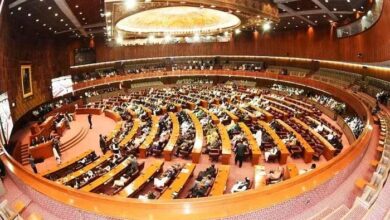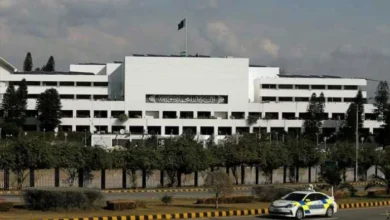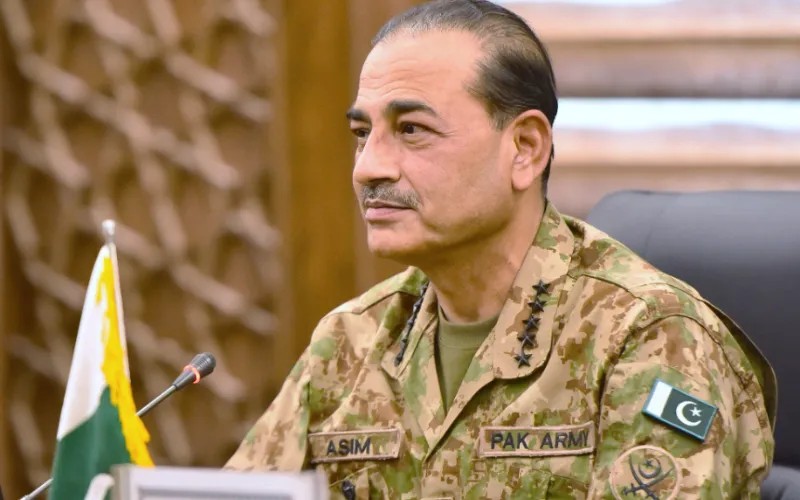

In an era shaped by uncertainty and shifting alliances, diplomacy often unfolds not in grand public arenas but in composed, carefully curated rooms, where every gesture signals intent and every word carries weight. The image of CDF Syed Asim Munir welcoming and receiving Iranian Foreign Minister for second round of peace talks at Islamabad reflects such a moment, composed yet consequential. At the center of this quiet engagement stands Syed Asim Munir, whose evolving role has begun to transcend traditional military boundaries, placing him firmly within the domain of strategic diplomacy and regional peacebuilding.
For Pakistan, a country long positioned at the intersection of competing geopolitical interests, the pursuit of peace is not an abstract ideal, it is a necessity. The presence of Iran in this dialogue underscores the gravity of the moment. Iran’s regional weight, combined with its complex relationships with global and regional actors, makes it a pivotal partner in any meaningful effort toward stability. Bringing such stakeholders together requires more than protocol, it requires credibility, experience, and a deep understanding of conflict dynamics, qualities that define Asim Munir’s professional journey.
To fully appreciate his current diplomatic posture, one must look back at the phases of his career shaped by intense internal and external security challenges. Before assuming the role of Chief of Army Staff, Asim Munir held key intelligence and command positions, including leadership within Pakistan’s military intelligence apparatus. These roles placed him at the heart of some of the country’s most sensitive and high pressure situations, where decisions were rarely binary and outcomes were often uncertain.
During years marked by heightened militancy and internal security threats, Pakistan faced a complex web of challenges, ranging from insurgent networks to crossborder tensions. In such an environment, traditional force based approaches often proved insufficient on their own. It was here that Munir’s approach began to take shape, one that combined operational precision with strategic restraint. Rather than relying solely on kinetic responses, there was an increasing emphasis on intelligence led operations, targeted interventions, and minimizing collateral impact. This balance between strength and restraint became a defining feature of his leadership style.
His tenure in intelligence roles, particularly at a time when regional volatility was at its peak, required not just tactical awareness but also foresight. Intelligence leadership is less about immediate victories and more about anticipating threats before they materialize. It demands the ability to read patterns, interpret intentions, and act decisively under pressure. In these roles, Asim Munir developed a reputation for disciplined analysis and measured decision making, traits that are now visible in his diplomatic engagements.
Equally significant was his experience along Pakistan’s sensitive border regions, where tensions have historically fluctuated between uneasy calm and sudden escalation. Managing such environments requires more than military readiness, it requires constant communication channels, de escalation mechanisms, and an understanding of the broader political context. Munir’s exposure to these dynamics appears to have reinforced his belief in controlled engagement, ensuring that even in moments of confrontation, the door to dialogue remains open.
This background becomes particularly relevant when examining his current efforts to facilitate dialogue between regional actors. The ability to bring opposing sides to the table is not merely a function of authority, it is rooted in trust. Leaders who have navigated crises, managed conflicts, and demonstrated restraint in times of pressure often command a level of credibility that enables them to act as intermediaries.
In the present context, where global and regional tensions continue to rise, such credibility is invaluable. The confidence captured at the airport while receiving Iranian Foreign Minister is emblematic of a broader effort to shift narratives, from confrontation to cooperation. It reflects an understanding that sustainable peace cannot be imposed, it must be negotiated, nurtured, and continuously reinforced.
What makes this effort particularly noteworthy is its emphasis on timing. In periods of heightened conflict, initiatives for dialogue are often viewed with skepticism. Yet, it is precisely during such times that diplomacy holds the greatest potential. By engaging stakeholders when tensions are high, leaders can prevent crises from escalating into irreversible conflicts. This proactive approach aligns closely with Munir’s professional background, where anticipation and prevention were often as critical as response.
Another dimension of his leadership is the recognition that modern conflicts are no longer confined to traditional battlefields. Economic pressures, information warfare, and regional alliances all play a role in shaping outcomes. Addressing these multifaceted challenges requires a comprehensive strategy, one that integrates military insight with diplomatic engagement. In this regard, Munir’s transition into a role that actively supports dialogue reflects an adaptive leadership style, responsive to the evolving nature of global politics.
For Pakistan, such initiatives also contribute to redefining its international image. Historically viewed through the lens of security challenges, the country is increasingly positioning itself as a facilitator of dialogue. This shift carries significant implications,not only for regional stability but also for economic cooperation and global partnerships. Peace, after all, is a prerequisite for progress.
However, the road to sustainable peace remains complex. Deep seated mistrust, competing national interests, and external influences continue to pose challenges. Dialogue alone cannot resolve these issues overnight. It must be accompanied by consistent efforts, confidence building measures, and a willingness from all parties to engage in good faith. This is where leadership becomes critical, not just in initiating conversations but in sustaining them over time.
The images, therefore, are more than snapshots, these are reflections of an ongoing process. It captures a moment where experience meets opportunity, where a leader shaped by years of managing conflict steps into a role aimed at preventing it. It highlights the transition from reactive strategies to proactive diplomacy.
In many ways, Asim Munir’s journey mirrors the broader evolution of modern leadership in conflict prone regions. The emphasis is no longer solely on demonstrating power but on exercising it responsibly. Strength is measured not just by the ability to confront adversaries but by the capacity to engage them constructively. That’s how People of Pakistan are expecting from him at home in political situations as well.
As the region continues to navigate uncertainty, efforts like these offer a sense of cautious optimism. They remind us that even in the most challenging environments, there remains space for dialogue, understanding, and eventual reconciliation. The pursuit of peace is rarely linear, but it is always necessary.
In choosing to prioritize engagement over escalation, Syed Asim Munir reinforces a critical lesson of our time, that the most enduring victories are not won on battlefields, but across tables, where words replace weapons, and vision shapes the future.