
Vote counting began Monday across five Indian states and territories amid heavy security, with national attention firmly fixed on the fiercely contested battleground of West Bengal. The outcome is being seen as a pivotal moment for Prime Minister Narendra Modi and his Bharatiya Janata Party (BJP) as they seek to expand their footprint in opposition-ruled regions.
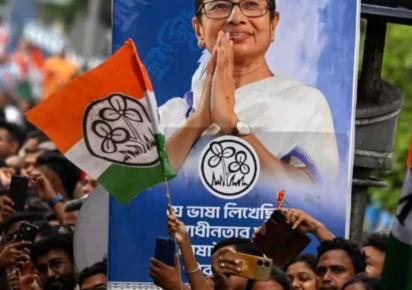
In West Bengal, a politically charged state of nearly 100 million people, the BJP mounted an aggressive campaign to unseat Chief Minister Mamata Banerjee, who has led the state since 2011 under the banner of the All India Trinamool Congress (TMC). The contest has evolved into a symbolic clash between Modi’s Hindu nationalist party and Banerjee’s regional powerhouse, with both sides projecting confidence as ballots are tallied.
Preliminary exit polls suggested a narrow advantage for the BJP, though such surveys in India have often produced unreliable forecasts. Political observers say the results could significantly alter the balance of power, not only within the state but also in national politics, as Modi eyes stronger momentum ahead of future electoral battles.
The campaign season was overshadowed by controversy after millions of names were removed from voter rolls in West Bengal. Authorities described the move as a routine effort to eliminate ineligible voters, but critics argued it disproportionately affected marginalized and minority communities, intensifying political tensions in an already volatile environment.
Banerjee expressed confidence before counting began, insisting that her party would retain control despite the BJP’s intense push. Meanwhile, senior BJP leaders declared the election a referendum on the state government, claiming that voters were seeking change after more than a decade of TMC rule.
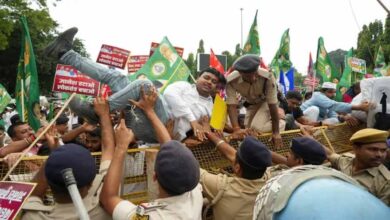
Security forces were deployed in large numbers across sensitive districts, reflecting concerns over potential unrest. Previous elections in West Bengal have been marred by sporadic violence, raising the stakes further as counting progresses.
Beyond West Bengal, ballots are also being counted in Tamil Nadu, Assam, Kerala and the union territory of Puducherry. In Tamil Nadu, the ruling Dravida Munnetra Kazhagam under Chief Minister M.K. Stalin is widely expected to secure another term. In Assam, the BJP is projected to retain power, while in Puducherry it remains part of the governing coalition.
Kerala presents another closely watched contest, where exit polls indicate that the Congress-led alliance could unseat the incumbent Communist government in a tightly fought race.
The broader implications of these state elections extend far beyond regional politics. A strong performance would bolster Modi’s position at a time when his administration faces mounting economic pressures, including persistent unemployment and sensitive foreign policy negotiations such as a pending trade deal with the United States.
As results unfold, the political direction of several key regions — and potentially the trajectory of India’s national leadership — hangs in the balance.