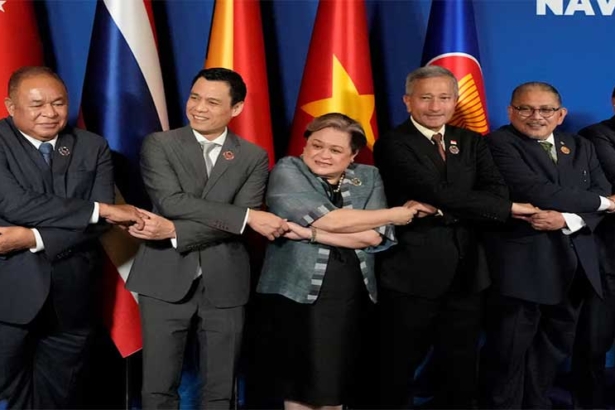

Leaders of the Association of Southeast Asian Nations have begun a major summit in Cebu, with urgent discussions focused on rising energy insecurity, food supply risks, and the wider impact of global conflicts on Southeast Asia.
The meeting brings together heads of state, foreign ministers, and economic officials from the 11-member bloc, representing nearly 700 million people. The gathering comes at a time when instability in the Middle East has disrupted global oil flows and increased pressure on import-dependent Asian economies.
Officials warned that conflicts outside the region are now directly affecting ASEAN countries, especially through rising fuel costs, disrupted trade routes, and strained supply chains. Philippine Foreign Affairs Secretary Ma. Theresa Lazaro said the situation shows that “events beyond our region can have immediate and profound effects” on Southeast Asia.
She called for stronger coordination mechanisms and faster crisis response systems to deal with future shocks, especially in energy and food security.
A key focus of the summit is the growing energy crisis triggered by geopolitical tensions, which has forced several ASEAN members to explore alternative supply arrangements. Discussions are underway on a proposed regional oil-sharing framework aimed at improving resilience during supply disruptions.
Analysts say the summit is expected to test the Philippines’ leadership as chair, particularly in balancing urgent economic concerns with long-standing regional issues such as the crisis in Myanmar and maritime tensions in the South China Sea.
Experts note that while ASEAN routinely issues cooperative statements, it has historically struggled to deliver binding or coordinated action during crises. This year’s energy shock, however, may force member states to move beyond symbolic commitments.
Observers also pointed to shifting geopolitical dynamics in the region. With the United States preoccupied by multiple global crises, China is increasingly seen by some analysts as expanding its influence in Southeast Asia through economic and energy partnerships.
Myanmar’s political situation remains another sensitive topic. The bloc continues to face divisions over engagement with its military-led administration, which has made limited reconciliation efforts but still faces resistance from several ASEAN members.
At the same time, leaders are expected to renew discussions on a long-delayed code of conduct with Beijing over competing claims in the South China Sea, an issue that continues to strain relations among regional powers.