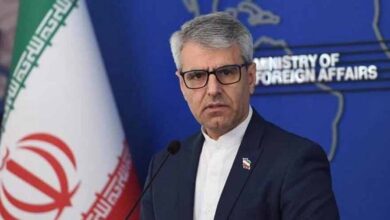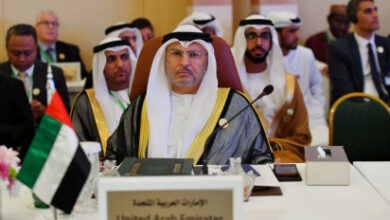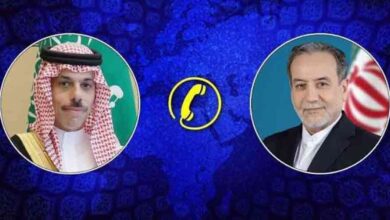

The Kingdom of Saudi Arabia has floated a non-aggression pact between Iran and Middle Eastern states based on a 1970s agreement that eased tensions in Europe during the Cold War, The Financial Times reported.
The Saudi Arabian efforts have gained the support of European capitals and EU institutions, but it’s unclear if Israel and the US would support it.
The UAE has taken a hawkish position on Iran and moved substantially closer to Israel since the US-Israeli war on Iran started.
Saudi Arabia is modelling its framework on the 1975 Helsinki Accords, which were signed by the Soviet Union and its allies, the US, and European states. The agreement secured a common acceptance of Europe’s post-WWII borders. Signatories also agreed to respect human rights and cooperate on economic, scientific, and humanitarian issues.
An Arab diplomat told The Financial Times that a similar agreement for the Middle East would be welcomed “by most Arab and Muslim states, as well as by Iran”. The latter has called on Gulf states to close US military bases in the region.
Israel would likely oppose any formal agreement that seeks to reduce tensions between Arab states and Iran. It’s also unclear whether the US would support the move.
It’s unclear how the agreement would handle sensitive issues like the Strait of Hormuz. Tehran wants to exert its influence over the waterway and has imposed its own system for navigating the crucial strait, including a toll.
Saudi Arabia and other Gulf states lobbied the US against attacking Iran, in part because they believed the war would leave Iran battered but emboldened, with the Islamic Republic still in power.
A CIA report suggests that is what has played out. The intelligence document said Iran retains most of its pre-war arsenal of ballistic missiles, and the government shows no sign of collapsing.
The Gulf has been divided over how to respond to the war. Iran pummelled the Gulf states with thousands of drones and missiles despite their efforts to prevent a conflict. The Trump administration lobbied Gulf states to join the war on Iran.
The UAE had launched strikes, but Abu Dhabi’s response had been more hawkish. For example, Saudi Arabia has also supported mediation efforts by its close partner, Pakistan, which have been opposed by the UAE.
Talks between the US and Iran mediated by Pakistan have stalled.
The UAE and Saudi Arabia have also staked out different positions on Israel.
Whereas voices close to the Saudi Arabian royal family have criticised Israel, the UAE has moved closer to it.
Israel dispatched Iron Dome batteries to the UAE during the war, according to US ambassador to Israel Mike Huckabee, and Israeli Prime Minister Benjamin Netanyahu made a secret wartime visit to the small Gulf State, his office said on Wednesday. However, Abu Dhabi denied that the visit took place.
Israeli soldier killed in Lebanon fighting
Israel’s military said Friday that one of its soldiers died in combat in southern Lebanon, bringing its losses to 20 personnel since the war with Hezbollah began in early March.
Staff Sergeant Negev Dagan, 20, “fell during combat in southern Lebanon”, the military said, without providing additional information.
Since the war began, 19 Israeli soldiers and one civilian contractor have been killed.
– Trump wants Iran uranium for ‘public relations’ –
US President Donald Trump suggested that hunting down Iran’s enriched uranium was primarily for political optics, after Israel demanded it as a goal in the Mideast war.
“I just feel better if I got it, actually, but it’s — I think, it’s more for public relations than it is for anything else,” Trump told Fox News host Sean Hannity in an interview from China broadcast late Thursday in the United States.
– Trump says Iran must make deal –
In the same interview, Trump told Hannity he was running out of patience to reach a truce with Iran as peace talks have stalled.
“I’m not going to be much more patient… They should make a deal. Any sane person would make a deal, but they might be crazy,” Trump said.
– US says Israel-Lebanon talks ‘positive’ –
A US official said talks in Washington on Thursday between Israel and Lebanon about an expiring ceasefire were “positive” and will take place as planned for a second day.
“We had a full day of productive and positive talks that lasted from 9 am to 5 pm (1300-2100 GMT). We look forward to continuing this tomorrow and hope to have more to share then,” a senior State Department official said.
On the ground, Israel’s military said it struck Hezbollah targets in south Lebanon on Thursday after warning residents of several towns and villages there and in the country’s east to evacuate. It also said a Hezbollah drone fell in Israeli territory, wounding several civilians.
– IMF downbeat on growth –
The International Monetary Fund warned that continuing disruptions due to the Iran war meant its global economic outlook was moving towards an “adverse” scenario, with growth pared down and greater risks to inflation.
Last month, the multilateral lender’s World Economic Outlook predicted global growth would drop to 3.1 percent in 2026 in its “reference” scenario, but warned of a bleaker outlook if the war were to drag on.
In the “adverse” scenario, where oil prices remain higher for longer, inflation expectations become less stable and financial conditions tighten, growth would slow to 2.5 percent, the Fund said at the time.
– Xi offers help on Hormuz –
Trump said President Xi Jinping had offered China’s help to open the Strait of Hormuz and pledged not to send military equipment to aid Iran in its war against the US and Israel.
“He said he’s not going to give military equipment… he said that strongly,” Trump told the “Hannity” show on Fox News, after the two leaders met in Beijing.
“He’d like to see the Hormuz Strait open, and said ‘if I can be of any help whatsoever, I would like to help,'” Trump added.
– Chinese ships pass Hormuz –
Iranian media reported Thursday that naval forces had allowed a group of Chinese ships to pass through the strategic Strait of Hormuz since the night before.
“Following a decision by the Islamic republic, a number of Chinese vessels have been allowed to pass through the Strait of Hormuz under Iranian-managed transit protocols,” the Tasnim news agency said.
It added that the passage, which was requested by Beijing, began on Wednesday evening after “an understanding on Iranian management protocols”.
– Iran lashes out at UAE –
Iran’s Foreign Minister Abbas Araghchi accused the United Arab Emirates of playing what he called an active role in the US-Israeli war against Iran.
“The UAE is an active partner in this aggression, and there is no doubt about it,” Araghchi said while attending the BRICS summit in India. “It also became clear that they participated in these attacks and may have even acted directly against us.”