
The Israeli military has issued urgent evacuation warnings for residents in three southern Lebanese towns—Arnaya (Arnaba), Anqoun, and Kfar Fila—ordering civilians to leave their homes immediately despite a fragile ceasefire that has been in place since mid-April.
In a statement released on Friday, the army instructed residents to move at least 1,000 metres away from populated areas into open ground, raising fears of renewed escalation along the volatile Israel–Lebanon border.
The warning comes even as diplomatic efforts continue to preserve the ceasefire, which was extended by the United States until early July. However, developments on the ground suggest growing instability and ongoing military activity.
Fresh Wave of Strikes Leaves Casualties in Southern Lebanon

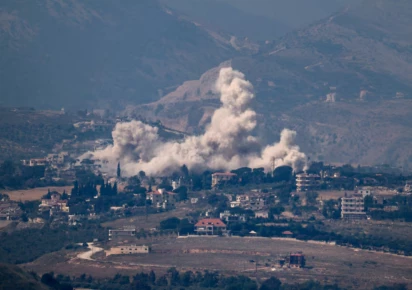
According to local reports compiled by Anadolu Agency, at least four people were killed and 14 others injured on Friday in a series of Israeli strikes across southern Lebanon.
In the Nabatieh region, a strike on a building near a police station in Doueir killed one person and injured another. Subsequent attacks in the same area raised the death toll further, with three additional fatalities reported.
Elsewhere, Israeli drones targeted vehicles, roads, and residential areas in Habboush, Abba, and nearby junctions, while artillery fire struck Kfar Rumman, Nabatieh al-Fawqa, and surrounding villages.
In Tyre, 12 people were injured after a strike near Jabal Amel Hospital destroyed a building linked to Bank Audi, prompting emergency teams to rush victims to medical facilities.
Despite the ongoing ceasefire framework, the strikes highlight how fragile the situation remains and how quickly violence can re-emerge along the border.
Ceasefire in Question Amid Conflicting Statements
Israeli media reports suggest that Prime Minister Benjamin Netanyahu has not fully endorsed implementation of the ceasefire agreement, with officials indicating internal disagreements over conditions tied to Hezbollah’s role in Lebanon.
At the same time, Israeli authorities claim that Hezbollah commanders have been targeted in recent operations, though the group has not confirmed these claims.
Lebanon’s state institutions, meanwhile, continue to report ongoing violations of the ceasefire, including drone strikes, artillery shelling, and targeted attacks in civilian-populated areas.

The Israeli army maintains that its operations are aimed at neutralizing threats posed by Hezbollah infrastructure and fighters in southern Lebanon.
Regional Tensions Spread Beyond Lebanon
Beyond Lebanon, regional developments are adding further complexity to an already tense geopolitical environment.

Iran’s Foreign Minister has said that Tehran and Oman will jointly manage the strategic Strait of Hormuz under international law, emphasizing cooperation on maritime security in the vital global shipping route.
Iranian officials also issued sharp statements regarding European and US policy positions in the region, while tensions remain high following recent military exchanges involving Israel and Iran-aligned groups.

In Washington, the US House of Representatives rejected a resolution aimed at limiting American military involvement in Lebanon-related hostilities, reflecting deep political divisions over the conflict.
Separately, US President Donald Trump said Washington does not need a formal deal with Iran to obtain enriched uranium, further highlighting ongoing diplomatic friction over nuclear and security issues.
Fragile Peace, Rising Uncertainty
The latest evacuation orders and military strikes underscore how quickly the situation in southern Lebanon can shift, even under a declared ceasefire.
With civilians once again being told to leave their homes and international diplomacy struggling to hold, fears are growing that the region may be edging toward a renewed cycle of confrontation.
For residents along the border, the uncertainty remains immediate and personal—marked by warnings, explosions, and the uneasy hope that the ceasefire can still be preserved.