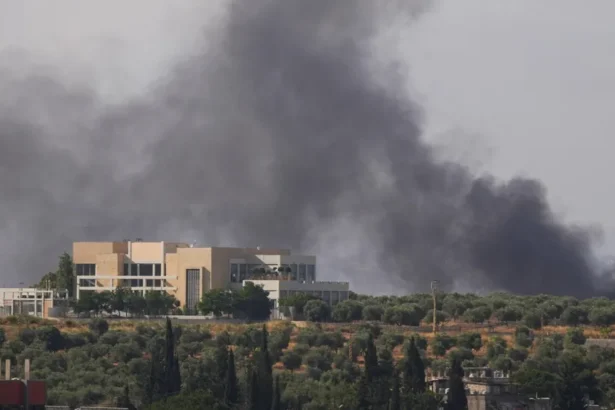

Israel carried out a series of air strikes in southern Lebanon on Saturday after issuing evacuation warnings for around 20 locations in the area. Lebanese state media reported that at least one person was killed in a strike on the town of Marrakeh in the Tyre district.
The latest attacks come amid growing hopes that a diplomatic breakthrough between the United States and Iran could soon bring an end to months of regional tensions. Officials involved in mediation efforts have indicated that a peace agreement may be finalized within days.
Israeli Prime Minister Benjamin Netanyahu had earlier warned that military action would continue if Hezbollah maintained attacks on northern Israeli communities. The fresh strikes suggest that tensions along the Israel-Lebanon border remain high despite ongoing diplomatic efforts elsewhere in the region.
Meanwhile, Pakistan, which has played a key role in facilitating talks between Washington and Tehran, has expressed optimism about the negotiations. Prime Minister Shehbaz Sharif said both sides were closer than ever to reaching an agreement. In a statement posted on social media, he said preparations were underway for the electronic signing of a peace deal, followed by technical discussions expected next week.
Iranian Foreign Minister Seyed Abbas Araghchi also signaled progress, stating that negotiations with the United States were approaching their final stages. According to him, the proposed agreement would not only help end hostilities between Iran and the US but could also contribute to easing tensions between Israel and Hezbollah in Lebanon.
One of the most significant elements of the reported agreement involves reopening the Strait of Hormuz, a crucial shipping route through which a large portion of the world’s oil and liquefied natural gas supplies pass. Iran effectively restricted access to the waterway after conflict erupted earlier this year, causing major concerns in global energy markets.
Araghchi said the deal would also lead to the lifting of a US blockade affecting Iranian shipping. Discussions regarding Iran’s nuclear program, however, would continue separately after the agreement takes effect.
American officials have confirmed several aspects of the proposed arrangement. They stated that economic relief for Iran would depend on the country’s compliance with specific commitments. Sanctions relief and access to frozen assets would be introduced gradually rather than immediately.
The conflict began in late February when US and Israeli forces launched strikes inside Iran. Tehran responded by targeting Israel and several Gulf states aligned with Washington. Although a ceasefire was reached in April, sporadic exchanges of fire have continued, including retaliatory attacks earlier this week.
US President Donald Trump recently stated that he had called off planned military operations against Iran because negotiators had reached what he described as a major settlement. However, he later dismissed reports published by Iranian media about the details of the agreement, saying they did not accurately reflect the actual terms under discussion.
Despite encouraging statements from all parties involved, uncertainty remains. Iranian officials have acknowledged that the proposed deal still requires approval from the country’s top security leadership. Araghchi said differing opinions exist within Iran’s Supreme National Security Council and that a final decision has not yet been made.
If approved, the agreement could mark a major turning point in a conflict that has threatened regional stability and disrupted international trade routes. For now, diplomats remain cautiously optimistic that a formal announcement could come within the next few days.