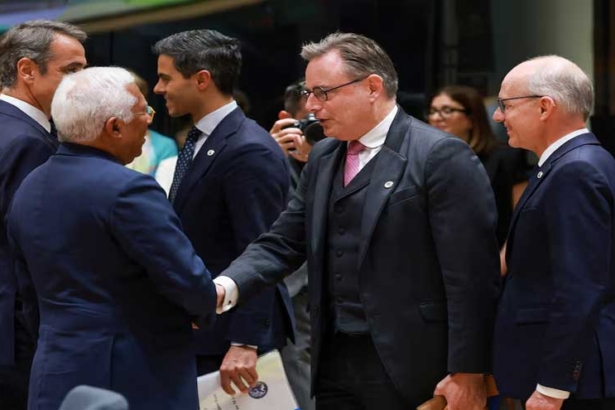

European Union leaders are preparing for difficult negotiations over the bloc’s next seven year budget after the first compromise proposal failed to satisfy both the countries that contribute the most money and those that depend heavily on EU funding. The discussions are expected to highlight deep divisions over spending priorities and how the union should raise additional revenue to support its future plans.
The proposed budget for the 2028 to 2034 period is valued at two trillion euros and covers a wide range of policies across the 27 member states. The funding supports agriculture, regional development, scientific research, education programmes, infrastructure projects and other initiatives aimed at reducing economic differences between member countries. Reaching an agreement on the budget is always one of the European Union’s most challenging political tasks because it requires unanimous approval from every member state.
A compromise draft prepared by the current Cypriot presidency reduced the European Commission’s original proposal by two percent. However, the adjustment failed to ease tensions. Countries that contribute more to the budget argued that the spending plan remains too expensive, while nations that receive larger amounts of funding insisted the proposed cuts would damage important programmes.
The revised proposal also increases support for farmers and regional development while reducing funding for research, innovation and other projects linked to economic competitiveness. This change has drawn criticism from governments that believe Europe must invest more heavily in technology, defence and modern industries if it wants to compete with global powers such as the United States and China.
The Netherlands, one of the largest contributors to the EU budget, has strongly opposed the current proposal. Dutch Prime Minister Rob Jetten argued that the plan continues to focus too heavily on traditional spending areas while failing to provide enough resources for defence, modernisation and future economic challenges. According to the Dutch government, Europe needs to adapt its financial priorities to changing global conditions instead of relying on old spending patterns.
Spain has taken the opposite position. Although it contributes to the budget, it still receives more funding than it pays in. Prime Minister Pedro Sanchez said the revised proposal is even less acceptable than the European Commission’s original plan. He argued that financial support for farmers and regional development should increase to reflect rising costs and inflation, warning that reducing these funds would place additional pressure on countries that rely on European assistance.
European governments are legally required to approve the new budget before the end of 2027. However, officials are hoping to reach an agreement by the end of 2026 because several major EU countries, including France, Italy, Spain and Poland, will hold national elections next year. Delaying negotiations could make the budget a political issue during election campaigns and further complicate efforts to secure unanimous support.
Another major issue under discussion is how the European Union should generate additional income without increasing the financial burden on member states. Several proposals are being considered, including directing part of the revenue from carbon emissions permits into the EU budget and collecting money from imports produced in countries with weaker climate policies. Other ideas include taxes linked to electronic waste, tobacco products, digital services, online gambling, cryptocurrency profits and the wealthiest individuals and large companies operating across Europe.
Although no final decisions are expected during the current round of talks, EU leaders are likely to indicate which funding options they support. Their discussions will help the incoming Irish presidency prepare a revised proposal that is expected to be presented later this year as negotiations continue.