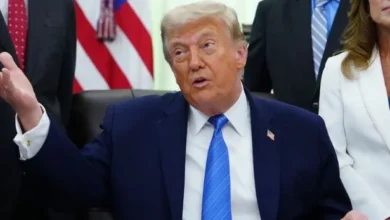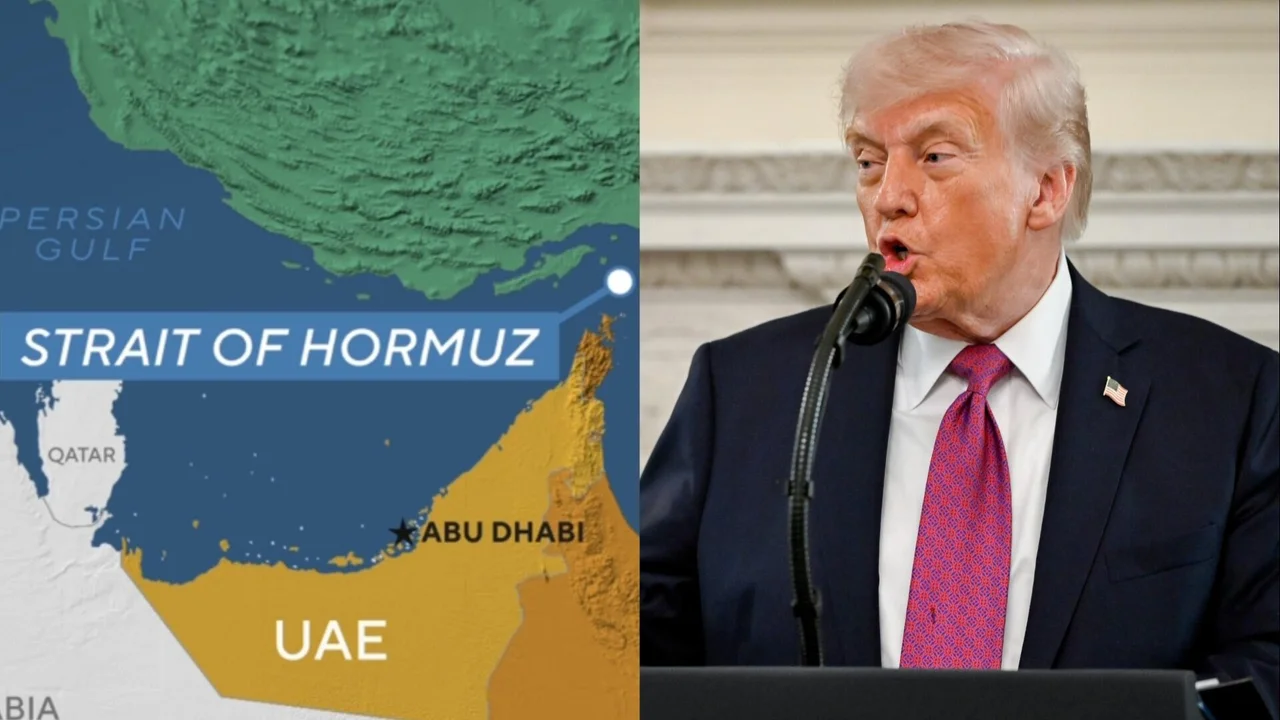

US President Donald Trump accused Iran of violating the recently agreed ceasefire after a commercial vessel was struck near Oman, further increasing tensions in the Strait of Hormuz. The latest incident has raised fresh concerns about the stability of the temporary agreement reached to halt months of conflict between Washington and Tehran and has once again placed one of the world’s busiest shipping routes at the centre of the dispute.
According to Trump, an Iranian drone struck the upper deck of a ship travelling near Oman on Thursday. He said the vessel suffered damage but was able to continue its journey. The US president also claimed American forces destroyed three additional drones during the incident and warned that Iran’s actions were a serious breach of the ceasefire agreement. Earlier, US officials had also alleged that Iranian forces were responsible for the attack, although Tehran did not directly comment on those accusations.
Iran instead criticised a joint statement issued by the United States and six Gulf countries that rejected Tehran’s demand to regulate shipping through the Strait of Hormuz. Iranian Deputy Foreign Minister Kazem Gharibabadi said safe navigation could not be guaranteed unless Iran’s role as a coastal state was recognised. Tehran has insisted that the strategic waterway should be managed jointly by Iran and Oman and has opposed any attempt to bypass its authority.
Reports also suggested that Oman had informed some allies that ships passing through the strait might eventually be required to pay transit fees, although there has been no official confirmation. Meanwhile, the foreign ministers of Iran and the United Arab Emirates held their first publicly announced phone conversation since the conflict began. During the discussion, the UAE stressed the importance of ensuring freedom of navigation through the waterway, where commercial traffic had only recently started recovering before the latest security incident.
Iranian state television also reported that the Revolutionary Guards warned and turned back three foreign oil tankers attempting what officials described as unauthorised passage through the strait. No additional information about the ships was released. A US official later said Washington was aware of those reports and reaffirmed that Iran would not be allowed to interfere with international shipping.
Despite the renewed tensions, global oil prices fell by around three percent on Friday, extending weekly losses. Analysts said markets appeared to remain optimistic that the conflict would not immediately disrupt energy supplies. Shipping activity has gradually resumed after months of disruption, with Saudi Arabia restarting crude exports from its Ras Tanura terminal and fertiliser shipments also increasing through the strait. The return of commercial traffic has eased fears of another major spike in global energy and food prices.
US Secretary of State Marco Rubio, who recently visited Gulf countries to reassure regional allies, repeated Washington’s support for unrestricted navigation through the Strait of Hormuz. In response, Iran’s Foreign Ministry argued that the presence of American military forces in the Gulf was the real source of instability. Officials warned against what they described as continued foreign interference in the region and maintained that shipping should remain under the supervision of Iran and Oman.
Meanwhile, Taiwan based shipping company Evergreen Marine confirmed that one of its Singapore flagged vessels was struck by an unidentified object while travelling near Oman. No crew members were injured and the ship safely continued its voyage. Iranian authorities later warned that vessels using routes not approved by Tehran would be responsible for any risks they faced.
Differences also remain over other parts of the broader ceasefire agreement, including Iran’s nuclear programme, financial incentives and the continuing conflict involving Israel and Hezbollah in Lebanon. Fresh reports from southern Lebanon said Israeli aircraft dropped leaflets urging residents of one town to leave the area. Israeli and Lebanese officials are also expected to continue discussions on a framework agreement aimed at reducing tensions along their shared border.