
Why is it so difficult to undo the legacy of dictators in Pakistan, even after clear mandates of people given through elections? Why every time in history, after getting rid of a military dictator, we continue to face a civilian authoritarian ruler, who behaves in the same disgusting manner, desiring “total” control over all institutions of the State. These questions need to be debated for finding appropriate answers—‘Political impasse: issues and solutions’, Business Recorder, March 3, 2009
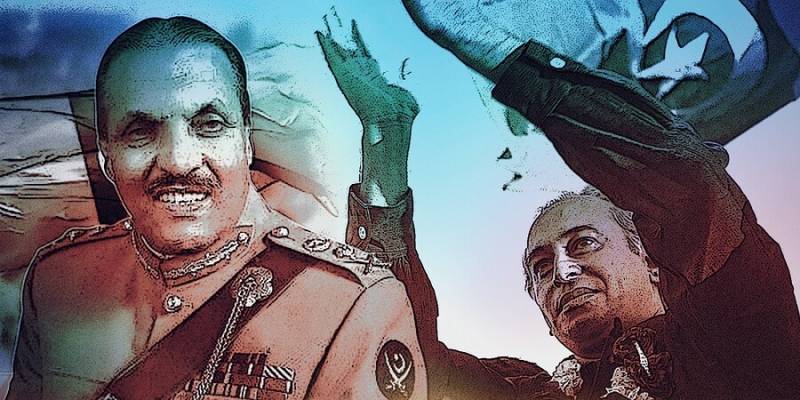
The nation will never forget that July 5, 1977 is not merely a date in Pakistan’s political calendar. It marks the beginning of a constitutional rupture whose consequences continue to shape the country’s politics, economy and institutions almost half a century later.
General Muhammad Zia-ul-Haq’s coup overthrew an elected government, suspended the Constitution, imposed martial law and initiated an eleven-year dreadful experiment in authoritarian rule. However, the real tragedy is not that dictatorship arrived in 1977. It is that, after nearly five decades, Pakistan has still not dismantled the institutional framework that dictatorship created. The more difficult question is not how dictators seized power, but why democratic governments repeatedly failed to undo their legacy, rather promoted the same.
Every year, Pakistan remembers the coup. Few ask why its consequences endure. General Zia is no longer alive, yet many of the political, legal and administrative structures fashioned during his rule remain embedded within the State. Military rule of Zia ended, but the habits it cultivated—centralisation of authority, constitutional manipulation, personalised politics, selective accountability and the subordination of representative institutions—proved remarkably resilient. The faces changed; the system largely did not.
History demonstrates that authoritarianism rarely survives through force alone. It endures because institutions adapt to it and political elites learn to function within its framework. Zia’s most enduring achievement (sic), from the perspective of authoritarian statecraft, was therefore not merely prolonging military rule. He fundamentally altered the relationship between the military establishment, civilian politicians, bureaucracy, judiciary and religious forces. Those structural transformations proved far more durable than martial law itself.
The 1973 Constitution envisaged parliamentary supremacy, an independent judiciary, provincial autonomy and representative government. Martial law interrupted that constitutional journey.
Constitutional amendments, extraordinary powers and judicial validation gradually normalised exceptionalism. Even after restoration of electoral politics, many of these distortions survived because successive civilian governments found them politically convenient. Instead of restoring constitutional equilibrium, they often appropriated instruments originally fashioned for authoritarian governance.
One of the paradoxes of Pakistan’s democratic experience is that political parties most severely victimized under dictatorship frequently retained dictatorship-era laws once they entered government. The legal legacy illustrates this contradiction vividly. Even today, major tax legislation promulgated during military regimes continues to govern millions of citizens.
The continued operation of the Income Tax Ordinance, 2001—promulgated under General Pervez Musharraf despite serious criticism and later observations by the Supreme Court that Parliament should enact tax legislation through proper democratic debate—symbolises this broader institutional inertia. Military rulers enacted extraordinary laws; elected representatives repeatedly declined to replace them.
This inability—or unwillingness—to undo authoritarian legacies extends well beyond taxation. Student unions remain banned. Labour movements never recovered their earlier strength. Independent institutions capable of mobilising democratic participation weakened steadily. Progressive politics gradually ceded space to patronage networks, identity politics and personalised leadership.
The vibrant political culture that once flourished in universities, trade unions and professional organisations has yet to regain its former vitality. As explored in Revisiting Pakistan’s Left, the repression of the late 1970s and 1980s permanently altered Pakistan’s political landscape by shrinking the institutional spaces where democratic leadership had historically emerged.
Zia’s self-styled Islamisation programme (sic) must likewise be understood as a political project rather than merely a religious one. It reshaped legal institutions, educational curricula and public discourse while strengthening conservative political forces.
Simultaneously, Pakistan’s role as the principal frontline state during the Afghan war transformed its political economy. Massive foreign assistance, covert operations, narcotics trafficking, arms proliferation and informal financial networks created distortions whose effects continue to haunt governance today.
As argued in Pakistan: From Hash to Heroin and later in its sequel Pakistan: Drug Trap to Debt Trap, the war economy eventually evolved into another form of structural dependence—a debt economy sustained by external borrowing and international financial institutions.
Suppression of independent journalism formed another defining feature of the era. Newspapers faced censorship, journalists were imprisoned and even publicly flogged. Yet authoritarian rule also produced remarkable resistance.
Viewpoint, under the editorship of Mazhar Ali Khan, became one of the few intellectual platforms where democratic ideas survived despite relentless censorship. Its contributors—including I.A. Rehman, Amin Mughal, Zafar Iqbal Mirza, Hussain Naqi and many others—demonstrated that ideas cannot easily be extinguished by coercion. Their courage reminds us that authoritarianism attacks independent thought long before it destroys democratic institutions.
The challenge confronting Pakistan today, however, differs fundamentally from that of 1977. Then, the source of political authority was unmistakable. Martial law openly displaced constitutional government. Contemporary Pakistan presents a more complex constitutional landscape. Elections continue to be held, legislatures function and civilian governments occupy office.
The recurring controversies surrounding electoral legitimacy, constitutional amendments, judicial restructuring and the relationship between elected institutions and unelected centres of power have generated a different model of governance—one commonly described as hybrid.
The visible instruments of martial law may have disappeared, but many observers contend that decisive authority increasingly resides beyond the institutions formally entrusted with democratic governance. This evolution from overt military rule to hybrid arrangements arguably represents the most significant constitutional development of recent decades.
Nearly three decades ago, the correspondent of The Herald (Karachi) while interviewing the great intellectual of our time, Edward W. Said, asked him: “Why we continue to turn to the Zias of the world”. Professor Said candidly replied, “So long those rule us believe in might is right”. He said, “(This) phenomenon in the global politics is reflective of the desire of the imperialists that want perpetuation of their control through handpicked cronies and lackeys in different countries”.
In 2026, after 27 years of Musharraf’s coup and 49 years of that of Zia, we are still faced with the challenge of undoing their legacies.
Edward Said’s insight remains profoundly relevant. Authoritarianism is not sustained solely by soldiers. It also depends upon willing collaborators—politicians seeking office without peoples’ vote and accountability, bureaucrats protecting privileges, judges validating unconstitutional departures and business elites prospering through proximity to power. Dictators rarely govern alone; they require an ecosystem of cronies.
Many say that control in Pakistan has always been with the mighty men in khaki, and only the form has changed—it is now “tacit” rather than becoming “explicit”. It is from hybrid to hybrid plus and now plus & plus will keep on increasing numerically. The greatest failure of Pakistan’s democratic governments has therefore not been electoral defeat or economic mismanagement alone. It has been their inability to reconstruct institutions on genuinely constitutional foundations.
Parliament seldom asserts its supremacy. Political parties remain highly personalised. Accountability is predominantly selective. Constitutional amendments increasingly reflect immediate political calculations rather than enduring institutional principles. Democracy survives procedurally while constitutionalism weakens substantively.
Aristotle warned more than two millennia ago, “When laws do not rule, there is no constitution”. Pakistan’s constitutional history repeatedly vindicates that observation. Whenever individuals become stronger than institutions, constitutions become instruments of expediency rather than restraints upon power. Whether under military rulers or civilian governments, the temptation to subordinate law to political convenience has proved remarkably persistent.
As Pakistan marks another anniversary of July 5, 1977, remembrance alone is insufficient. The question before the nation is not whether General Zia-ul-Haq was right or wrong; history has rendered its verdict. The real challenge is whether Pakistan possesses the political will to dismantle the constitutional, legal and institutional legacy of authoritarianism that has survived him.
Undoing the legacies of dictators’ and their cronies [Mutilation of Constitution by dictators and cronies, Minute Mirror, November 15, 2025] requires restoring parliamentary supremacy, strengthening genuinely independent institutions, protecting freedom of expression, reviving democratic participation in universities and workplaces, and ensuring that every organ of the State functions strictly within constitutional limits.
Poet Ahmad Mushtaq captured our predicament with haunting simplicity:
Patā ab tak nahīñ badlā hamārā
Vohī ghar hai vohī qissa hamārā
Nearly half a century after the coup, those lines remain painfully relevant. Pakistan cannot build a democratic future while continuing to inhabit institutions designed for authoritarian rule. The struggle today is no longer against one dictator. It is against the enduring legacy of dictatorship and cronyism itself.