
Pakistan’s successful mediation between Iran and the US has done more than halt a dangerous conflict in West Asia. It has elevated Pakistan’s diplomatic profile, secured its relevance in international affairs, and demonstrated that patient diplomacy can still prevail over military confrontation.
Yet every diplomatic success brings with it new responsibilities. Having helped others step back from the brink of war, Pakistan must now turn its attention to a region in which peace remains frustratingly elusive – its own neighbourhood.
Given the goodwill it enjoys internationally, Pakistan today has a unique opportunity to convert its diplomatic capital into a wider regional peace initiative spanning South Asia and Central Asia. The moment calls for vision, confidence, and strategic patience.
Recent history should serve as a useful guide in resolving disputes. In January 2024, Pakistan and Iran were on the verge of a serious military confrontation after the unprecedented exchange of missile strikes across their common border. Yet what could have spiralled into a prolonged crisis was contained through mature diplomacy, prudence and political wisdom. Within a week, communication channels were restored, and a monitoring mechanism was established to monitor terrorists.
High-level visits followed. The late Iranian president, Ebrahim Raisi, and foreign minister Hossein Amir-Abdollahian travelled to Pakistan, while Prime Minister Shehbaz Sharif later visited Tehran. Consequently, it was not purely crisis management but the transformation of a troubled relationship into one of growing cooperation. Their experience demonstrates a simple but powerful truth: even the most difficult disputes can be addressed when political leaders choose dialogue over escalation. Pakistan should apply the same principle to the rest of its neighbourhood.
The challenge on the eastern front is admittedly formidable. India remains reluctant to participate in meaningful dialogue and continues to view regional issues through the prism of strategic competition. Yet Pakistan should not allow Indian intransigence to become an excuse for diplomatic inactivity. Islamabad should continue to articulate a clear vision for regional peace and economic cooperation. By consistently advocating dialogue, Pakistan strengthens its international standing and places the burden of non-engagement on New Delhi.
More immediately, however, Pakistan’s western frontier deserves urgent attention.
For decades, Pakistan and Afghanistan have been bound together by geography, history, culture, religion and commerce. Yet despite these enduring connections, bilateral relations remain hostage to mutual suspicions and unresolved security concerns. This situation serves neither country. A hostile Pakistan-Afghanistan relationship undermines regional connectivity, weakens economic opportunities, and creates space for non-state actors to exploit instability.
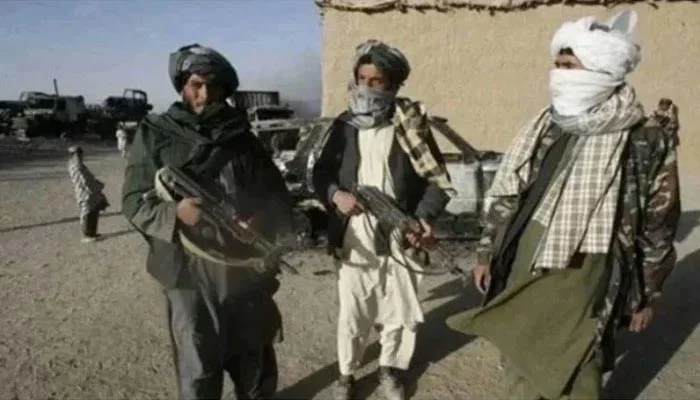
At the centre of the dispute lies the TTP. From Islamabad’s perspective, the continued presence of TTP terrorists inside Afghanistan represents the single greatest obstacle to normal relations. For the Afghan Taliban, the issue is complicated by historical, ideological and personal ties dating back to the years of insurgency against the US-led coalition forces.
The TTP often describes itself as having fought alongside the Afghan Taliban during the two-decade war in Afghanistan. Many within the movement, therefore, view the current period as a time of reward and sanctuary. The challenge, therefore, is not whether the issue exists but how to address it without allowing it to poison the entire bilateral relationship.
Pakistan should pursue a strategy that combines firmness on security with generosity on economic and humanitarian engagement. Such an approach would deny extremists the ability to dictate the future of relations between two neighbouring Muslim countries. Multiple practical measures could be adopted.
First, Pakistan should avoid actions that generate anti-Pakistan feelings within Afghanistan. The government should focus on intelligence-based operations and exact targeting. Strict vigilance along the border would discourage the terrorists and smugglers straddling the border.
Second, local communities must become partners in counterterrorism efforts. Sustainable security cannot be imposed from above. The people of the merged districts have paid a heavy price in the fight against terrorism and should be empowered through development, employment opportunities and community-based security initiatives.
Third, trade should not be weaponised. Historically, economic interdependence has proven to create constituencies for peace. Border crossings should facilitate commerce; a thriving economic relationship can gradually create incentives for moderation on both sides.
Fourth, Pakistan should ease visa restrictions on students, patients, traders and legitimate businesspersons. Human interaction often succeeds where official diplomacy fails. People-to-people contact can help rebuild trust, which may have been eroded over the years of tension.
Finally, Islamabad and Kabul can become a bridge to Central Asia. The two countries can benefit from regional connectivity projects, transit trade and energy corridors, which may transform geography from a source of conflict into a source of prosperity.
Yet, diplomacy is a two-way street. Pakistan’s willingness to engage must be matched by concrete action from the Afghan Taliban. Goodwill cannot survive indefinitely in the absence of reciprocity. Stable relations between Kabul and Islamabad would be possible if the two sides addressed the concerns that have repeatedly undermined bilateral trust.
The Taliban authorities should take visible and verifiable measures to rein in the TTP. This includes disarming militant cadres, prohibiting recruitment and fundraising activities, restricting the movement of TTP leaders and denying the group the freedom to organise from Afghan soil. Similarly, stronger efforts are needed to curb smuggling and other illicit cross-border activities that undermine state authority and economic stability. Such measures should not only improve relations with Pakistan but also strengthen Afghanistan’s own credibility as a responsible member of the regional community.
The wider strategic picture is equally important. A stable Pakistan-Afghanistan relationship would open opportunities far beyond the bilateral sphere. It would facilitate trade with Central Asia, strengthen regional connectivity initiatives, improve border security and reduce the space available to transnational terrorist networks. It would also add to a more stable regional environment at a time when geopolitical competition is intensifying across Eurasia.
Pakistan’s diplomatic achievement in facilitating peace between Iran and the US has shown that dialogue remains a powerful instrument of statecraft. The challenge now is to apply the same wisdom closer to home.
History often presents nations with defining moments. Pakistan may be experiencing one today. Having demonstrated its ability to bridge divides in a distant conflict, it should now embark upon the more difficult but more consequential task of building peace in its own neighbourhood. Success will not come overnight. There will be setbacks, disappointments, and resistance. But the alternative, a region trapped in perpetual mistrust and recurring crises, is far more costly.
The path to peace may be long, but every journey begins with a single step. For Pakistan, that step should lead towards a neighbourhood at peace with itself.