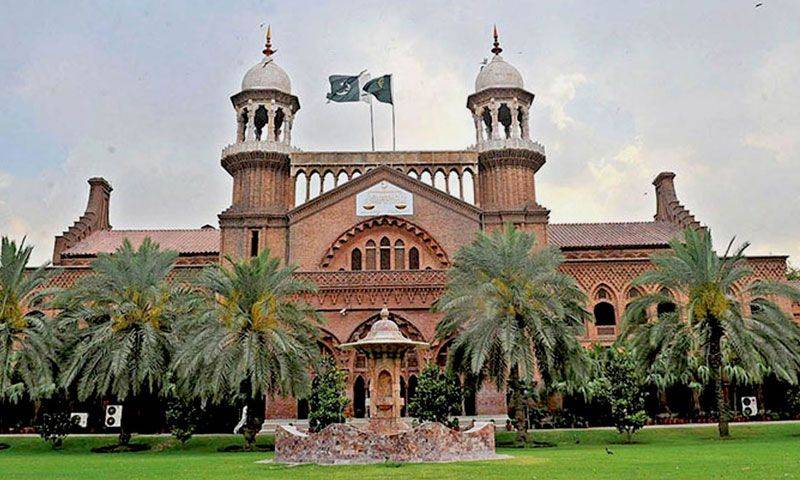

The twelve-page judgment delivered by Justice Muhammad Tariq Nadeem of the Lahore High Court may, at first glance, appear to be an order on a post-arrest bail petition. However, a closer examination of its legal and administrative dimensions reveals that it has evolved into a comprehensive judicial document highlighting the weaknesses of Punjab’s criminal investigation system, police negligence, and the systemic causes of delayed justice.
Ordinarily, judicial decisions resolve disputes between litigating parties. Occasionally, however, a judgment transcends the confines of an individual case and serves as a catalyst for institutional reform. This decision belongs to that rare category. The Court not only granted post-arrest bail to the accused, Tanvir Ahmed, but also addressed a far more significant question: who should bear the consequences when state institutions fail to discharge their legal responsibilities?
The Court categorically held that an accused person cannot be made to suffer because of police inefficiency, negligence, or defective investigation. This principle extends well beyond the facts of a single case; it reflects the constitutional guarantee of liberty, the rule of law, and the protection of fundamental human rights. When the State itself fails to comply with legal obligations, it cannot justify depriving a citizen of liberty without lawful grounds.
Perhaps the most remarkable aspect of this judgment is that it goes beyond identifying legal issues and exposes deep-rooted flaws in the investigative system that have hindered the administration of justice for years. The Court highlighted that the police file remained virtually inactive for more than six years, failed to initiate proceedings to declare the accused a proclaimed offender, neglected the mandatory maintenance of daily case diaries, and did not conduct a fair and impartial investigation of the cross-version. These shortcomings are not confined to one district or one criminal case; they reflect broader institutional challenges.
Justice Muhammad Tariq Nadeem did not merely criticize the system—he also proposed a practical roadmap for reform. The Inspector General of Police, Punjab, was directed to circulate the judgment among all Regional Police Officers (RPOs), City Police Officers (CPOs), District Police Officers (DPOs), and Heads of Investigation across the province. The Court further ordered an audit of pending criminal investigations in every district, directed immediate measures to eliminate unnecessary delays, and required a compliance report within thirty days. Such practical directions elevate the judgment from an ordinary judicial order to a blueprint for administrative reform.
Another notable feature of the judgment is its detailed reliance on constitutional principles, provisions of the Code of Criminal Procedure, the Police Rules, and several authoritative precedents of the Supreme Court of Pakistan. This method of judicial reasoning strengthens the legal foundation of the decision and provides valuable guidance for future cases involving similar issues.
The Court also emphasized that delays in the criminal justice process do not affect only the accused; they equally undermine the rights of victims and complainants. A prompt, professional, and impartial investigation is the foundation upon which a fair trial is built. When an investigation is delayed, biased, or poorly conducted, the entire process of justice is compromised.
Within Pakistan’s judicial history, judgments that extend beyond resolving individual disputes and seek to improve institutional performance are always regarded as significant. Justice Muhammad Tariq Nadeem’s decision appears to be one such judgment. It clearly articulates the constitutional concept of personal liberty, the right to a fair trial, and the legal responsibilities of investigative authorities.
The real test now lies with the Punjab Police and its leadership. If the Court’s directions are implemented sincerely, if pending investigations are properly audited, if investigators receive better training, and if those responsible for negligence are held accountable, this judgment could mark the beginning of meaningful reform in Punjab’s investigative system. Conversely, if it remains confined to official files without practical implementation, its transformative potential will remain unrealized.
Ultimately, this judgment reminds us of a fundamental truth: justice does not begin in the courtroom; it begins with the very first step of a police investigation. If investigations are conducted professionally, promptly, and impartially, not only are the rights of innocent citizens protected, but the real offenders are also brought to justice. That is the true foundation of a transparent, credible, and people-centered criminal justice system.