
As extreme weather becomes more common across China, many people are choosing an unusual way to prepare for natural disasters. In the eastern city of Hangzhou, a disaster simulation centre is giving visitors the chance to experience powerful winds, heavy rain and flash floods in a safe environment. The training aims to help people understand the dangers of severe weather and improve their ability to respond during real emergencies.
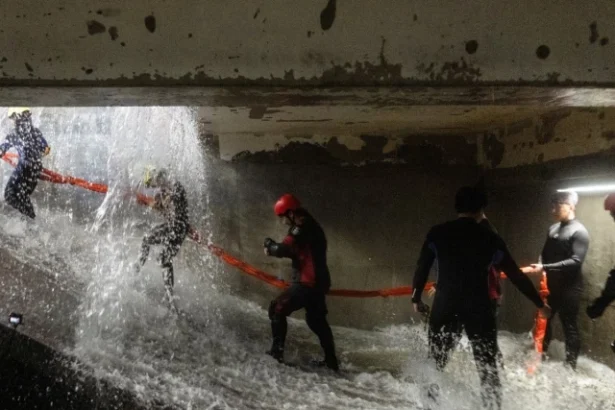
Among those taking part was 34 year old cafe owner Huang Zhen, who closed his business for a day to attend the programme. During the session, he faced strong winds and rushing water that were designed to recreate the conditions of a real typhoon. Despite wearing protective equipment and being supervised by trained instructors, Huang said the experience was physically demanding and showed him how difficult it can be to stay safe during such disasters.
The Lvxing Disaster Simulation Training Centre charges 1,599 yuan, around 235 dollars, for a full day of training. According to the operators, it is the first facility in the world to offer a realistic typhoon simulation. The centre can produce winds reaching speeds of up to 165 kilometres per hour along with intense rainfall to recreate the force of a powerful storm.
The training does not stop with strong winds. Another section of the centre releases around 900 tonnes of water to imitate flash floods in mountainous areas. Participants are also required to move through flooded streets in a mock urban setting where water levels can rise from thigh height to shoulder height. These exercises are designed to teach practical survival skills while helping people understand how quickly flood conditions can become dangerous.
Huang said unpredictable weather has become more noticeable over the past two years. He believes taking part in the training has increased his awareness of the risks posed by natural disasters and given him a better understanding of how to react during emergencies. He added that experiencing these situations in a controlled environment can help people make better decisions if they ever face a real storm.
Scientists have warned that climate change is increasing the frequency and intensity of extreme weather around the world, including in China. This year has raised additional concerns because of the El Nino weather pattern, which can contribute to higher temperatures and stronger typhoons. Chinese climate officials expect as many as six typhoons to develop in the Northwest Pacific and the South China Sea during July, which is well above the seasonal average.
Recent storms have already highlighted the growing threat. Typhoon Bavi caused severe flooding in several parts of China and forced millions of people to leave their homes. One participant, 44 year old freelance worker Wu Zijian from Shanghai, said the storm made many people realise that typhoons can be much more dangerous than they had previously believed.
The disaster simulation centre has attracted more than 160,000 visitors since opening in May 2025. Chief instructor Wang Kuanghan said the organisation plans to establish five more training centres across China over the next three years. These new facilities are expected to include simulations for disasters such as earthquakes and fires. Even so, Wang stressed that the best way to survive a typhoon is often the simplest. He advised people to remain indoors during severe storms and avoid unnecessary travel until the danger has passed.