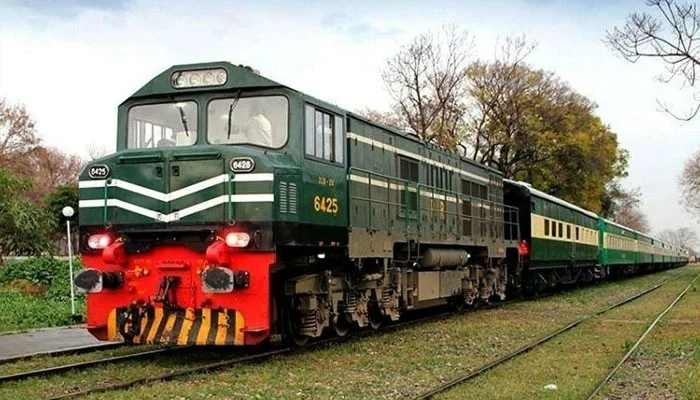

Prime Minister Shehbaz Sharif directed relevant authorities to complete ongoing development projects within Pakistan Railways according to their stipulated timelines and highest quality standards. Chairing a review meeting in Islamabad on the progress of the Pakistan Railways Transformation Plan, the prime minister emphasised that establishing a modern and efficient railway network is fundamental to boosting national economic growth, trade, and regional connectivity.
During the session, the prime minister described the national railway system as the lowest-cost and most effective means of transport available for both passengers and freight across the country. He noted that upgrading this infrastructure is critical to strengthening Pakistan’s position as a regional trade and logistics hub.
The high-level meeting was briefed extensively on major transit initiatives, including the Main Line-1 (ML-1) and Main Line-3 (ML-3) upgrades, alongside the Thar coal rail connectivity project. Officials reported that the detailed engineering design for the Karachi-Rohri section of ML-1 has successfully reached completion, and the prime minister subsequently requested new proposals for upgrading the Rohri-Multan segment of the line. Furthermore, the Rohri-Nokundi section of ML-3 is slated for upgrades through the Public Sector Development Programme (PSDP) utilising bridge financing mechanisms.
Regarding freight infrastructure, the briefing highlighted that roughly 60 percent of the construction work on the 112-kilometre railway line connecting Thar Coal to the Chhor railway station has been finished. The remaining track laying is expected to be completed by December 2026, allowing for more efficient transport of domestic coal resources.
To accelerate structural changes within the department, international consultants have been formally engaged to support systemic railway reforms. As part of this restructuring strategy, schools and hospitals previously operated directly by Pakistan Railways have now been outsourced to private managers. Concurrently, administrative work is underway to commercialise six major railway stations across the network to generate non-fare revenue.
The strategy session saw attendance from several prominent cabinet members, including Planning Minister Ahsan Iqbal, Economic Affairs Minister Ahad Khan Cheema, Railways Minister Hanif Abbasi, and IT and Telecom Minister Shaza Fatima, alongside senior administrative secretaries.