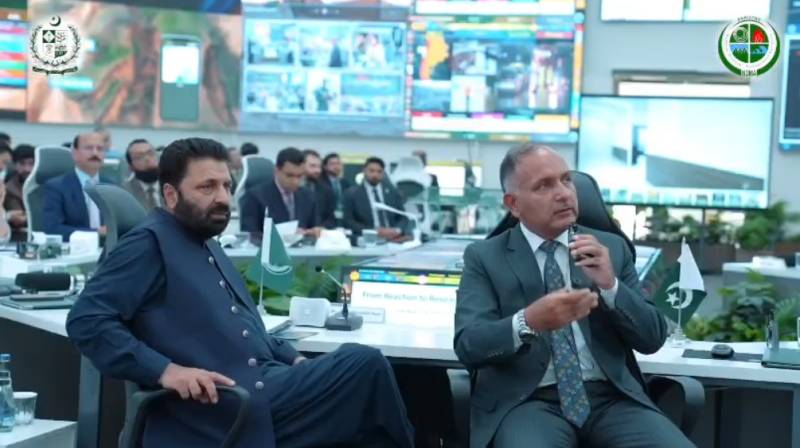

Gilgit-Baltistan Chief Minister Advocate Amjad Hussain on Tuesday visited the National Emergencies Operation Centre at the National Disaster Management Authority, where he was briefed on monsoon risks, early warning systems and emergency response mechanisms.
NDMA Chairman Lt. Gen. Inam Haider Malik briefed the chief minister on the scope of the NEOC and its national monitoring system, which tracks weather conditions, rivers, streams and potential natural hazards across the country around the clock.
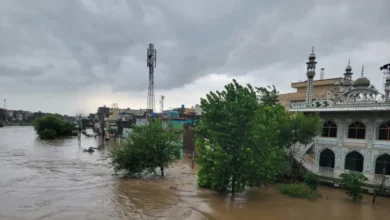
The meeting focused on risks facing Gilgit-Baltistan during the monsoon season, including floods, landslides and glacial lake outburst floods.
Officials also gave a detailed briefing on flash flooding from glacial lakes, the possible impact of river and stream flooding and measures required to protect vulnerable communities.
The chief minister was informed about NDMA’s modern early warning, real-time monitoring and decision-making systems designed to help authorities respond promptly to emerging threats. NDMA says its NEOC operates round the clock to provide timely warnings and support proactive disaster risk management across Pakistan.
Malik said timely warnings, effective coordination and close cooperation among institutions were essential to reducing casualties and property losses during natural disasters.
Hussain appreciated the NEOC’s technological capabilities and the national-level coordination system established by NDMA for disaster preparedness and response.
The NDMA and Gilgit-Baltistan government agreed to further strengthen coordination and information-sharing to protect lives, livelihoods and property during the monsoon season.
Gilgit-Baltistan is particularly vulnerable to landslides, flash floods and glacial lake outburst floods because of its mountainous terrain and rapidly changing weather conditions.