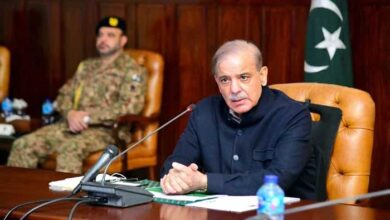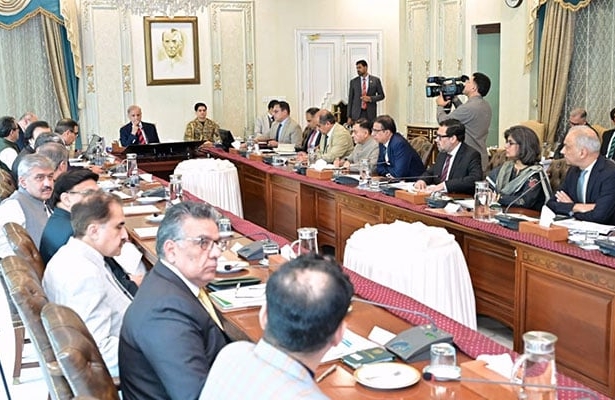

Prime Minister Shehbaz Sharif has directed all relevant ministries and institutions to ensure the timely implementation of targets and deadlines under the government’s privatisation programme, stressing the need for close coordination to complete the process according to schedule.
The directives were issued during a meeting held to review progress on the privatisation of state-owned enterprises. The meeting was informed that a total of 27 public sector organisations have been included in the government’s privatisation agenda, which is being carried out in three phases.
During the briefing, officials updated the prime minister on the progress of the privatisation of Islamabad, Lahore and Karachi airports, as well as several major public sector entities.
The meeting also reviewed the privatisation process of electricity distribution companies, including the Islamabad Electric Supply Company (IESCO), Faisalabad Electric Supply Company (FESCO), and Gujranwala Electric Power Company (GEPCO).
Officials informed the prime minister that Expressions of Interest (EOIs) have already been invited for all three companies. The deadline for investors to submit documents for FESCO has been set for August 7, while submissions for GEPCO will close on August 21. The deadline for IESCO is September 7, 2026.
The briefing noted that several international companies have expressed interest in acquiring the power distribution companies. Officials added that roadshows and engagement sessions with potential investors are continuing to attract further investment.
Prime Minister Shehbaz also reviewed the proposed privatisation of the Zarai Taraqiati Bank Limited (ZTBL) and directed authorities to design the transaction in a way that preserves the bank’s vital role in supporting Pakistan’s agricultural sector.
He emphasised that the bank should continue providing agricultural loans and financial services to farmers even after privatisation. The prime minister said farmers’ access to financial resources is essential for increasing crop yields and improving agricultural productivity.
He further stated that agriculture remains a key pillar of Pakistan’s economy and plays a critical role in ensuring food security. Therefore, any privatisation model should safeguard the sector’s long-term interests while maintaining uninterrupted financial support for farmers.