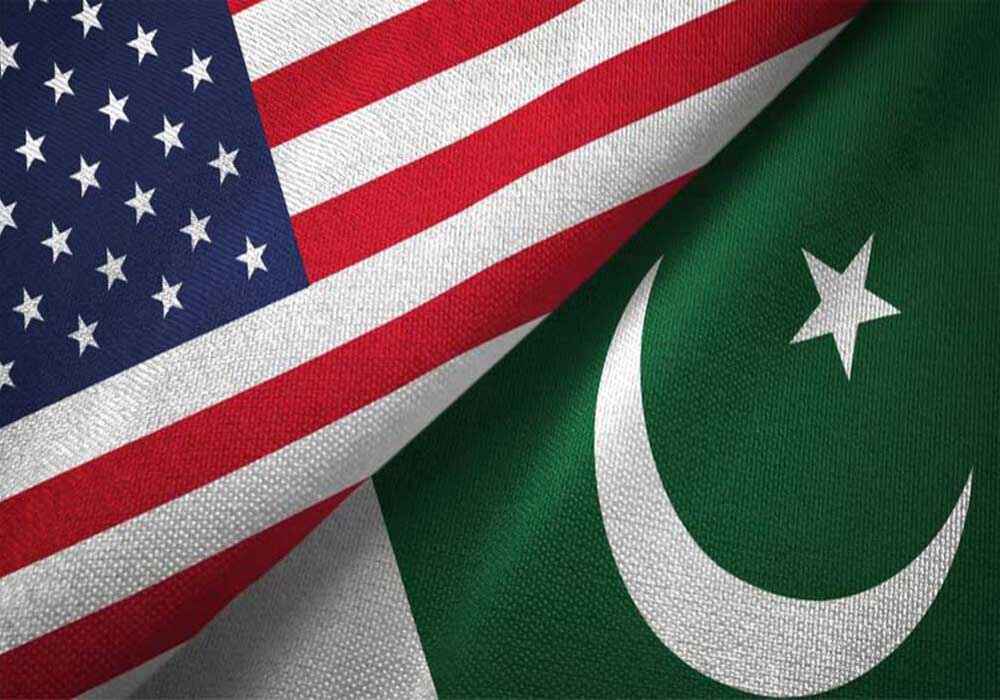

Pakistan and the United States have maintained one of the most consequential yet complex bilateral relationships in South Asia. Over more than seven decades, the relationship has witnessed periods of close strategic cooperation, moments of mutual disappointment, and repeated efforts at rebuilding trust. Today, amid shifting geopolitical realities, economic transformation, and emerging technological opportunities, both countries have a rare chance to redefine their partnership based on equality, mutual respect, and long-term shared interests rather than short-term strategic expediency.
Pakistan recognized the United States soon after its independence in 1947, and diplomatic relations were formally established in 1948. During the Cold War, Pakistan emerged as an important security partner, joining U.S.-backed regional alliances such as SEATO and CENTO. The relationship deepened further during the Soviet intervention in Afghanistan in the 1980s, when both countries cooperated closely in support of the Afghan resistance.
Following the end of the Cold War, however, strategic priorities diverged. The imposition of sanctions under the Pressler Amendment, differences over nuclear policy, and declining geopolitical convergence created a period of mistrust. After the tragic events of September 11, 2001, Pakistan again became a frontline partner in global counterterrorism efforts. While this cooperation produced significant security outcomes, it also imposed enormous economic, human, and social costs on Pakistan. Differences over regional security, Afghanistan, drone operations, and counterterrorism strategies periodically strained bilateral ties.
Despite these fluctuations, the relationship never completely lost its strategic relevance. Both countries continued cooperation in defense, education, health, agriculture, energy, and people-to-people exchanges. Millions of Pakistani-Americans have served as an enduring bridge between the two societies, making valuable contributions to American economic, academic, technological, and public life while strengthening bilateral understanding.
Recent diplomatic engagement indicates that both Islamabad and Washington recognize the need to move beyond a security-centric relationship. The visit of senior members of the U.S. Congress and American business leaders to Pakistan, alongside growing high-level diplomatic exchanges, demonstrates renewed interest in expanding cooperation across multiple sectors. Pakistan’s leadership has correctly emphasized that mature strategic partnerships are increasingly measured not by military cooperation alone but by the depth of economic, technological, and commercial engagement.
Economic cooperation offers perhaps the greatest untapped potential. The United States remains Pakistan’s largest single-country export destination, while bilateral trade has continued to grow steadily. Pakistan imports American cotton, soybeans, advanced technology, and industrial equipment, while exporting textiles, apparel, surgical instruments, sporting goods, agricultural products, and information technology services. However, the current trade volume remains far below its potential. Expanding bilateral trade toward the proposed target of $20 billion over the coming years would benefit businesses, workers, and consumers in both countries.
Pakistan’s improving macroeconomic stability, structural reforms, investment facilitation through the Special Investment Facilitation Council (SIFC), expanding digital economy, growing technology sector, critical minerals, renewable energy projects, and improved logistics infrastructure provide new opportunities for American investors. The recent financing support for the Reko Diq mining project demonstrates that confidence in Pakistan’s long-term economic prospects is increasing.
At the same time, the relationship should not overlook cooperation in emerging sectors such as artificial intelligence, cybersecurity, higher education, climate resilience, healthcare, agricultural modernization, clean energy, semiconductor supply chains, and digital entrepreneurship. These areas represent the future of global competitiveness and can become new pillars of bilateral cooperation.
Yet lasting partnerships require addressing historical shortcomings. For decades, Pakistan-U.S. relations have often been shaped by transactional calculations linked to immediate regional crises. This cyclical engagement has produced recurring trust deficits whenever strategic priorities shifted. Both sides should now avoid allowing temporary geopolitical developments to define a relationship with far broader potential.
Several steps can help transform bilateral relations into a more durable partnership. First, both governments should institutionalize regular strategic dialogue covering trade, investment, technology, education, climate, and regional security. Second, expanding private-sector investment should become a central objective alongside government-to-government cooperation. Third, greater parliamentary exchanges, academic collaboration, and cultural diplomacy can reduce misconceptions and strengthen public understanding. Fourth, both countries should respect each other’s sovereignty, security concerns, and national priorities while managing differences through sustained dialogue. Finally, cooperation should increasingly be guided by equality, transparency, reciprocity, and mutual benefit rather than dependency or short-term geopolitical calculations.
The Pakistan-United States relationship has survived changing global orders because it rests on shared interests that extend beyond any single issue or region. In today’s interconnected world, economic resilience, technological innovation, and regional stability require partnerships built on trust and consistency. By embracing a forward-looking agenda centered on trade, investment, innovation, and people-to-people ties, Islamabad and Washington can transform a relationship shaped by history into one driven by shared opportunity.
The future of Pakistan-U.S. relations need not be defined by the ups and downs of the past. It can instead become a model of pragmatic cooperation—one based on sincerity, equality, mutual respect, and a common commitment to peace, stability, and shared prosperity.