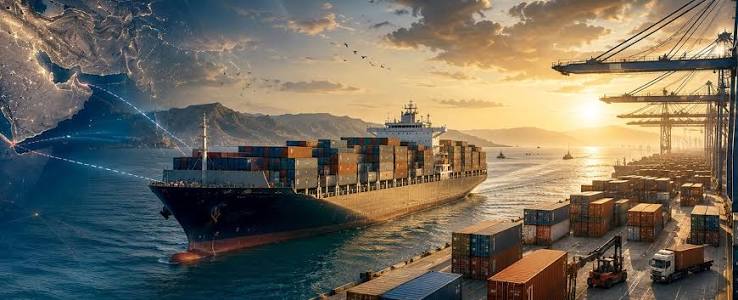

At a time when the world is tense and the Middle East crisis has disrupted the flow of ships through the Strait of Hormuz and Bab el-Mandeb, Gwadar Port is emerging as an alternative for global shipping lines.
This has created a fresh opportunity for Gwadar Port to do more business by demonstrating its capacity to handle cargo efficiently. Geographically close to both chokepoints, Gwadar has offered commercial and logistics companies an alternative transhipment hub.
Located on the Arabian Sea, less than 400km from the Strait of Hormuz, Gwadar Port has seen an upward trend in transit traffic over the last four months.
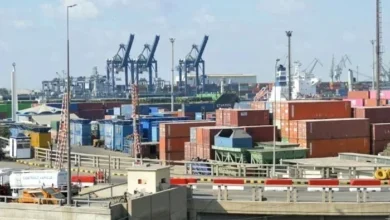
According to data from the Gwadar Port Authority (GPA), the port handled a record 11,000 containers in April, a substantial increase over its performance throughout 2025. During the entire year of 2025, Gwadar Port processed around 8,300 containers, while fewer than 20 vessels docked at the port.
The momentum continued in May, when Gwadar Port handled more than 53,277 metric tonnes of cargo, another major operational milestone and a reflection of the port’s expanding role in regional and international maritime trade.

One significant operation during the month involved the Chinese vessel MV B Jia Shan, which berthed at Gwadar Port carrying nearly 20,669 tonnes of steel billets for onward shipment to Sohar Port in Oman.
Officials said the successful berthing and cargo handling of the vessel, which had a draft of 12.8 metres, demonstrated Gwadar Port’s capacity to accommodate larger international cargo ships.
Another transhipment vessel, MV Show Long, also anchored at Gwadar Port in May. According to GPA Shabbir Ahmed, who spoke to Geo.tv, the vessel was carrying 16,077 metric tonnes of transhipment cargo, including more than 13,000 packages of Chinese-manufactured industrial equipment and pipes.
The cargo was originally destined for Kuwait but was diverted to Gwadar amid the prevailing maritime situation in the Strait of Hormuz, providing another example of the port’s potential as an alternative logistics and transhipment route.
Gwadar Port achieved another milestone in June with the successful berthing of the second Afghan Transit Trade vessel under the revised transit trade framework.
The operation followed the arrival of MV Beyond 2 on February 4, 2025, the first vessel to dock under the revised Afghan Transit Trade arrangements.
Gwadar Chamber of Commerce and Industry member Nazir Syed said the recent decision of the Economic Coordination Committee (ECC) to replace the bank guarantee requirement with an insurance guarantee for Afghan transit trade through Gwadar had improved the ease of doing business and accelerated cargo clearance.

He urged the port authorities to ensure rapid berthing and smooth unloading of transit cargo, saying the port was fully equipped to handle increasing volumes under the Afghanistan-Pakistan Transit Trade Agreement (APTTA).
Industry representatives are seeing the increase in cargo handling as evidence of a change in the port’s operational momentum. The growing number of vessels and cargo operations indicates increased utilisation and stronger prospects for the port’s emergence as a regional maritime and economic hub.
Gwadar Port is increasingly being promoted as a potential regional transhipment hub capable of connecting markets in China, the Middle East, Central Asia and East Africa.
Some estimates suggest that the port could eventually contribute up to $25 billion to Pakistan’s economy if its transhipment and logistics potential is fully realised.
With global freight operators looking for alternative routes because of security concerns and congestion affecting traditional shipping lanes around the Gulf, Gwadar is being presented as a potentially safer and cost-effective alternative.
Its location outside the immediate conflict zone has also increased attention towards the port, with Gwadar being positioned as a potential competitor to established regional maritime hubs, including Jebel Ali Port.
Maritime expert Jahazaib Baloch described Gwadar as one of the region’s peaceful and strategically located ports and called for a more aggressive international marketing campaign to promote its available capacity and facilities.
He recommended encouraging shipping agents to engage directly with major international carriers, particularly COSCO Shipping Lines, to route transhipment and transit cargo through Gwadar.
The port’s infrastructure was developed by the China Overseas Port Holding Company at a cost of around $300 million, while all four berths are now fully operational.

To capitalise on Gwadar’s commercial potential, the government has introduced incentives aimed at attracting foreign investors, shipping companies and logistics operators.
The incentive package includes a 23-year tax holiday from federal, provincial and local taxes, along with a 100% exemption from import duties on materials and equipment. Foreign investors can also benefit from 100% foreign ownership.
The government has also introduced a 25% reduction in berthing fees for container vessels and discounts of up to 40% on port charges for transhipment containers. General cargo can also get one month of free storage, compared with the standard five-day free storage period available at other national ports.
The broader incentive framework covers investment promotion, supply-chain integration, business facilitation, technical cooperation, and the development of seafood processing and export-oriented industries.
The measures form part of a wider strategy to develop Gwadar into a modern, investor-friendly deep-sea port and a strategic gateway for trade between Pakistan and markets in Central Asia, the Middle East and East Africa.
The government expects the incentives to attract domestic and international investment, accelerate economic activity in Gwadar and strengthen Pakistan’s logistics and maritime sectors.
Gwadar Port Chairman Noor-ul-Haq Baloch said the reduction in tariffs would encourage maritime trade and create employment opportunities in Balochistan. He added that the revised tariff structure was expected to attract more shipping and commercial activity to the port.
Meanwhile, the government has also taken steps to strengthen Gwadar’s connectivity with neighbouring Iran and the wider Central Asian region.
Under the Transit of Goods Through Pakistan Order 2026, issued by the Ministry of Commerce on April 25, 2026, six overland transit routes leading towards the Pakistan-Iran border have been introduced.
Among these routes is the approximately 87-kilometre Gwadar-Gabd corridor, which establishes a direct land connection between Pakistan and Iran.
The corridor has the potential to facilitate transit trade between Pakistan, Iran and landlocked Central Asian countries, further strengthening Gwadar’s position as an overseas access point for Central Asian economies seeking connectivity with international markets.
Rs280bn development programme for Gwadar
Alongside the expansion of port operations, the Gwadar Development Authority (GDA) is preparing a long-term development programme aimed at transforming the city into a modern and economically vibrant port city.
Under the medium-term phase of the Gwadar Smart Port City Master Plan 2025–2035, the GDA has proposed development projects worth approximately Rs280 billion, to be implemented in phases.
The development programme was discussed at a meeting held on May 9 under the chairmanship of GDA Director General Muin-ur-Rehman Khan, where officials reviewed proposals for Gwadar’s upcoming 10-year development programme.
The proposed programme includes a Central Business District, Special Economic Zones, the GDA Housing Scheme, ecological corridors and master-plan microplanning.
The development agenda also includes commercial centres, public spaces, museums, heritage centres, coastal tourism resorts, foreign tourist resorts, Grab Beach Park and the GDA Club.
A major component will involve construction and expansion of internal and external road networks, completion of unfinished GDA roads and development of new highways in accordance with the master plan.
The programme also emphasises modern urban infrastructure, environmental protection, socioeconomic development and improved public amenities.
10-year development programme under umbrella PC-I
During the meeting, Deputy Director Town Planning Abdul Razzaq said that, in accordance with provincial government directives, the GDA was preparing a comprehensive 10-year development programme under an ‘Umbrella PC-I’.
The proposed programme will initially be submitted to the provincial government and subsequently forwarded to the federal government for approval and funding. The authority hopes that the programme will be incorporated into the 2026–27 fiscal year budget.
According to officials, the programme will bring together the GDA’s existing business plan and ongoing development schemes under a coordinated framework designed to ensure implementation of the Gwadar Smart Port City Master Plan.
The meeting was informed that the master plan had entered its second phase, focusing on modern urban infrastructure, industrial development, socioeconomic improvement, environmental protection, tourism promotion and modern municipal services.
The development plan also includes upgrading Senator Muhammad Ishaq Cricket Ground, underground electricity cabling across the city and installation of modern streetlights through solarisation of GDA highways.
Under the Old Town Rehabilitation Project, authorities are planning road construction and expansion, improvements to sewerage and drainage systems, streetlights, memorial monuments and modern municipal services in Shambay Ismail Ward, Surbandar and Pishukan.
Water supply infrastructure is another key priority. Proposals have been reviewed for laying approximately 200 kilometres of new water pipelines and establishing additional desalination plants to improve water availability in areas covered by the master plan.
The combination of rising cargo volumes, increasing vessel activity, new transit trade routes, tariff incentives and a major urban development programme indicates that Gwadar is entering an important phase of commercial and infrastructural expansion.
The port’s growing transhipment activity, particularly involving cargo originating from China and destinations in the Middle East, demonstrates its potential to serve as an alternative maritime gateway at a time when shipping companies are increasingly concerned about disruptions along traditional routes.
However, sustaining this growth will require continued investment in port infrastructure, road and rail connectivity, digital logistics systems, security, competitive tariffs and efficient cargo clearance procedures.
If the current momentum is maintained and the planned development projects are implemented effectively, Gwadar could strengthen its position as a major maritime gateway connecting China, Pakistan, Iran, the Middle East and landlocked Central Asian states, while contributing to broader economic and employment opportunities in Balochistan and Pakistan.