
ISLAMABAD: The federal government has proposed recovering around Rs34 billion from consumers of distribution companies (Discos) and K-Electric through the quarterly tariff adjustment (QTA) for April-June 2026, translating into an estimated increase of Rs1.34 per unit.
The proposed adjustment has been attributed largely to higher capacity-related costs resulting from a decline in electricity consumption during the quarter. However, representatives of the industrial sector have strongly opposed the proposed increase, arguing that businesses are already facing high electricity costs and cannot absorb another financial burden.
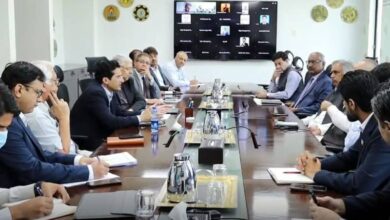
The National Electric Power Regulatory Authority (NEPRA) held a public hearing on Wednesday to examine the QTA request, during which representatives of industries, power distribution companies and the government presented their positions.
Initially, the power distribution companies had requested an adjustment of Rs23.031 billion for the second quarter of fiscal year 2026 under the QTA mechanism. The amount was later revised upward to Rs33.778 billion.
According to the figures presented before NEPRA, the largest component of the proposed adjustment is related to capacity charges, amounting to Rs46.280 billion. Variable operation and maintenance costs account for another Rs4.936 billion.
The calculation also includes a negative adjustment of Rs13.517 billion related to Use of System Charges (UoSC) and the Market Operator Fee (MOF), which partially offsets the overall increase.
Similarly, Rs3.040 billion has been included to account for the impact of transmission and distribution losses on monthly Fuel Charges Adjustments (FCA). A further negative adjustment of Rs21.175 billion has been made under the incremental consumption package.
The distribution companies have also claimed Rs14.211 billion for costs relating to Small Power Producers (SPPs) and Captive Power Producers (CPPs) that they say remained unrecovered.
Industrial sector voices concern
During the hearing, industrial representatives raised strong objections to the proposed QTA adjustment, warning that another increase in electricity prices could further weaken the competitiveness of Pakistan’s manufacturing sector.
Rehan Javed, Aamir Sheikh and Tanveer Barry conveyed their concerns to NEPRA officials in the presence of representatives from the Ministry of Energy and the distribution companies.
The representatives argued that industries were already operating under considerable cost pressures and that any additional increase in electricity tariffs would raise production expenses and make it more difficult for local businesses to compete in domestic and international markets.
Tanveer Barry, representing the Karachi Chamber of Commerce and Industry (KCCI), particularly questioned the sharp rise in capacity-related charges.
According to Barry, capacity charges had increased from around Rs36 billion in the first quarter to more than Rs50 billion in the period under review. He said the increase could ultimately translate into a much larger financial burden for consumers.
He estimated that the combined impact could place an additional burden of approximately Rs3.50 per unit on consumers, depending on the final adjustment approved by the regulator.
Barry also pointed out that eight distribution companies had reported positive capacity charges, while three had recorded negative adjustments. He urged NEPRA to examine the calculations and underlying reasons for the variations before approving any additional burden on consumers.
Lower electricity demand
Officials of the Peshawar Electric Power Company (Pesco) told the hearing that electricity consumption had fallen by approximately five per cent during the period under review.
They attributed much of the decline to weaker demand from domestic and commercial consumers. Increasing adoption of solar energy was also cited as one of the factors reducing demand from residential consumers.
NEPRA Member Maqsood Anwar Khan questioned Pesco officials about whether load-shedding was also being carried out in areas where consumers regularly paid their electricity bills.
The Pesco representatives acknowledged that load-shedding was taking place.
Maqsood Anwar Khan observed that interruptions in electricity supply could themselves contribute to lower electricity sales, as consumers would naturally use less grid electricity when supply was unavailable.
Solarisation becomes key point of debate
The growing use of solar power also featured prominently during the hearing.
The NEPRA member noted that the expansion of solar generation had provided relief to the national electricity system by reducing daytime demand from the grid. He observed that without the contribution of solar energy, pressure on the power system and the need for daytime load management could have been considerably greater.
He further noted that increasing solarisation was shifting the pattern of load-shedding, with pressure becoming more visible during night-time hours when solar generation was unavailable.
The NEPRA member also disagreed with the assertion that solarisation alone was responsible for a decline in electricity sales, maintaining that the impact of rooftop and distributed solar generation should be assessed in a broader context.
Industry questions capacity payments
Industrial representatives also questioned why consumers should continue to shoulder substantial capacity payments when many areas were still experiencing load-shedding.
Barry argued that consumers were effectively being asked to pay for electricity generation capacity while not receiving uninterrupted power supply.
He further raised concerns about capacity payments being made to older and relatively inefficient power plants. According to him, the under-utilisation of generating units was contributing to higher capacity-related costs and ultimately increasing the price of electricity for consumers.
The industrial sector also questioned whether the dispatch of power plants was fully aligned with the Economic Merit Order (EMO), arguing that deviations from the merit order could contribute to unnecessary costs.
The representatives called on NEPRA to undertake a detailed review of the QTA calculations before reaching a final decision.
They urged the regulator to defer the proposed increase, warning that higher electricity costs would place additional pressure on industries, increase production expenses and potentially undermine Pakistan’s export competitiveness.
NEPRA is expected to examine the claims and objections raised during the public hearing before determining the final quarterly tariff adjustment applicable to consumers.