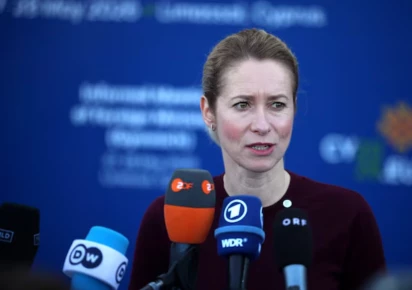

European Union foreign policy chief Kaja Kallas is preparing a major new sanctions package targeting Russia, describing it as potentially the bloc’s most extensive list since the war in Ukraine began.
In an interview with German newspaper Welt, Kallas said she plans to present the proposed measures in the coming months. She said that if the package is approved, the number of sanctioned Russian individuals, companies and organisations could rise by about one-third.
Kallas argued that continued pressure on Moscow was necessary and welcomed signs of closer coordination between the European Union and the United States. She pointed to the US Senate’s approval of a sanctions bill earlier this month as a development that could bring Washington and European capitals closer on Russia policy.
The EU foreign policy chief also warned of what she described as a growing hybrid threat facing Europe. She cited alleged incidents involving sabotage, espionage and cyberattacks, which she said were frequently linked to Russia.
Kallas also referred to recent reports of Russian missiles and drones entering the airspace of Poland and Romania. She said such incidents should not be treated lightly, arguing that Moscow was testing the readiness and defensive capabilities of European countries.
She welcomed Germany’s plans to reform its intelligence services, saying stronger intelligence capabilities would be important in responding to emerging hybrid security threats.
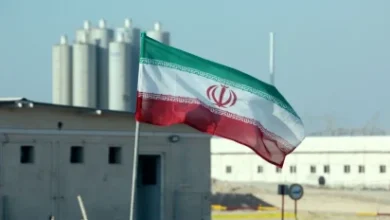
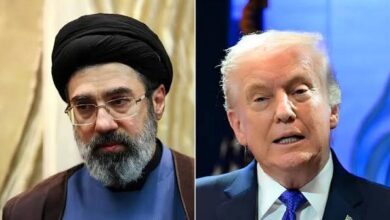
Kallas also discussed diplomatic efforts involving the United States and Iran. She said negotiations aimed at resolving tensions were continuing but warned that their outcome remained uncertain because of a lack of trust between the two sides.
She highlighted the economic consequences of the closure of the Strait of Hormuz, a vital route for global energy and maritime trade. Kallas said freedom of navigation should remain unrestricted and argued that reopening the waterway should be treated as a priority.
She also said efforts to prevent Iran from acquiring nuclear weapons should remain an important part of the international agenda.
On the Israel-Palestine conflict, Kallas reiterated the European Union’s support for a two-state solution, describing it as the only viable long-term framework for allowing Israelis and Palestinians to live securely alongside each other.
She said EU missions were continuing efforts to preserve the possibility of such a settlement and suggested that a US-backed Gaza peace initiative could provide an opportunity for progress.