
A phone should not become electronic waste because its battery has become tired.
Yet that is increasingly how we have designed our electronic lives. A battery loses its ability to hold a charge, replacing it becomes expensive or difficult, and an otherwise perfectly functional device is discarded. The screen works. The camera works. The processor works. Almost everything works except one component. Still, the entire device is treated as waste.
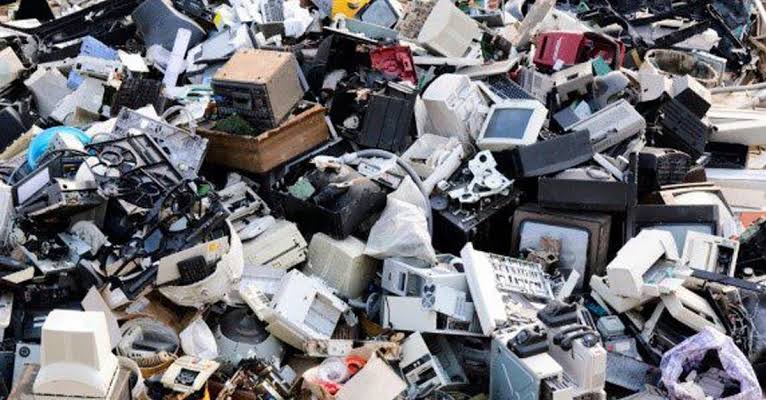
This is the absurdity at the heart of the e-waste crisis.
We have spent years talking about recycling electronic waste. We need to talk just as seriously about preventing electronic waste from being created in the first place.
The scale of the problem is enormous. The UN’s Global E-waste Monitor recorded 62 billion kilograms of electronic waste generated globally in 2022. Only 22.3 per cent was documented as formally collected and recycled in an environmentally sound manner. By 2030, global e-waste is projected to reach 82 billion kilograms.
These numbers should force us to ask a different question. Instead of asking only how we dispose of electronic products, we should ask why so many products have to be disposed of at all.
The answer often begins with design.
For years, consumers have been encouraged to replace devices rather than repair them. Batteries are glued into products. Parts are difficult to access. Repair information may not be readily available. Spare parts can become unavailable soon after a product leaves the market. In some cases, software restrictions can make replacing a component unnecessarily difficult.
A replaceable battery can therefore become the reason an entire phone, laptop or other electronic product enters the waste stream.
Other countries are beginning to recognise that this is not simply a consumer inconvenience. It is an environmental and regulatory issue.
The European Union is perhaps the clearest example. Its ecodesign rules for smartphones and tablets placed on the EU market from 20 June 2025 focus explicitly on extending product lifetimes through reparability, upgradability and battery durability. The rules include requirements concerning disassembly and repair, availability of critical spare parts, software updates and access to necessary software or firmware for professional repairers. They also introduce a repairability class for smartphones and tablets on the energy label.
The EU’s Batteries Regulation goes further. Article 11 provides that portable batteries incorporated into products must generally be removable and replaceable by the end user during the lifetime of the product. The replacement should be possible with commercially available tools without requiring specialised tools, thermal energy or solvents. Manufacturers must provide instructions and safety information, and compatible replacement batteries must be made available for at least five years after the last unit of a model is placed on the market. The regulation also prevents software from being used to obstruct the replacement of a compatible battery. These requirements apply from 18 February 2027.
This is a profound change in regulatory thinking.
The question is no longer simply: Where does the battery go when it becomes waste?
It becomes: Why should the battery’s failure make the entire product waste?
France offers another useful model. Its repairability index, introduced under its anti-waste and circular-economy legislation, gives consumers a score out of 10 based on factors including access to technical documentation, ease of dismantling, availability of spare parts and the cost of those parts. Since 2025, France has also begun replacing the repairability index with a broader durability index for certain products, incorporating reliability alongside repairability.
Pakistan should learn from both approaches.
The country is currently at an important point in developing its own response. In July 2025, Pakistan’s Ministry of Climate Change and Environmental Coordination convened a working group to examine the country’s e-waste situation, identify policy and regulatory gaps and begin developing a national e-waste management framework. The Ministry specifically highlighted unsafe handling and informal recycling practices and identified the need for formal recycling systems, national legislation and public awareness.
That framework should not be limited to recycling.
Pakistan should make repairability a central principle of e-waste law.
Manufacturers and importers of designated electronic products should be required to ensure that commonly replaced components, particularly batteries, can be replaced safely and reasonably. Spare parts should remain available for a defined period. Repair manuals and necessary technical information should be accessible to independent repairers. Software should not unnecessarily prevent compatible replacement components from functioning.
There should be genuine exceptions where safety requires professional repair. The EU model itself recognises such exceptions for certain products, including specific medical equipment and appliances designed for environments involving regular exposure to water.
But safety should not become a blanket justification for making ordinary consumer products disposable.
Pakistan should also consider introducing a repairability or durability label. A consumer buying a phone should be able to see, before purchase, whether its battery is replaceable, whether spare parts are available, how long software support will continue and how easily the product can be dismantled and repaired.
France has demonstrated that such information can be incorporated into consumer law. The EU has now gone further by embedding repairability information into its product rules for smartphones and tablets.
There is also a strong economic argument for this approach.
Pakistan has a large network of people earning their livelihoods through electronics repair. A right-to-repair framework could bring these technicians into a more formal circular economy through training, certification, safe battery-handling practices and access to legitimate repair information and parts.
Repair is therefore not simply about saving the environment. It can also mean preserving livelihoods, reducing imports and keeping valuable materials in productive use for longer.
This should be accompanied by extended producer responsibility. Companies that place electronic products on the Pakistani market should bear responsibility for those products throughout their life cycle. That means financing collection, reuse, refurbishment and environmentally sound recycling rather than leaving the entire burden to municipalities, informal workers and consumers.
The international direction is already clear. The Global E-waste Monitor identifies stronger e-waste legislation and extended producer responsibility as important elements of effective national systems.
Pakistan’s policy should also be consistent with the international framework under the Basel Convention, which has developed technical guidelines concerning environmentally sound management and the transboundary movement of electrical and electronic waste and used electrical and electronic equipment.
But the central principle should remain simple: prevention comes before recycling.
A product that remains in use for another five years is better than a product that is recycled today and replaced with a new one tomorrow.
Pakistan should therefore measure more than the tonnes of e-waste collected. It should measure how many devices were repaired, how many batteries were replaced, how many products were refurbished and how long electronic products remained in use.
The country is now developing its national e-waste framework. It has an opportunity to avoid repeating the mistakes of a disposable economy.
A battery should be replaceable.
A screen should be repairable.
A computer should not become obsolete because one component failed.
And an electronic product should not be designed with its own graveyard built into it.
If Pakistan is serious about tackling e-waste, the first question should not be how efficiently we can dispose of our electronics.
It should be why we designed them to become disposable in the first place.