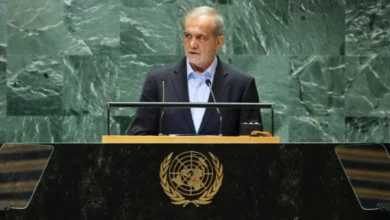

Iranian Foreign Minister Abbas Araghchi has criticised European countries over their stance on the ongoing conflict between Iran, the United States and Israel, saying Europe cannot claim to support the rule of law and human rights while remaining indifferent to or supporting military action against Iran.
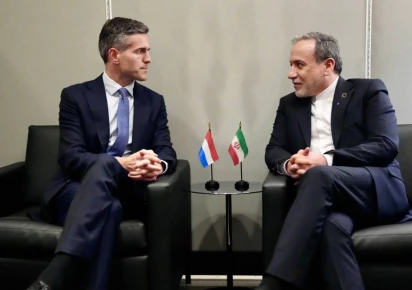
Araghchi made the remarks during a meeting with Dutch Foreign Minister Tom Berendsen in New York on Tuesday, on the sidelines of the 81st session of the United Nations General Assembly.
According to Iranian state media, the two foreign ministers discussed bilateral relations as well as regional and international developments. Araghchi accused European countries of applying what he described as double standards to developments in the region, particularly in their response to US and Israeli actions against Iran.
The Iranian foreign minister also blamed what he described as repeated US treaty violations and Washington’s pursuit of war for growing insecurity in the Persian Gulf and the Strait of Hormuz.
He said lasting peace and stability in the region would require an end to US actions that Tehran considers illegal and aggressive, along with respect for Iran’s national rights and interests.
Berendsen, meanwhile, stressed the importance of diplomatic efforts and shared the Netherlands’ assessment of the current situation in the region and relations between Iran and Europe.
Araghchi also held talks with French Foreign Minister Jean-Noel Barrot in New York and criticised what Iranian media described as France’s interventionist position toward Tehran.
During the meeting, the Iranian foreign minister said the French embassy in Iran must comply with the country’s laws and regulations.
He also criticised Paris’ position on the conflict, particularly its response to US and Israeli military action against Iran.
Araghchi accused France of maintaining what he called double standards on human rights. He said Paris could not raise concerns about human rights while remaining silent over what Tehran describes as violations against Iranian civilians.
He further criticised French cooperation with US sanctions imposed on Iran.
Araghchi said Tehran wanted relations with France and other countries to be based on mutual respect and shared interests. He added that Iran would continue to defend its national interests.
Meanwhile, Iran has conveyed its conditions for ending the ongoing conflict to the United States through a Qatari mediator, Iranian Foreign Ministry spokesperson Esmail Baghaei said.
According to Iranian state media, Tehran called for an end to the war on all fronts and a halt to what it described as US acts of aggression.
Iran also demanded an end to the naval blockade and economic pressure, along with the release of Iranian assets, Baghaei said.
US Special Envoy Steve Witkoff confirmed that discussions between the two sides had taken place through mediators on the sidelines of the UN General Assembly.
Witkoff said the mediators moved between the US and Iranian delegations during the talks. He described the discussions as a completed round that Washington hoped would be constructive and promising.
He added that mediators would continue their diplomatic efforts.
Iran has restored around half of the production capacity damaged at the South Pars gas field, according to Deputy Oil Minister Ahmad Zeraatkar, as reported by semi-official Fars news agency.
Zeraatkar said the remaining restoration work was expected to be completed before winter.
He had previously said in late August that around 40 per cent of the damaged capacity had been brought back online.
The South Pars field is a major source of Iran’s natural gas production, making the restoration of its facilities important for the country’s energy supply.
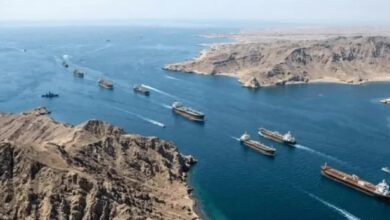
Shipping activity through the Strait of Hormuz remained significantly below its recent average on Tuesday.
Preliminary data showed that only three commodity vessels passed through the strategic waterway, compared with four a day earlier and an average of about 15 vessels over the previous 10 days.
The figures could change because some vessels turn off their tracking systems while sailing through the area.
All three vessels recorded in the latest data were moving out of the strait. One Panamax tanker was among them.
A liquefied natural gas carrier, Al Mafyar, was also detected inside the waterway after it had last been recorded outside the strait on September 19.
The Strait of Hormuz is one of the world’s most important energy routes and previously carried around a fifth of global oil and gas supplies.