


Saudi Arabia has vowed a strong response to renewed Houthi attacks as fighting intensifies across Yemen, raising fears of a wider regional conflict and potential disruption to international maritime trade.
According to reports carried by Arab media on Monday, a missile strike targeting King Khalid International Airport in Riyadh killed 13 people and injured 309. A Pakistani national was among those reported killed in the attack, while further casualties were reported following another strike on Sunday.
Saudi authorities said Saturday’s attack killed four Saudi nationals, two Bangladeshis and one citizen each from the United States, Egypt, Jordan, Syria, Palestine and Sudan. The reported death toll and casualty figures could not be independently verified from the available information.
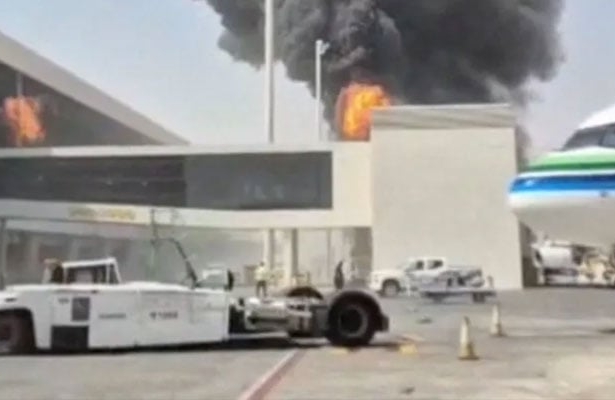
The attack reportedly involved a ballistic missile that struck a passenger terminal and triggered a fire. The Saudi-led coalition condemned the strike as a war crime, while the Houthis claimed responsibility.
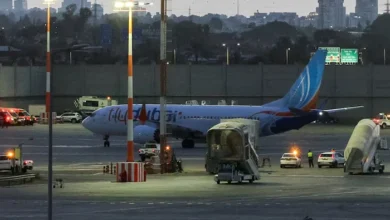
Flights at the airport were suspended, cancelled or diverted to other locations following the incident. Educational institutions in Riyadh were also instructed to shift to online learning for a week as authorities responded to the security situation.
Houthi attacks target Saudi airports
The latest violence follows a series of reported attacks on Saudi infrastructure. Foreign media reports said the Houthis had targeted four Saudi airports in Riyadh, Abha, Jazan and Najran over the past week.
Saudi authorities reported three injuries in attacks on Jazan and Najran airports, while strikes involving Abha and Riyadh reportedly caused three deaths and 36 injuries in separate incidents.
The Houthis also claimed to have targeted an oil refinery operated by Saudi Aramco in Rabigh, a Red Sea coastal city. Saudi authorities had not confirmed the reported refinery attack in the source report.
The group had previously announced a maritime blockade against Saudi Arabia in July, adding to concerns over shipping security in the region.
Fighting spreads across Yemen
Meanwhile, clashes between Houthi fighters and forces aligned with Yemen’s internationally recognised government have continued in several parts of the country.
Houthi-linked media reported attacks in Haifan district in Taiz province and in the northern province of Saada. Yemeni government forces also released footage that they said showed a Houthi drone being shot down at Jabal Saber.
The Saudi-led coalition said it had intercepted a ballistic missile heading towards Al-Kharj and destroyed a drone in the Eastern Province.
Yemeni government forces have also reported significant battlefield gains. Military spokesman Colonel Majid Abdullah Al-Nuzaili claimed that approximately 2,000 military operations had killed more than 1,150 Houthi fighters and destroyed ammunition depots and 180 combat, transport and supply vehicles.
These claims have not been independently verified, according to Arab media reports.
Government forces launch new offensive
Saudi-backed Yemeni forces launched an operation called “Fajr Yemen” on October 4 to regain territory held by the Houthis.
Government forces claimed to have retaken the port city of Mokha and the district of Dhubab near the strategic Bab al-Mandab Strait. The Houthis rejected those claims.
Fighting has also intensified around Taiz, where the siege has reportedly tightened, while clashes have spread to Marib and Al Jawf.
The developments threaten to deepen Yemen’s prolonged conflict, which has already caused extensive civilian suffering and displacement.
Could the US join Saudi military operations?
The possibility of direct American military involvement has also emerged as a major concern.
An Arab media report said US President Donald Trump had not ruled out American participation in Saudi operations against the Houthis and indicated that the possibility would be reviewed. Trump also expressed an intention to speak with Saudi Crown Prince Mohammed bin Salman.
According to US media reports, Washington has been assisting Saudi-backed operations through intelligence sharing, target identification and military planning.
The United States previously provided intelligence, logistical support and weapons to the Saudi-led coalition after its intervention in Yemen began in 2015, although it did not directly participate in the coalition’s airstrikes at that time.
In 2021, the administration of then-President Joe Biden ended US support for what it described as offensive operations by the Saudi-led coalition, citing the worsening humanitarian crisis in Yemen.
With the latest attacks intensifying and Washington considering its options, the prospect of deeper US involvement could further complicate efforts to contain the conflict.
The renewed fighting following the breakdown of a ceasefire has heightened concerns over regional security, civilian casualties and the safety of shipping routes around the Red Sea and Bab al-Mandab Strait, a crucial passage for international trade.
As Saudi Arabia prepares its response, the scale of any retaliation and the possibility of wider international involvement remain uncertain.