


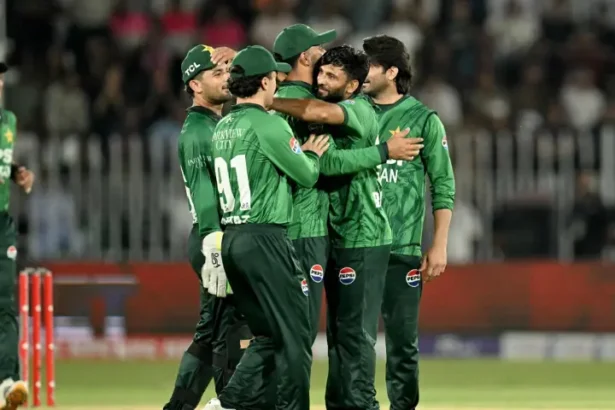

Pakistan may have won their three-match T20 International series against Sri Lanka, but the final defeat has exposed several weaknesses that the team must address before the 2028 T20 World Cup.
Sri Lanka defeated Pakistan by eight wickets in the third T20I on Tuesday, chasing a target of 169 after Kusal Mendis produced an outstanding unbeaten 87. The result came after Pakistan had secured the series with a commanding 82-run victory in the second match, highlighting both the team’s potential and its inconsistency.
The series marked an important phase in Pakistan’s restructuring, with Sahibzada Farhan taking over the captaincy from Salman Ali Agha in 2025 and several established players, including Babar Azam, Shaheen Afridi and Haris Rauf, missing from the squad.
Although Pakistan finished the series with two victories, the final match offered valuable lessons about the team’s middle order, wicketkeeping options, bowling combinations and leadership.
Head coach Mike Hesson admitted Pakistan had fallen short with the bat in the final match.
“We made a few changes and lost our way a little bit in the middle order. We probably left ourselves 20 or 30 runs short,” he said after the defeat.
Pakistan began aggressively, with Farhan and Fakhar Zaman adding 34 runs in the first three overs. However, Sri Lankan pacer Eshan Malinga changed the momentum with a double-wicket maiden, dismissing Fakhar and the in-form Maaz Sadaqat.
The middle order struggled to recover. Hasan Nawaz scored 16 off 17 balls, while Khawaja Nafay managed only three runs from five deliveries. Imran Randhawa and Abdul Samad also failed to turn their starts into substantial contributions.
Arafat Minhas was one of the bright spots, scoring an unbeaten 34 off 20 balls and sharing a 66-run partnership with Farhan, Pakistan’s longest stand of the innings.
Farhan finished the series with an impressive 238 runs across three matches, strengthening his position as a key figure in Pakistan’s T20 plans.
However, Pakistan’s batting concerns extend beyond individual performances. Nafay, for instance, has produced stronger numbers when batting in the top three than lower down the order. His record suggests that using players in their preferred positions could help Pakistan build a more effective batting combination.
The team also needs to settle its wicketkeeping situation following Mohammad Rizwan’s absence. Nafay and Usman Khan have offered options behind the stumps, but Pakistan still lack an undisputed first-choice wicketkeeper.
Bowling selection presents another challenge. Sufiyan Muqeem, Abrar Ahmed and Minhas provide spin options, while the role of Shadab Khan remains open to debate given his recent international bowling returns. Fast bowler Razaullah has also attracted attention for his pace, with Hesson describing him as raw but naturally quick.
The coach defended the team’s experimentation, pointing to Pakistan’s strong results over the previous 18 months as justification for giving emerging players opportunities.
He also backed Farhan’s early progress as captain, saying the opener was beginning to trust his instincts and would improve with experience.
With two years remaining before the 2028 T20 World Cup, Pakistan have time to refine their combinations and strengthen their approach. The Sri Lanka series showed that the top order can deliver and several emerging players have potential.
But the final defeat was a reminder that winning a series does not automatically resolve deeper problems. Pakistan’s next challenge is to turn promising individual performances into a balanced, adaptable team capable of competing consistently against the world’s best.