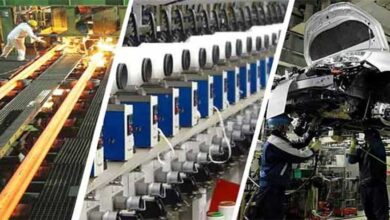



Pakistan’s large-scale manufacturing sector recorded modest growth in August 2026, as gains in petroleum products, automobiles and garments were offset by declining production in food, chemicals, pharmaceuticals, textiles and steel.
According to data released by the Pakistan Bureau of Statistics, the Large-Scale Manufacturing (LSM) Index reached 113.19 in August, compared with 112.45 in the same month last year. However, output fell 4.96 per cent compared with July, highlighting continued pressure on industrial activity.
During July and August of the fiscal year 2026-27, large-scale manufacturing output increased by 1.85 per cent compared with the corresponding period last year. The overall improvement remained limited, with several major industrial sectors reporting lower production.
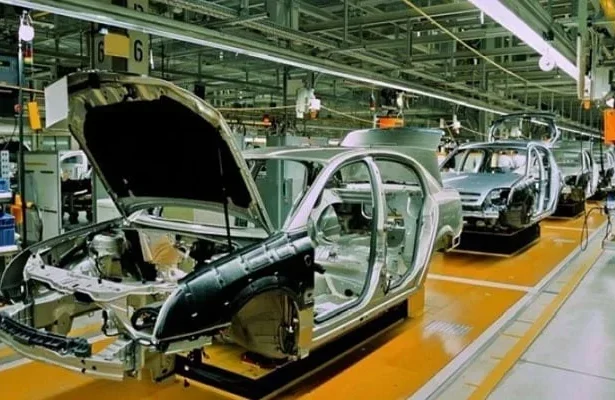
Petroleum products emerged as the strongest performer among the major manufacturing groups, recording annual growth of 31.85 per cent in August. Automobile production increased by 11.66 per cent, while garment manufacturing rose by 10.85 per cent. Tobacco production also registered growth of 10.11 per cent.
Other transport equipment recorded an increase of 26.95 per cent. Wood product manufacturing surged by 242.71 per cent, although the increase was partly attributed to a low base in the previous year.
Despite these gains, declining output in several key industries continued to weigh on overall manufacturing performance. Food production fell by 10.49 per cent, while chemical manufacturing declined by 12.93 per cent. Pharmaceutical production dropped by 8.86 per cent, and iron and steel output decreased by 11.56 per cent.
Textile production, a major component of Pakistan’s industrial sector, also contracted by 2.80 per cent in August. Beverage manufacturing fell by 7.79 per cent, while paper and board production declined by 5.41 per cent. Fertiliser output decreased by 9 per cent, and other manufacturing, including football production, recorded a sharp contraction of 37.97 per cent.
Chemical products also faced significant pressure, with production falling by 20.36 per cent. These declines indicated that the recovery remained concentrated in selected industries rather than spreading across the wider manufacturing sector.
Several other industries recorded positive growth during the month. Fabricated metal products increased by 7.07 per cent, while rubber products rose by 5.06 per cent. Production of computers, electronics and optical equipment grew by 4.91 per cent, while electrical equipment recorded a smaller increase of 2.06 per cent. Furniture manufacturing expanded by 73.47 per cent.
Cement production declined by 3.52 per cent in August compared with the same month last year. However, the sector recorded cumulative growth of 1.26 per cent during July and August.
The performance of major industries during the first two months of the fiscal year showed stronger gains in selected segments. Automobile production increased by 32.45 per cent, while garments recorded growth of 16.69 per cent. Petroleum products rose by 15.48 per cent, other transport equipment increased by 37.04 per cent, and tobacco production grew by 22.35 per cent.
These gains helped support overall industrial output despite continued weakness in food, textiles, chemicals, pharmaceuticals, and iron and steel manufacturing.
The latest figures suggest that Pakistan’s industrial recovery remains uneven. Although automobiles, petroleum products and garments have supported growth, falling production in several major sectors continues to limit broader expansion in large-scale manufacturing.