

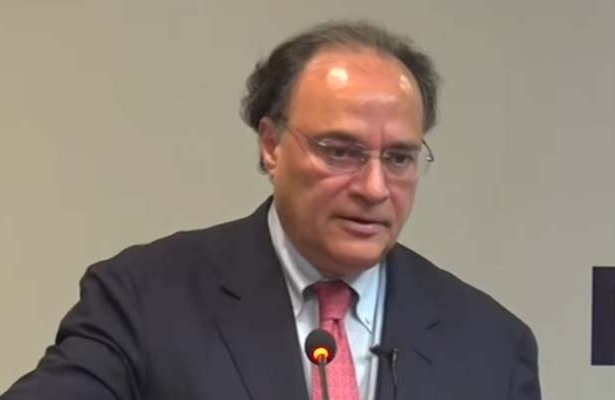

Federal Finance Minister Muhammad Aurangzeb has warned that ongoing global conflicts could affect the prices of essential commodities, as uncertainty continues to weigh on the international economy. However, he said Pakistan’s economic recovery remained on track despite external challenges.
Addressing a ceremony in Lahore on Saturday, the finance minister said the government was working to strengthen the economy, facilitate investors and introduce reforms to improve the tax system. He noted that international investors were considering opportunities in Pakistan alongside other markets, with investors from Europe and the United States also showing interest in Pakistani bonds.
Aurangzeb said the government was implementing reforms to improve tax collection and expand the tax base. He added that the private sector was being encouraged to play a greater role in driving economic growth and creating investment opportunities.
The minister also discussed the government’s efforts to protect consumers from the impact of rising energy costs. He said the government had tried to ensure that Pakistanis did not have to stand in long queues for petrol, unlike people in some other countries.
He said the government had introduced targeted subsidies to provide relief to those who needed it most. According to the minister, owners of large vehicles did not require the same level of assistance, making targeted support a more appropriate approach than providing subsidies to everyone.
Aurangzeb said Pakistan was also preparing to meet its energy requirements during the coming winter. The government was working to ensure adequate supplies of natural gas and liquefied natural gas (LNG) to meet domestic demand.
He maintained that the country had not been allowed to face an energy shortage and described the supply situation for crude oil and other energy sources as satisfactory. Ensuring uninterrupted energy supplies remains important for economic stability, particularly as international conflicts create uncertainty in global energy markets.
The finance minister said Pakistan had faced balance-of-payments crises in the past because of its dependence on imports. However, he noted that sustained efforts over the past four to five years had helped restore the country’s credit rating to the B category.
He expressed optimism about the outlook for remittances, saying inflows from overseas Pakistanis could reach $44 billion during the current fiscal year.
Aurangzeb said there had been concerns that the war could reduce remittances, but the country had instead recorded an increase. He described the trend as encouraging for Pakistan’s external accounts and overall economic stability.
The minister’s remarks come as the government seeks to maintain economic progress while managing risks from international conflicts, energy market uncertainty and potential increases in the cost of essential goods.