


Venezuelan opposition leader María Corina Machado has returned to her country after more than 10 months in exile, marking a significant development in the country’s uncertain political situation.
Machado announced her arrival on Sunday through a post on X, writing that she was back with her supporters. Her return followed several unsuccessful attempts to re-enter Venezuela in recent months.
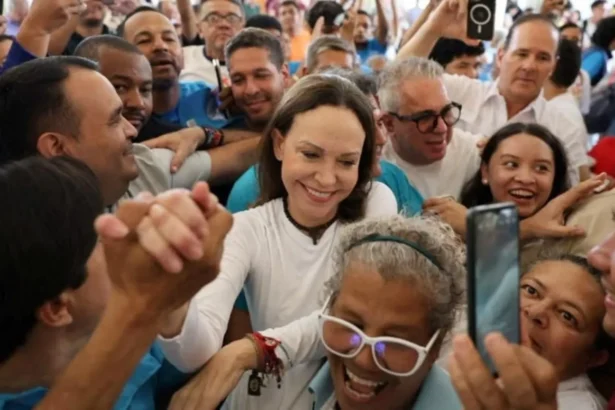
Supporters welcomed Machado in the state of Lara, where she attended Mass at a church before beginning her journey to the capital, Caracas. Crowds gathered along the route to greet her, while videos and photographs showed her smiling and waving to supporters from a vehicle as she arrived in the capital late on Sunday.
Machado described her return as a moment of reunion and called for the freedom of political prisoners and Venezuela. Her ally, former opposition presidential candidate Edmundo González, also confirmed her arrival and said her return was an important moment for Venezuelans seeking political change.
González said he planned to join Machado in the country to advance what he described as the struggle for freedom.
Machado left Venezuela more than 10 months ago to travel to Norway to receive the Nobel Peace Prize. Before her departure, she had spent time in hiding amid political pressure from the government of then-President Nicolás Maduro.
She won an opposition primary in 2023 with an overwhelming majority but was barred from contesting the 2024 presidential election by authorities aligned with Maduro. She rejected the accusations used to justify the ban, describing them as politically motivated.
González subsequently ran against Maduro in the election. Although the government-aligned electoral authority declared Maduro the winner, it did not publish detailed voting results. The opposition disputed the outcome and presented copies of voting tallies that it said showed González had won.
Venezuela’s political situation changed dramatically in January, when US forces seized Maduro, who was taken to New York to face charges related to drugs, weapons and torture. Maduro has pleaded not guilty. His deputy, Delcy Rodríguez, was subsequently sworn in as interim president and later signed an oil agreement offering favourable terms to the United States.
Machado’s return follows months of uncertainty over whether she would be allowed back into the country. An adviser said in September that she had made seven attempts to return in the preceding weeks but had been unable to do so. Reports suggested Washington had played a role in delaying her return, an allegation the US denied.
Her next political steps remain unclear. Machado has previously said she would seek the presidency if another election were held. A spokesperson described her return as an important step towards a democratic transition and called for free, fair and verifiable presidential elections.
The spokesperson also thanked US President Donald Trump, Secretary of State Marco Rubio, Congress and allied governments for their support.
Trump told reporters on Sunday that he was unaware of the details of Machado’s return but hoped she was safe. In January, Machado had visited the White House and presented Trump with her Nobel Peace Prize medal. The Nobel committee has clarified that the prize itself cannot be revoked, shared or transferred to another person.
Rubio said US-backed reconciliation talks had helped create conditions for Machado’s safe return. He pointed to the release of hundreds of political prisoners and the return of opposition figures from exile, describing the talks as an opportunity to achieve peaceful political change and lasting democracy in Venezuela.