


LAHORE: Imprisoned Pakistan Tehreek-e-Insaf (PTI) leaders have called for a national reconciliation, respect for the Constitution and the rule of law, warning that political instability and economic challenges are deepening the country’s crises, it was reported on Wednesday.
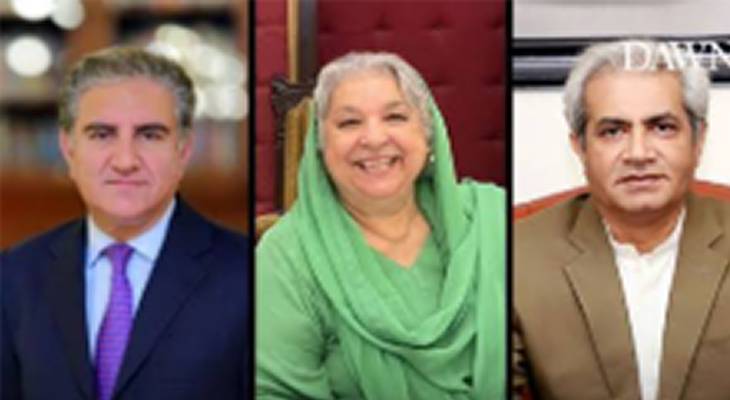
In a joint statement conveyed through their lawyer, Rana Mudassar Umar, Shah Mahmood Qureshi, Dr Yasmin Rashid, Ijaz Chaudhry, Mian Mahmood-ur-Rashid and Umar Sarfraz Cheema criticized the government’s policies and alleged that constitutional and democratic institutions were being undermined.
PTI leaders alleged the government was using unlawful measures to sideline the party and its founder, adding that Governor’s Rule in Khyber Pakhtunkhwa would not weaken public support for him.
The leaders also noted that the PTI’s appeal against governor’s rule was scheduled for hearing at the Peshawar High Court on November 10, and stated that the matter should have been taken up earlier.
The statement expressed concern over the 26th and 27th Constitutional Amendments, alleging that they had weakened the judiciary.
PTI leaders recalled Benazir Bhutto and Zulfikar Ali Bhutto’s sacrifices for democracy and criticized Bilawal Bhutto Zardari, saying his statements contradicted his family’s political legacy.
They also raised allegations regarding police conduct and claimed that more than 3,000 people had been killed in encounters involving the Counter Crime Department (CCD) in Punjab.
The PTI leaders further pointed out media freedom and how it is being restricted through the Prevention of Electronic Crimes Act (PECA).
The statement also highlighted rising inflation, poverty, hunger and declining human development, arguing that higher petrol, gas and electricity prices were adding to public hardships.
It further claimed that political uncertainty and economic difficulties were discouraging domestic and foreign investment.
Calling for a change in approach, the leaders urged the government to pursue dialogue with the opposition and introduce confidence building measures rather than attempting to eliminate political opponents.
They also explained that national unity and public confidence were essential to combating terrorism.
The leaders called for all stakeholders to be consulted in developing an effective counter terrorism strategy, including lasting progress required national reconciliation, constitutional respect and the supremacy of law.