

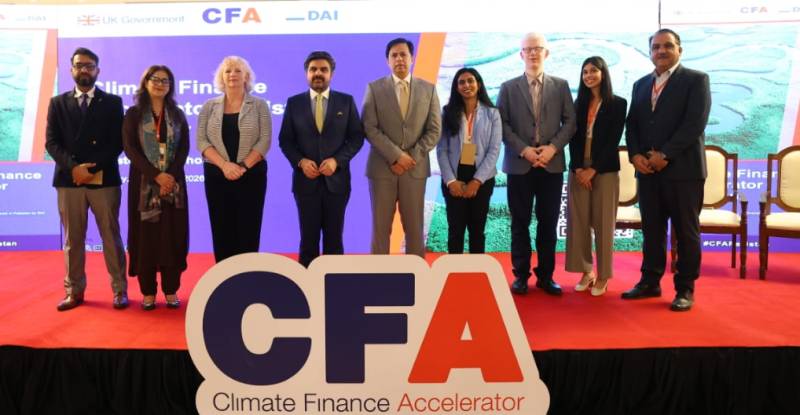

Ten Pakistani businesses are seeking combined $51 million over the next 12 months to expand practical climate solutions, following specialist support from the UK Government.
The businesses are developing cleaner energy, transport, construction, farming and waste solutions. With UK-funded technical and financial advice, they strengthened their investment proposals and presented them directly to investors, banks and development finance institutions in Karachi.
CFA Pakistan, implemented by DAI on behalf of the UK Government, gave each business technical, financial, and gender equality and social inclusion support to prepare for investment. Between 2022 and 2024, the programme supported 22 projects in Pakistan and helped mobilise $40 million in investment for climate projects.
The two-day Climate Finance Accelerator Pakistan Investor Roadshow on 27 and 28 October connected the businesses with potential investors. Together, the ten businesses across five sectors: agriculture and land use, waste and circular economy, clean energy, building and construction, and e-mobility. Together they have a three-year investment pipeline worth $120 million.
The roadshow also brought together government, investors and industry representatives to discuss how Pakistan can attract more private finance for climate projects by addressing policy, regulatory and market barriers.
Alison Blackburne, British Deputy High Commissioner Karachi, said:
“The UK’s climate partnership with Pakistan is increasingly focused on mobilising climate finance, strengthening adaptation and resilience, and supporting the policy and institutional systems needed for implementation. The UK-Pakistan Green Compact, which we signed with the Government of Pakistan last December, provides the wider partnership framework, bringing together climate and clean-energy, finance, policy dialogue, private investment, green skills and international cooperation.”
Welcoming guests on behalf of the Government of Pakistan, Syed Nasir Hussain Shah, Minister to Government of Sindh for Local Government & Housing Town Planning, reaffirmed the government’s commitment to working with the private sector and development partners to mobilise finance for climate action:
“Climate change is often discussed primarily as an environmental challenge. But for Pakistan, it is much more than that. It is an economic challenge. It is a development challenge. It is a challenge for our infrastructure, our agriculture, our cities, our energy systems, and, ultimately, for the livelihoods of our people. The role of government, therefore, is increasingly about creating the conditions in which private capital can invest with confidence.”
Vardah Malik, Team Lead, CFA Pakistan, who has led the programme’s capacity-building cycle with the cohort, said:
“Today is about connecting investor-ready Pakistani climate businesses with the investors who can fund them, and about turning those conversations into lasting partnerships,”
The 2026 cohort includes the following businesses:
Agriculture, Forestry and Other Land Use
• A.S. Enterprises: Agricultural stubble converted to Bio-Coal.
• TrashIt: Organic waste and crop residue to microbe-enriched compost.
Waste Management and Circular Economy
• Sahara Recycling: Integrated waste recycling parks for municipal solid waste.
• Waste Busters JV EnterTech: Organic waste management utilising Black Soldier Fly technology.
Clean Energy and Energy Transition
• Biowaste Energy Ventures Ltd: Biomethane and waste-to-energy platform.
• GoSeedIT: Pay-as-you-go solar for underserved mid-market customers.
• BioEnergy Solution Pvt. Ltd: Biomass fuel pellets from agricultural and organic waste.
Building and Construction
• EcoEdge AI: Sensor and AI-driven building energy optimisation.
E-mobility
• BusCaro: Urban mobility platform for commuters and transport suppliers.
• Daewoo Express: Electric bus fleet and charging infrastructure.
Since 2022, the UK-funded programme has supported 22 projects in Pakistan and helped mobilise US$40 million for climate projects. If the latest businesses secure investment, their work could reduce pollution, create jobs, improve waste management and expand access to cleaner energy and transport.