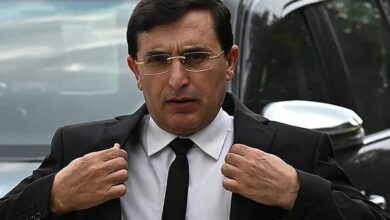


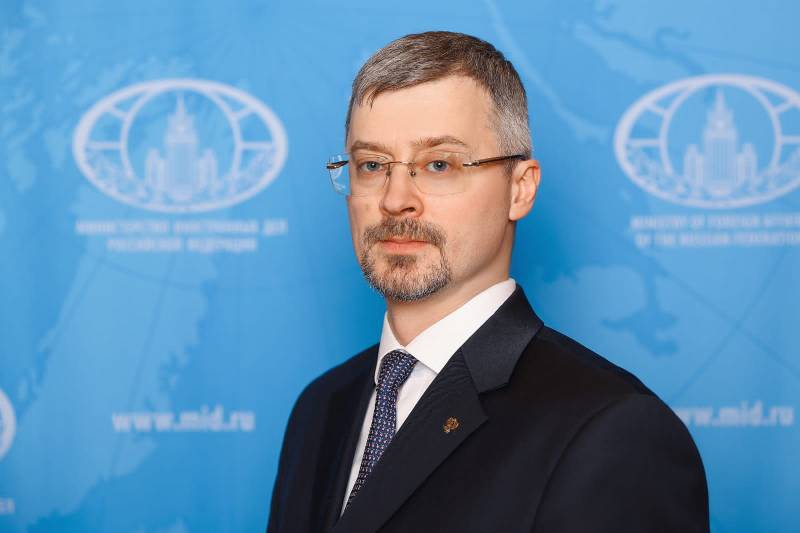

ISLAMABAD: Russian Ambassador to Pakistan Albert P. Khorev has said Moscow would consider a Pakistani initiative to mediate in the Ukraine conflict if Islamabad wished to facilitate a resolution.
He added that Russia could also mediate between Pakistan and Afghanistan if both countries agreed.
Khorev was speaking at the launch of Ukraine War: Beyond the Headlines, authored by Munir Ahmed. The event was attended by Senator Mushahid Hussain Sayed, Sardar Masood Khan, retired general Asad Durrani, researcher Dr Almas Haider Naqvi and Professor Dr Gul Ayesha Bhatti.
Khorev said Russia was closely examining proposals from friendly countries, including South Korea and Brazil, for resolving the Ukraine conflict. He said Moscow appreciated Pakistan’s position on the issue and would consider a mediation initiative if Islamabad wished to pursue one.
The ambassador said Russia was seeking a political and diplomatic solution to the Ukraine crisis and had neither plans nor motivation to go to war with Europe. He maintained that European sanctions against Russia would not help resolve the conflict.
According to Khorev, Ukraine received $160 billion in Western military assistance between 2022 and 2025, while 54 countries were providing military and financial support to Kyiv. He also claimed that Western weapons had caused $13.6 billion in damage to Russian infrastructure.
Khorev said the book comprehensively covered the causes of the conflict, its effects on the parties involved, Western policies towards Russia and alleged war crimes. He also said the West was playing a dual role in the conflict, with the United States and other Western countries acting against Russian interests.
Addressing the ceremony, Senator Mushahid Hussain Sayed said the perception that Pakistan had always stood with the United States and the West was incorrect.
He cited Pakistan’s support for China during the 1960s, when the United States and Western countries were strongly opposed to Beijing. He also recalled Pakistan’s invitation to Iran’s then-president during the Iran-Iraq War, when the United States and Arab countries supported Iraq.
Mushahid Hussain said the Ukraine conflict was neither a core issue for Pakistan nor a matter of deep national interest. He added that Russia appreciated Islamabad’s neutral position and that Pakistan had maintained neutrality on two occasions under different governments when resolutions critical of Moscow were considered.
He also highlighted Pakistan’s role in facilitating efforts to reduce tensions between the United States and Iran, saying Islamabad had been working for the past three months to promote peace.
Criticising NATO’s strategic outlook, he said the alliance portrayed Russia and China as adversaries despite China being thousands of kilometres away from the Baltic region. He argued that NATO sought to justify its continued existence following the collapse of the Soviet Union.
Mushahid Hussain also questioned what he described as inconsistencies in Western security policy, noting that Western powers had previously allied with Afghan fighters against the Soviet Union before later identifying Islamic fundamentalism as a security threat.
Researcher Dr Almas Haider Naqvi said the book highlighted what its author described as Western double standards, arguing that Western countries had condemned military interventions involving Iraq, Afghanistan and Libya while supporting Ukraine.
He said the publication also examined the effects of the Ukraine conflict on developing countries, particularly food and energy crises, and criticised what he described as one-sided media coverage of the war.
Professor Dr Gul Ayesha Bhatti said books about Russia were difficult to find in Pakistan and that language barriers further limited access to available publications. She described Munir Ahmed’s book as a useful resource for understanding Russia’s perspective.
She added that the publication demonstrated that independent expression and documentation remained possible in the Global South. She also noted that war in Europe and the energy crisis were directly affecting countries in Asia and Africa.