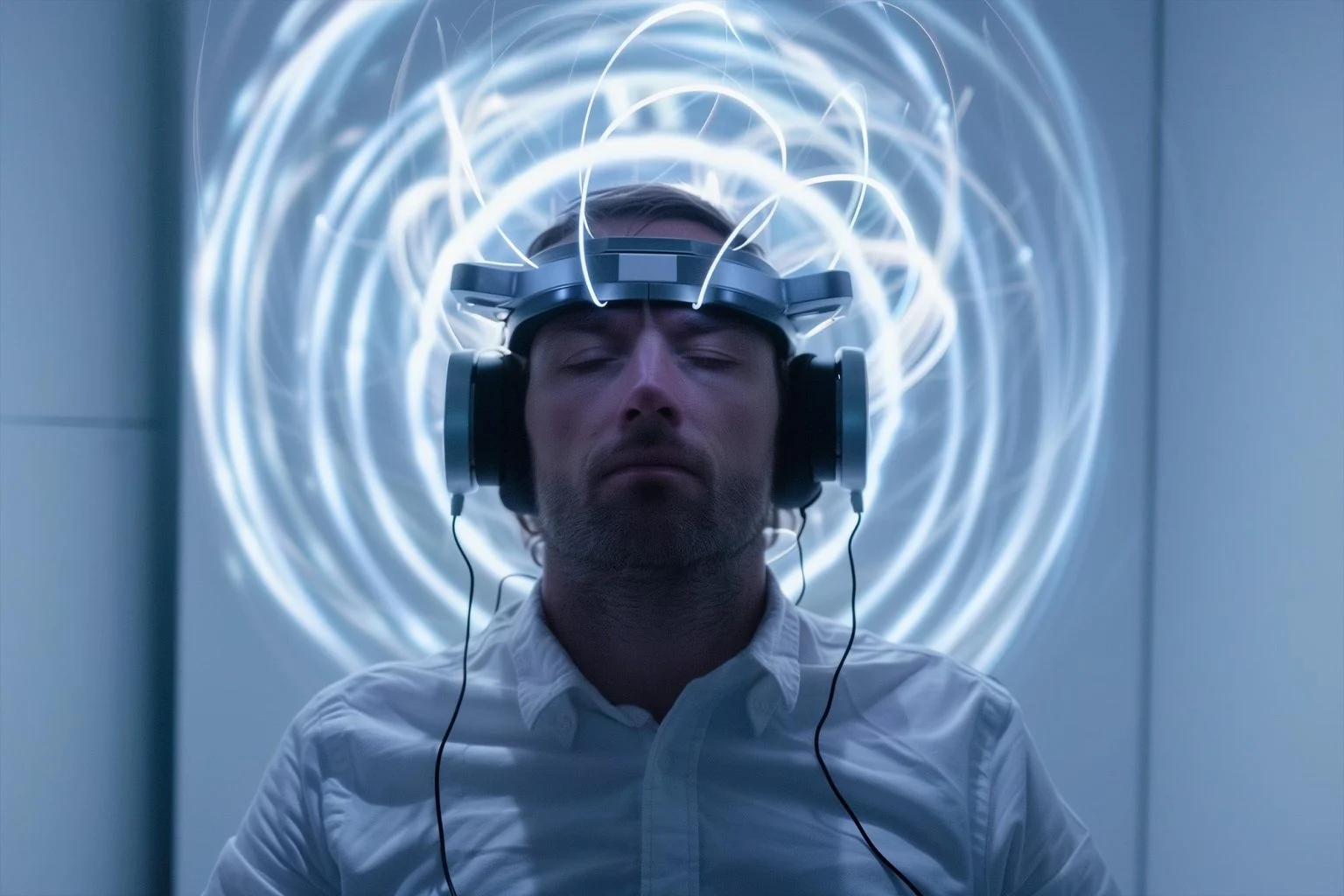

LONDON: Repetitive transcranial magnetic stimulation offers rapid depression relief for patients unresponsive to conventional treatments.
Accelerated over just five days, this therapy targets key brain areas to adjust imbalances linked to depression, demonstrating significant effectiveness.
Transcranial Magnetic Stimulation to Treat Depression
A type of therapy that applies a magnetic field to both sides of the brain has shown promise in rapidly treating depression, especially in patients who haven’t responded to standard treatments.
This therapy, called repetitive transcranial magnetic stimulation (TMS), uses an electromagnetic coil placed against the scalp to send a high-frequency magnetic field into the brain.
About one in 20 adults is estimated to suffer from depression. While treatments like antidepressant medications and cognitive behavioral therapy (talk therapy) are available, nearly one in three patients finds these options ineffective.
Depression often involves an imbalance in brain activity, with some regions, such as the dorsolateral prefrontal cortex, being underactive, while others, like the orbitofrontal cortex (OFC), show overactivity.
Accelerated TMS and Its Efficacy
Repetitive transcranial magnetic stimulation applied to the left side of the dorsolateral prefrontal cortex (an area at the upper front area of the brain) is approved for treatment of depression in the UK by NICE and in the US by the FDA. It has previously been shown to lead to considerable improvements among patients after a course of 20 sessions, but because the sessions usually take place over 20-30 days, the treatment is not ideal for everyone, particularly in acute cases or where a person is suicidal.
In research published in Psychological Medicine, scientists from Cambridge, UK, and Guiyang, China, tested how effective an accelerated form of TMS is. In this approach, the treatment is given over 20 sessions, but with four sessions per day over a period of five consecutive days.
The researchers also tested a ‘dual’ approach, whereby a magnetic field was additionally applied to the right-hand side of the OFC (which sits below the dorsolateral prefrontal cortex).
Clinical Trial Results
Seventy-five patients were recruited to the trial from the Second People’s Hospital of Guizhou Province in China. The severity of their depression was measured on a scale known as the Hamilton Rating Scale of Depression.
Participants were split randomly into three groups: a ‘dual’ group receiving TMS applied first to the right- and then to the left-hand sides of the brain; a ‘single’ group receiving sham TMS to the right-side followed by active TMS applied to the left-side; and a control group receiving a sham treatment to both sides. Each session lasted in total 22 minutes.
There was a significant improvement in scores assessed immediately after the final treatment in the dual treatment group compared to the other two groups. When the researchers looked for clinically-relevant responses – that is, where an individual’s score fell by at least 50% – they found that almost half (48%) of the patients in the dual treatment group saw such a reduction, compared to just under one in five (18%) in the single treatment group and fewer than one in 20 (4%) in the control group.
Long-Term Effects and Expert Insights
Four weeks later, around six in 10 participants in both the dual and single treatment groups (61% and 59% respectively) showed clinically relevant responses, compared to just over one in five (22%) in the control group.
Professor Valerie Voon from the Department of Psychiatry at the University of Cambridge, who led the UK side of the study, said: “Our accelerated approach means we can do all of the sessions in just five days, rapidly reducing an individual’s symptoms of depression. This means it could be particularly useful in severe cases of depression, including when someone is experiencing suicidal thoughts. It may also help people be discharged from hospital more rapidly or even avoid admission in the first place.
“The treatment works faster because, by targeting two areas of the brain implicated in depression, we’re effectively correcting imbalances in two import processes, getting brain regions ‘talking’ to each other correctly.”