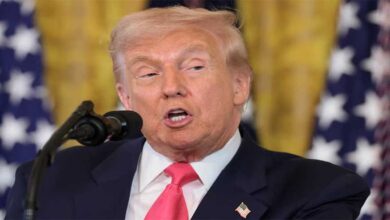
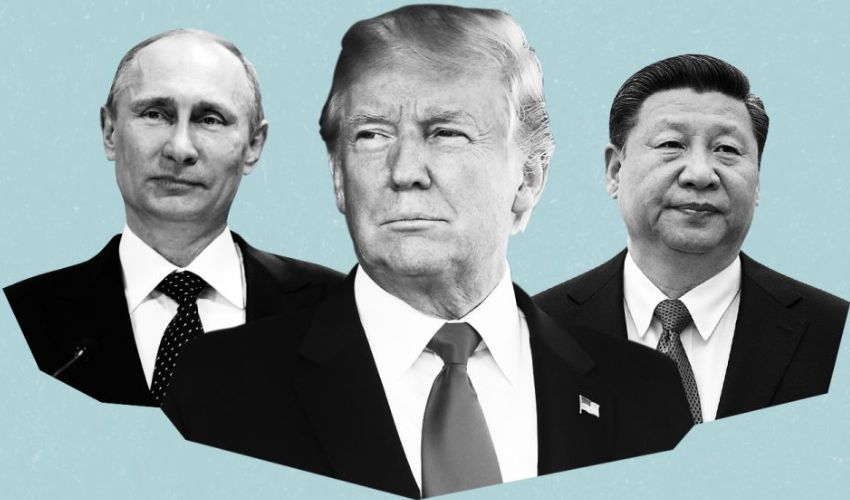

During his first term in office, U.S. President Donald Trump applied his particular brand of diplomacy with Washington’s adversaries, publicly befriending Russia and North Korea while separately piling pressure on China and Iran.
This time he faces a different kind of challenge: a more united group of U.S. antagonists who have drawn closer following Russia’s 2022 invasion of Ukraine.
Trump, who took office Monday, has vowed to end Russia’s war in Ukraine, curb Iran’s nuclear program and counter China while building up the U.S. military.
But in the past few years, Chinese President Xi Jinping and Russian President Vladimir Putin have forged a “no-limits partnership,” with Beijing giving Russia the economic support it needs to sustain its war in Ukraine.
On Tuesday, Putin and Xi proposed a further deepening of their strategic partnership during a long phone call after Trump was sworn in as U.S. president.
Russia has also signed strategic pacts with North Korea in June 2024 and Iran on Friday.
The grouping of four U.S. foes, which Biden’s ambassador to China recently called an “unholy alliance,” adds up to a loss of leverage for the U.S. and its partners, say analysts.
“The dilemma for Trump, who has expressed a desire to ‘get along with Russia,’ and who is trying to squeeze China on trade, is that Moscow’s partnership with Beijing limits both Russian willingness to engage with Washington and Chinese vulnerability to U.S. pressure,” said Daniel Russel of the Washington-based Asia Society Policy Institute, who headed East Asia policy under former President Barack Obama.
TikTok had been the subject of a US ban that kicked in the day before Trump’s inauguration.
Russia has weathered intense Western sanctions largely thanks to massive purchases of Russian oil by China and a supply of dual-use goods that the previous Biden administration said prop up the Russian defense industrial base, a charge China denies.
North Korea is supplying soldiers and weapons for Russia in Ukraine and has rapidly advanced its nuclear missile program. And experts fear Iran, though weakened by Israel’s assault on its regional proxies, could restart its effort to build a nuclear weapon.
Members of the new administration acknowledge the challenge.
“China is buying oil from Iran for pennies on the dollar, Iran is using that to send missiles and drones into Russia, that is then hitting Ukrainian critical infrastructure,” said Mike Waltz, the incoming national security advisor in a Fox News interview in November.
In his Senate confirmation hearing last week, Secretary of State Marco Rubio labeled China as the gravest threat facing the United States and accused Moscow, Tehran and Pyongyang of sowing “chaos and instability.”
PEELING ALLIES AWAY FROM CHINA
Zack Cooper, a senior fellow focused on Asia at the American Enterprise Institute, said he thinks Trump’s team “will try to peel countries away from China.”
“They seem to want to wedge Russia, North Korea and Iran away from China, which means differentiating these threats rather than implying that they are inter-related,” Cooper said. “So pushing for a deal with Pyongyang and another one with Moscow seems most likely to me.”
Dividing the partners will not be easy.