
The Trump administration’s effort to slash and reshape American foreign aid is crippling the intricate global system that aims to prevent and respond to famine.
Struggling to manage hunger crises sweeping the developing world even before US President Donald Trump returned to the White House, the international famine monitoring and relief system has suffered multiple blows from a sudden cessation of US foreign aid.
The spending freeze, which Trump ordered upon taking office on January 20, is supposed to last 90 days while his administration reviews all foreign-aid programmes. Secretary of State Marco Rubio has said an exception allows emergency food assistance to continue.
But much of that emergency aid is at least temporarily halted as humanitarian organisations seek clarity about what relief programmes are allowed to continue. Compounding the problem is Trump’s move this week to shut the US government’s top relief provider, the US Agency for International Development (USAID).
About 500,000 metric tonnes of food worth $340 million is in limbo, in transit or storage, as humanitarian organisations wait for US State Department approval to distribute it, said Marcia Wong, a former senior USAID official who has been briefed on the situation.
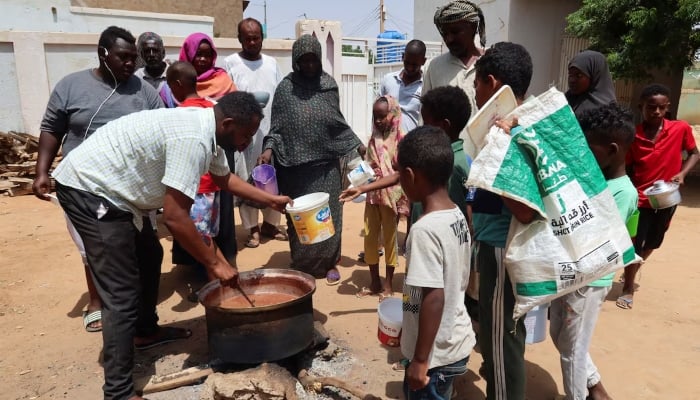
US-provided cash assistance intended to help people buy food and other necessities in Sudan and Gaza also has been halted, aid workers told Reuters. So has funding for volunteer-run community kitchens, an American-supported effort in Sudan to help feed people in areas inaccessible to traditional aid, these people said.
Humanitarian organisations have hit roadblocks in getting paid for emergency food operations. Questions about what programmes have permission to continue have gone unanswered, because the people who normally field such inquiries – officials at USAID – have been placed on leave, at least six sources said.
The Famine Early Warning Systems Network (FEWS NET), the US entity that produced regular food security alerts meant to prevent famine, also has been shut down. Its loss leaves aid organisations without a key source of guidance on where and how to deploy humanitarian relief.
And the US government issued stop-work orders to two major manufacturers of nutritional supplements, diminishing the supply of life-saving food for severely malnourished children around the world.
“We are the one thing that nearly everyone agrees on – that little children who are starving and need emergency aid need help,” said Mark Moore, chief executive officer of Mana Nutrition of Georgia, one of the two suppliers ordered to stop producing supplements. “It is not hype or conjecture or hand wringing or even contested use of stats to say that hundreds of thousands of malnourished children could die without USAID.”
Shortly after this story was published, the US government notified Mana and the other manufacturer, Edesia Nutrition of Rhode Island, that the stop-work orders had been rescinded.
The US State Department did not respond to requests for comment for this story.
Stockpiles on hold
Conflict is driving large numbers of people into desperate hunger, and the US is the largest single donor of aid. It provided $64.6 billion in humanitarian aid over the last five years. That was at least 38% of the total such contributions recorded by the United Nations.
In 2023, almost 282 million people in 59 countries and territories experienced extreme food shortages that threatened their lives or livelihoods, according to the 2024 Global Report on Food Crises.
Even before the pause in US aid, the world’s famine-fighting system was under enormous strain, driven by conflict and political instability, as Reuters detailed in a series of reports last year. The halt in aid creates a two-pronged crisis for humanitarian organisations working to relieve severe hunger.
It impairs the programmes that aim to prevent mass starvation. More immediately, it hobbles programmes meant to respond to crises and save lives.
Among the food aid in limbo around the world is almost 30,000 metric tonnes meant to feed acutely malnourished children and adults in famine-stricken Sudan, two aid workers there said. Some is sitting in hot warehouses, where it is in danger of spoiling, they said.
The food includes lentils, rice and wheat, one of the workers said – enough to feed at least 2 million people for a month. Some items have a quick expiration date and will be inedible by the end of Trump’s 90-day pause, this person said.
Aid groups are confused about which relief programmes qualify for waivers from the spending freeze and if they’ll be able to obtain them – because most USAID staff have been placed on leave.
A lost steering wheel
Longer term, the shuttering of FEWS NET stands to cripple the world’s ability to predict, prevent and respond to food insecurity crises.
Created by the US government in 1985 after devastating famines in East and West Africa, FEWS NET is funded by USAID and managed by Washington, DC-based Chemonics International.
FEWS NET is charged with providing early warning to US policymakers about hunger crises that could require a humanitarian response. It uses data from federal agencies, scientists and other humanitarian organisations to produce a stream of reports on food security. USAID and humanitarian organisations used FEWS NET reports to decide where to send food aid.
Researchers who collect and analyse data on food insecurity and famine say FEWS NET is essential to world efforts to fight hunger. They say it can be more nimble and prolific than its UN-backed counterpart, the Integrated Food Security Phase Classification system (IPC), a global partnership that reports on food insecurity in dozens of lands.
In most areas where it works, the IPC requires consensus on its findings among local government authorities and representatives of other humanitarian bodies. This can result in political attempts to influence its work and can delay and impede its efforts to alert the world to a looming crisis,a recent Reuters investigation found.
FEWS NET doesn’t face those consensus-building requirements, and so is faster and more efficient, researchers say. In 2024, FEWS NET produced more than 1,000 food insecurity outlooks, alerts and other reports covering more than 34 countries. The IPC published 71 reports in 33 countries.
The IPC declined to comment on FEWS NET’s demise. The “implications for the initiative remain unclear,” said Frank Nyakairu, a spokesman for IPC.
On January 27, Chemonics, which manages FEWS NET, received a stop-work order from USAID. Two days later, FEWS NET’s website went dark, eliminating public access to thousands of reports funded by American taxpayers.
“Ending FEWS NET is sort of like taking the steering wheel off the car,” said Andrew Natsios, a professor at Texas A&M University who headed USAID from 2001 to 2006. “Even if the car is working fine, if there’s no steering wheel, you don’t know where the car is going.”