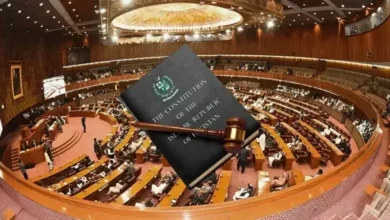
Harassment is a breach of basic human rights. It deprives the victim of social empowerment. When this kind of behaviour is experienced at the workplace, it reduces productivity, lowers workers’ motivation and lowers their morale. It has highly negative consequences on the economy as well. A research report published in the journal of general education suggests that about half of the female workers are harassed by their co-workers and more than half of males are subject to the same treatment by their co-workers. These respondents claim that this is because of the inefficiency of the management. The Nineteenth Amendment grants the security to both male and female, which provide them relief from harassment at the workplace. This law applies to every kind of employee either permanent, contractual, or apprentice. Now the question is whether this law is seriously implemented by all the authorities and institutions of Pakistan in reality.
Beginning with the idea of harassment, let’s claridy our perceptions of harassment. There are so many types of workplace harassment like power harassment, discriminatory harassment, personal harassment, verbal harassment, physical harassment, sexual harassment, and so on. So, harassment is not only sexual and physical as it is understood commonly, but verbal harassment also plays a vital role to lower the morale of a person at the workplace. The aggressive attitude of bosses often creates a humiliating working environment for employees. When an employee is yelled at and scolded publicly, it hits the self-respect of the employee and indicates the lack of dignity and worth of that individual. Verbal abuse includes yelling, making belittling comments, cursing, name-calling, and threats.
Recently in Pakistan, a video went viral on the social media became an issue for the traditional media as well. In the video, a well-known Special Assistant to the CM Punjab was yelling at and scolding the Assistant Commissioner Sialkot in public for not properly inspecting Ramazan Bazaars, as there the SACM saw that damaged fruits were being sold. The AC was trying to explain the issue and was giving the reason that due to the bad weather it happened, but the SACM was not listening to her and kept on scolding her until she walked away to end the rant. This kind of behaviour is highly unbearable in this democratic country as no one has the right to humiliate anyone in public. The right decorum for this issue is to sort it out privately in offices. These kinds of visits are for on-ground observations only. The outcomes of the observations must be conducted with decorum and decency, not to yell unprofessionally at the government employee in public. The SACM should have reported the issue to the other superior authorities of AC rather than questioning her designation. This was an act of verbal abuse by the same gender and hence it comes under the rubric of verbal harassment.
Normally, an act of harassment is considered as coming from the opposite gender. But this is not always the case, sometimes one could be harassed by the same gender too. People are fighting to eliminate gender biases from the world and for this, the suffering gender tries to give a helping hand to each other to empower themselves.
If it is seen with the eye of the Feminism School of thought, females are taking a stand for other females to make them empowered, eradicate the acts of discrimination they are facing, and protect their basic rights. For this, a woman must take a stand for a woman and talk about their rights until those rights are granted. But if a woman starts to scold and yell at another woman in public this is the humiliation of the gender as a whole. No one has the right to ask for justification for the position that one is having.
The above incident portrays the brutal attitude of ministers towards civil servants. Such type of incidents have occurred in the past but the action was not taken properly to end this type of behavior of superior authorities with civil servants. It can be also a bureaucrat harassing his or her lower staff in the same manner. It is always the common people who suffer the most. Why are all the obligations for common people, not for bureaucrats and politicians?
Though Pakistan is a democratic state, the attitude of authorities has always remained like that of a proud and brutal monarch. It is still a mystery that either the history is linked with this as in the region many proud kingdoms have ruled, or it is an inherited trait of bureaucracy from British rulers. Most of the time they don’t consider that these codes of conduct are also an obligation on them. In advanced countries, bureaucrats and ministers consider themselves public servants, whose duty is just to serve the people and the state. Every individual of the country is equally responsible to follow the law, constitution, social values, and other courses of conduct.
It is high time this behaviour is sorted out, and the government should devise a policy to deal with such kind of behaviour. The government must be aware of some alarming consequences of this kind of behaviour. Research suggests that workers are involved in very negative acts in the organization when they become subject to harassment. The government is required to go for strategic leadership to solve this issue. A research study by H. Williams suggests some techniques for strategic leadership to maintain a harassment-free workplace. These techniques could be implemented by the government on broader terms to ensure the attitude of a government worker with another worker to enhance productivity and efficiency.