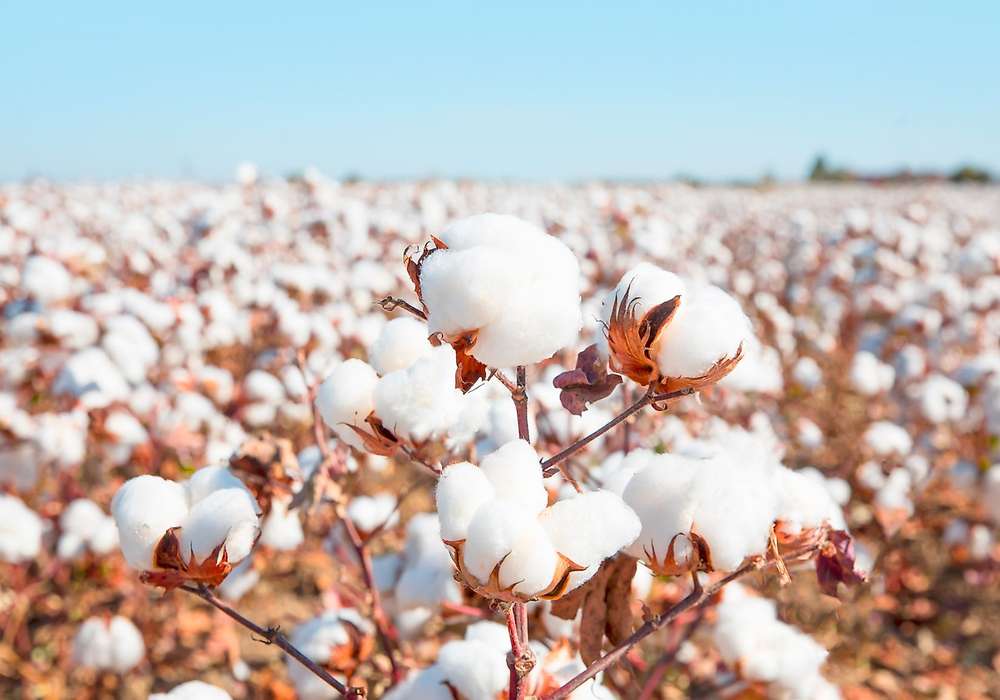

ISLAMABAD: The government has set an ambitious cotton production target of 9.64 million bales for the upcoming Kharif sowing season 2026–27, to be cultivated over an area of 2.16 million hectares, as authorities seek to revive the struggling agriculture sector and address growing concerns over declining crop yields.
The decision was taken during a meeting of the Federal Committee on Agriculture (FCA) held on Tuesday under the chairmanship of Federal Minister for National Food Security and Research Rana Tanveer Hussain. The committee reviewed crop performance, set production targets for major Kharif crops, and assessed the country’s overall food security outlook.
Sharp decline in cotton output raises concerns
Officials noted that Pakistan’s cotton sector continues to face significant pressure, with production falling to 5.607 million bales in the 2025–26 season. This is a steep decline compared to the country’s peak output of around 15 million bales recorded in 2014–15.
Agricultural experts have repeatedly warned that structural issues, including reduced farmer incentives, rising input costs, and climate variability, have contributed to the ongoing downturn in cotton production.
Targets set for major Kharif crops
In addition to cotton, the FCA finalized production targets for other key crops for the 2026–27 Kharif season. Rice production has been set at 9.17 million tons from 3.39 million hectares, while maize output is targeted at 9.77 million tons from 1.5 million hectares.
Sugarcane production has been projected at 80.3 million tons over an area of 1.14 million hectares. Targets were also set for minor crops including moong, mash, and chillies as part of broader efforts to strengthen agricultural output and ensure food supply stability.
Review of Rabi season performance
The committee also reviewed the performance of Rabi crops for 2025–26. Wheat production was estimated at 29.31 million tons from 9.38 million hectares, reflecting stable output levels.
Among other crops, onion production stood at 2.70 million tons from 163,000 hectares, showing a slight decline compared to the previous year. Tomato production fell to 555,000 tons due to a reduction in cultivated area, marking an 11.9% decrease.
In contrast, potato production rose significantly to 12.17 million tons from 466,000 hectares, an increase of 23.2%, while gram output surged to 262,000 tons, up by 52.4% year-on-year.
Water availability and weather outlook
Officials briefed the committee that water availability at canal heads for the upcoming Kharif season is expected to remain around 67.45 million acre feet (MAF).
The Pakistan Meteorological Department reported above-average rainfall during March and early April, which has helped improve soil moisture conditions in several regions. Forecasts suggest that continued rainfall in April and May, along with rising temperatures in northern areas, could further enhance water inflows into reservoirs.
The committee stressed the need for efficient and judicious use of water resources, particularly in downstream agricultural zones, to mitigate the risks of shortages.
Government outlines food security strategy
Speaking at the meeting, the federal minister emphasized that improving agricultural productivity—especially per-acre yield—is critical for achieving long-term food security.
He noted that while overall food availability remains stable, affordability continues to be a major challenge for low-income households. He highlighted the implementation of the interim National Wheat Policy 2025–26, approved on November 19, 2025, as a key step toward supporting farmers and encouraging private sector participation in the wheat value chain.
Agricultural reforms and financing plans
The minister also outlined a broader agricultural roadmap developed in collaboration with provincial governments and the Green Pakistan Initiative. The plan focuses on mechanization, seed system improvements, cotton revival, value addition, enhanced financing access, and export expansion.
He added that the proposed National Agri-Trade and Food Safety Authority would help standardize food quality regulations and improve Pakistan’s competitiveness in international markets.
Input supply and credit outlook
The committee was informed that sufficient rice and maize seed stocks are available to meet upcoming demand. Officials from the National Fertiliser Development Centre confirmed that urea supply is expected to remain stable due to strong domestic production and existing reserves.