
WASHINGTON: Pakistan and the Asian Development Bank (ADB) have agreed to deepen their cooperation during high-level talks held in Washington on the sidelines of the World Bank and IMF Spring Meetings.
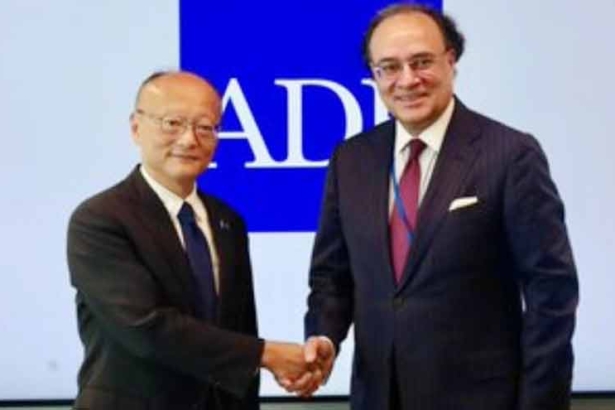
Federal Minister for Finance and Revenue Senator Muhammad Aurangzeb met ADB President Masato Kanda to discuss economic collaboration and ongoing financial challenges. Both sides exchanged views on global market volatility and reaffirmed their commitment to working closely together. The finance minister described Pakistan’s Country Partnership Strategy with ADB as a major step forward and welcomed the bank’s support for the country’s first Panda Bond initiative. He also expressed optimism about progress in the IMF programme reviews, adding that the government is addressing economic pressures while the State Bank of Pakistan continues to monitor developments.
The minister conveyed an invitation from the prime minister to the ADB president to visit Pakistan.
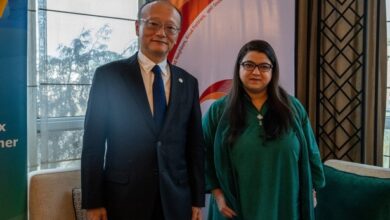
On the sidelines of the meetings, Senator Aurangzeb also held talks with UN Secretary-General António Guterres. Their discussion focused on global economic difficulties, food and energy security in developing countries, and the situation in the Middle East. The finance minister appreciated cooperation under the Borrowers Platform initiative, while the UN chief acknowledged Pakistan’s constructive role in promoting regional peace and stability.
In a separate engagement with Fitch Ratings, Pakistan’s credit outlook was reviewed. The finance minister welcomed Fitch’s decision to maintain Pakistan’s B- rating and noted that a staff-level agreement with the IMF has been achieved. He said international confidence in Pakistan’s reform agenda remains firm and that external financing arrangements for the fiscal year 2026 have been completed.
The minister highlighted Pakistan’s plans to return to global capital markets through Panda Bonds, Eurobonds and Sukuk, along with ESG-linked financial instruments. During meetings with senior leadership of Franklin Templeton, discussions focused on privatisation and capital market reforms. He shared that 29 state-owned enterprises have been handed over to the Privatisation Commission and that outsourcing of Islamabad, Karachi and Sialkot airports is in progress. The privatisation of power distribution companies is also moving ahead.
He further briefed investors on the Global Medium-Term Note (GMTN) programme and upcoming steps to appoint lead managers as Pakistan prepares to re-enter international markets. The finance minister also revealed that the Pakistan Virtual Assets Regulatory Authority has been established, no-objection certificates have been issued to Binance and other service providers, and the State Bank has lifted its earlier restriction on banking channels for crypto-related transactions.
In another meeting with senior representatives of JPMorgan Chase, the minister said Pakistan aims to return to international capital markets after nearly four years. He shared plans for issuing rupee-linked, dollar-denominated instruments and outlined support arrangements from ADB and the Asian Infrastructure Investment Bank for the Panda Bond initiative. He also appreciated financial assistance from Saudi Arabia and assured that all financing options under discussion would be carefully considered.