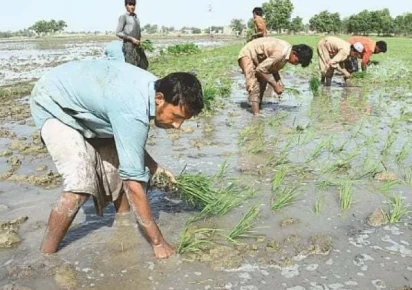

Farmers in Punjab are facing serious challenges as changing weather patterns continue to damage crops and reduce agricultural production across the province.
Punjab, known as Pakistan’s main food-producing region, grows major crops like wheat, rice, sugarcane, maize, and cotton. However, over the past two decades, the province has experienced major climate changes, including rising temperatures, irregular rainfall, and shorter winters, all of which are affecting farming.
Reports from the Pakistan Meteorological Department show that average temperatures in Punjab have steadily increased since 2000. At the same time, rainfall has become unpredictable, with some areas receiving heavy downpours while others face dry conditions. These changes are disturbing natural crop cycles and putting pressure on farmers.
Research by agricultural institutions such as the University of Agriculture Faisalabad and the Pakistan Agricultural Research Council warns that rising temperatures are shortening crop growth periods. Studies suggest that even a small temperature rise of 1 to 4 degrees Celsius could reduce wheat production by up to 30 percent.
Experts say that more than 80 percent of farmers in Punjab are already feeling the effects of climate change. Unusual weather events are also creating problems, such as unexpected rains during wheat harvesting and heavy monsoon rains that damage rice and cotton crops.
Agricultural experts describe this situation as a “climate shift,” where traditional seasonal patterns are no longer reliable. They also note changes in farming trends, with farmers increasingly shifting towards water-heavy crops while cotton production is declining in some areas.
To deal with these challenges, experts are suggesting solutions such as using short-duration crop seeds, improving farming techniques, and increasing the use of modern fertilizers. They also recommend better pest control measures, as higher temperatures are leading to faster pest growth.
Farmers and agriculture specialists believe that digital farming tools, improved water management, and timely weather information can help reduce losses. However, they stress that stronger government support and investment in research are also necessary.
Farmers say the situation is already affecting their livelihoods. They report delays in sowing and harvesting due to unpredictable rains, while sudden heatwaves are causing crops to mature too quickly, reducing quality and yield.
Agricultural representatives have warned that without immediate action, farmers may suffer even greater financial losses in the coming years. They have urged the government to focus on supporting local agriculture and protecting farmers from the growing impact of climate change.