
South Korea has stepped up diplomatic efforts with Iran to secure the safe passage of its ships stranded in the strategically vital Strait of Hormuz amid ongoing regional tensions.
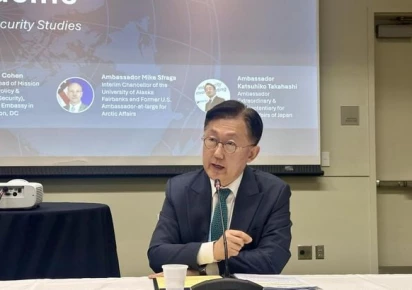
Seoul’s special envoy, Chung Byung-ha, held talks in Tehran with Iranian Foreign Minister Abbas Araghchi, urging cooperation to ensure uninterrupted and secure transit for all vessels, including those linked to South Korea.
According to officials, at least 26 South Korea-associated ships and 173 crew members remain stuck in the narrow maritime corridor, which serves as one of the world’s most critical energy supply routes.
During the meeting, the South Korean envoy also emphasized the need for renewed dialogue between Iran and the United States, expressing hope that diplomatic engagement would help stabilize the region and ease maritime risks.
He further highlighted the importance of maintaining and strengthening bilateral ties between Seoul and Tehran, particularly in times of heightened geopolitical uncertainty.
Iranian Foreign Minister Abbas Araghchi responded by stating that his country’s actions in the region are in line with international law and aimed at safeguarding national security and interests. He warned that any escalation would place responsibility on those he described as aggressors.
The Strait of Hormuz remains a crucial chokepoint for global energy trade, handling a significant share of the world’s oil and liquefied natural gas shipments. Any disruption in the passage has immediate global economic implications.
South Korean authorities have been coordinating closely with Iran and neighboring states, sharing information to ensure the safety of both vessels and crew members. Despite the situation, Seoul has clarified that it currently has no plans to pay any transit fees to Iran for the release of its ships.
Earlier this month, South Korea also extended humanitarian assistance worth $500,000 to Iran, signaling a balanced approach of diplomacy and support while navigating the ongoing tensions in the region.